
Smart Grid
-
Smart Grid
ComEd Says Smart Grid Efforts Reduced Power Interruptions
ComEd’s smart grid program finally has some good news to share. In a progress report to the Illinois Commerce Commission (ICC) this week, the utility said that 479 distribution automation (DA) devices installed in the first year of the program resulted in 82,000 fewer customer power interruptions in 2012.
-
 Coal
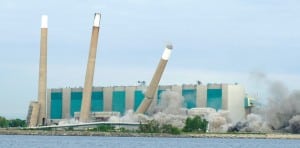
CoalOntario Goes Coal-Free in a Decade
By the end of 2013, one year ahead of its goal, the province of Ontario will be virtually coal-free—a first for a North American jurisdiction. How did the most populous part of Canada go from 25% to 0% coal-fired generation in just a decade, and what does this phaseout mean for the rest of the world?
-
Coal
DOE Nominee Moniz Gets Bipartisan Support in Senate Hearing
Dr. Ernest Moniz, President Obama’s nominee for the next Secretary of Energy, appears poised for easy confirmation after responding to questions from the Senate Energy & Natural Resources Committee on April 9. His remarks indicated support for, among other things, small modular reactors, carbon capture technology research, and moving forward with the recommendations of the Blue Ribbon Commission on America’s Nuclear Future.
-
Coal
Proposed 2014 Budget: More Funds for the DOE, Less for the EPA
The proposed 2014 federal budget that President Obama submitted to Congress on Wednesday includes increases for the Department of Energy in general and for DOE-sponsored research and development (R&D) in particular. It also shows a slight decrease in funding for the Environmental Protection Agency (EPA).
-
Smart Grid
AeroVironment Gets Commercial License for DOE-Developed EV Frequency-Responsive Tech.
The commercial license agreement for a frequency-responsive technology that tells an electric vehicle’s (EV’s) battery charger when to start and stop charging based upon existing conditions on the electric grid has been reached between developer Pacific Northwest National Laboratory (PNNL) and AeroVironment Inc. The technology could boost widespread adoption of plug-in EVs and support the integration of variable renewable sources while alleviating concerns about grid stability.
-
Legal & Regulatory
NRC Grants Citizen Petition to Examine Solar Storms
Attention to the potential risks of solar storms to the power sector continues, as the NRC issues a highly unusual grant to a citizen’s rulemaking petition on how solar storms could affect spent fuel powers at nuclear plants.
-
Coal
Gates Calls for Increased Spending on Energy Research, Renewed Focus on Nuclear
Bill Gates didn’t mince words last night when sharing with the IHS CERAWeek crowd his thoughts about public support for basic scientific research in the United States.
-
Wind
What Toothpaste and Battery Manufacturing Have in Common (Video)
Among the early-stage energy technology projects on display at last week’s Advanced Research Projects Agency-Energy (ARPA-E) Energy Innovation Summit were two from the Palo Alto Research Center (PARC) that have the potential to enhance a variety of battery and other power-related applications. POWER shot video demonstrations of these technologies, which are approximately three to five years from commercialization. See if you can figure out which one was inspired by striped toothpaste.
-
Coal
ARPA-E Plays Matchmaker for Innovative Energy Research Projects
The Advanced Research Projects Agency-Energy (ARPA-E) may be the most important federal agency many in the power industry have never heard of. Whatever generation technology you are associated with, ARPA-E’s work will affect its future.
-
Smart Grid
DOE Announces $20M in Funding to Enhance Energy Cybersecurity
The Department of Energy (DOE) last week announced the availability of up to $20 million for the development of tools and technologies to enhance cybersecurity of delivery control systems for electricity, oil, and gas in the U.S.
-
Hydro
FERC Proposes Reforms to Diminish Barriers to Small Generator Interconnection
The Federal Energy Regulatory Commission (FERC) on Thursday proposed four reforms intended to reduce the time and cost to process transmission interconnection requests from generating facilities of 20 MW or smaller. The reforms would boost reliability by increasing energy supply and remove hurdles in the development of new renewable power sources, FERC said.
-
Legal & Regulatory
Terror Threat to Grid Is Real, Says Suppressed Study
A 2007 study sponsored by the Department of Homeland Security confirmed some of the industry’s worst fears about the grid’s vulnerability to terrorist attack. That study has remained under wraps until recently–and its findings are even worse than you may suspect.
-
O&M
Emerging Technologies Enable “No Regrets” Energy Strategy
Achieving a balance between affordable and sustainable electricity while improving reliability is a challenge unlike any the electricity sector has faced since its inception. Technology innovations in key areas such as energy efficiency, smart grid, renewable energy resources, hardened transmission systems, and long-term operation of the existing nuclear and fossil fleets are essential to shaping the future of electricity supplies.
-
 Instrumentation & Controls
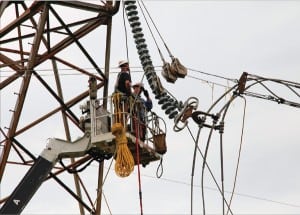
The Electric Grid: Civilization’s Achilles Heel?
Solar flares have proven destructive effects on transmission grids, but there are many other “black swan events” that threaten modern civilization. Experts disagree about which protective steps should be taken today.
-
Distributed Energy
Improving Grid Resiliency After Superstorm Sandy
For the power generation and delivery industry, the lesson of Hurricane Sandy was how fragile much of the grid is. Distributed generation, smart grid technology, and combined heat and power offer cost-effective ways to improve grid resiliency. -
Smart Grid
Conference Report: 12th ICS Cyber Security Conference
The 12th ICS Cyber Security Conference was held at Old Dominion University’s Virginia Modeling Analysis and Simulation Center (VMASC) October 22–25, 2012. There were approximately 150 attendees from multiple industries, universities, government, and vendors as well as consultants from the U.S., South America, Europe, and Asia.
-
O&M
As Cybersecurity Bill Dies, Newly Declassified Report Underscores Grid Vulnerabilities
Despite growing concern about cybersecurity both in and outside of Washington, the Senate’s cybersecurity bill died a second time on Nov. 13. The apparent inability of Congress to pass legislation designed to protect critical U.S. infrastructure could lead to President Barack Obama implementing some of the bill’s provisions via executive order. A day after the bill failed to gain 60 votes for passage, a recently declassified report was released that finds the U.S. power grid is vulnerable to attacks that could be more destructive than natural disasters such as Hurricane Sandy.
-
Hydro
Hawaii’s Largest Wind Project Online as State Struggles to Integrate Renewables
On Monday, as First Wind announced its 69-MW Kawailoa Wind Project had gone into commercial operations on Oahu, other news underscored the difficulty the island state faces in trying to substitute renewables for expensive, imported fossil fuels.
-
Smart Grid
ABB Announces World’s First Circuit Breaker for HVDC
Switzerland-based ABB today announced that it has developed the world’s first circuit breaker for high voltage direct current (HVDC), solving what it says has been “a 100-year-old electrical engineering puzzle and paving the way for a more efficient and reliable electricity supply system.” The breakthrough holds promise not just for renewables development but also for all types of generation that nations and regions wish to transmit over long distances, including under large bodies of water.
-
Solar
California’s Streamlined DG Interconnection Process Bodes Well for Solar
The California Public Utilities Commission (CPUC) last week approved a deal involving the state’s major utilities and renewable energy advocates that is aimed at streamlining the process for connecting distributed generation (DG) resources to the grid. The CPUC’s action will make it easier for small amounts of distributed resources—such as rooftop solar photovoltaic (PV) systems—to connect to the grid. The agreement also revises upward the amount of DG that can be connected to a specific power line segment without the need for supplemental studies.
-
Instrumentation & Controls
Chinese Hackers Blamed for Breach of Telvent’s SCADA-Related Network
Cyber attacks on the utility industry are no longer theoretical. According to multiple sources, smart grid technology vendor Telvent told U.S., Canadian, and Spanish customers on Sept. 10 that hackers had broken through its firewall and accessed “project files” related to its OASyS SCADA system. On Wednesday, reports surfaced that, based on the perpetrators’ “digital fingerprints,” the attack appears to be the work of a well-known Chinese hacker group.
-
Smart Grid
Regulators Cannot Move Fast Enough to Protect Grid, FERC Warns
In testimony before a congressional subcommittee, Joseph McClelland, director of the Federal Energy Regulatory Commission (FERC) Office of Electric Reliability, enumerated the ways in which the U.S. regulatory system is ill-equipped to deal with time-sensitive threats to physical and cyber assets of its power system.
-
Smart Grid
USDA Reaches $250M Goal for Smart Grid Technologies
The U.S. Department of Agriculture (USDA) last week said it had reached its $250 million goal to finance smart grid technologies. Agriculture Secretary Tom Vilsack also announced nine rural electric cooperatives and utilities in 10 states would receive loan guarantees to make improvements to generation and transmission facilities and implement smart grid technologies.
-
 Solar
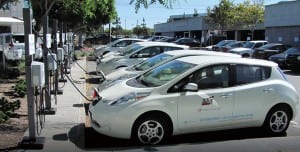
SolarSmart Grid Award: Customers Motivate San Diego Gas & Electric’s All-Inclusive Smart Grid Vision
“If you build it, they will come” has proven a risky strategy for some smart grid projects. One of California’s largest investor-owned utilities faced the opposite challenge—customers whose behaviors necessitated a smarter grid. Customer involvement in and support for smart grid plans is a major reason SDG&E’s smart grid efforts continue to garner accolades, including the 2012 POWER Smart Grid Award.
-
 Distributed Energy
The Rise of the Virtual Power Plant
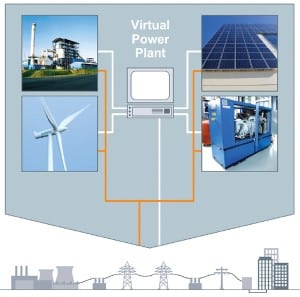
Siemens Infrastructure & Cities and Munich city utility Stadtwerke München (SWM) this April put into operation a virtual power plant (VPP), linking several small-scale distributed energy sources and pooling their resources so they can be operated as a single installation (Figure 1). The project comes on the heels of a February 2012 expansion of a […]
-
 Smart Grid
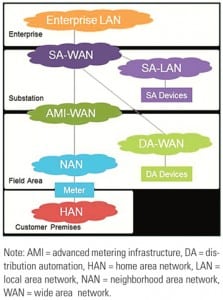
Ten Smart Grid Trends to Watch in 2012 and Beyond
The year 2012 represents a turning point for the smart grid. Many foundational elements have been tested; several have been successfully deployed. Now the serious work of integration and value-generation begins, even though the challenges remain substantial.
-
 Smart Grid
EEI Proposes Road Map for Electric Vehicle Integration
Several new models of plug-in electric vehicles will enter the market in 2012, joining the Nissan LEAF and Chevrolet Volt. The Edison Electric Institute has prepared four suggestions to help utilities smoothly handle the introduction of these vehicles to roads and grids.
-
Solar
The U.S. Military Gets Smart Grid
At home and abroad, U.S. military microgrid and smart grid projects are driven by energy security concerns. The pace of such projects, however, can be slow, and the potential for civilian grids to benefit from lessons learned and technologies developed for these important installations may be limited.
-
 O&M
O&MEPRI Bridges Industry R&D Gaps
The technologies used to generate and distribute electricity will be radically transformed during the coming decade. Amid that change, the power industry must continue to meet customer reliability, safety, and cost-of-service expectations. Achieving the right balance among these often-conflicting goals is the primary focus of every utility. The Electric Power Research Institute is helping utilities achieve that balance with R&D programs for many new and emerging technologies.
-
 Coal
CoalChina’s 12th Five-Year Plan Pushes Power Industry in New Directions
The Five-Year Plan is the expression of the centralized planning goals for China’s economy. The 12th Five-Year Plan, approved by the Chinese Government on March 14, 2011, established many social and economic goals, including significant expansion of the country’s power generation industry in many new directions.