
Research and Development
-
 Nuclear
Japan’s Nuclear Group Will Work with newcleo On Next-Gen Technologies
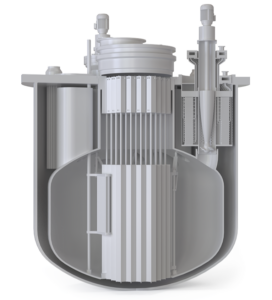
Newcleo, a European developer of advanced nuclear reactors, and the Japanese Atomic Energy Agency (JAEA) have signed a collaboration agreement to test key materials for newcleo’s Lead-cooled Fast Reactor (LFR) technology. The partnership announced October 1 will leverage the world-class expertise and experience of JAEA, making use of Joyo, a sodium-cooled fast reactor located in […]
-
 Trends
Buildings Will Devour 50% of New Global Electricity by 2035—Here’s How Smart Design Can Change That
Nations around the world are undergoing a seismic shift, switching from fossil fuels to renewable energy to meet net-zero targets. But one sector is set to dominate new demand—buildings.
-
 Top Plant
Award-Winning Cogeneration Project Turns Hydrogen-Rich Waste into Industrial Energy
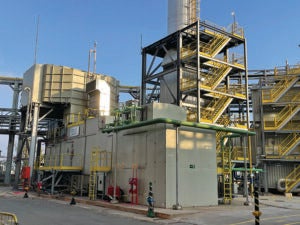
In Brazil’s industrial heartland, a pioneering energy project has earned a POWER Top Plant award for turning hydrogen-rich waste into clean, reliable power. The Vesta Cogeneration Plant not only boosts
-
 Top Plant
Power Under Pressure: How a Gas-Fired Plant Has Helped Address Taiwan’s Energy Transition
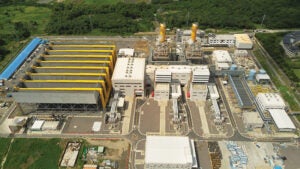
Taiwan’s energy transition faces a unique challenge: powering its world-leading semiconductor industry while phasing out nuclear power and reducing coal dependence. Part of the solution emerged from an unlikely location—a former pineapple field in Tainan—where engineers built what has been recognized as a POWER Top Plant award-winning facility critical to the island’s energy future.
-
 Nuclear
Igniting Fusion: The Key to Closing Our Energy Gap and Powering the Future
Fusion is the only technology that can deliver continuous, dispatchable power 24/7/365. Not only is fusion clean, sustainable, and cost-effective, but fusion plants can also be built into existing urban and industrial locations, plugging directly into today’s grid, significantly lowering development time and deployment costs.
-
 Commentary
Young Americans Are the Future of Energy—It’s Time to Unleash Them
Throughout the first nine months of the Trump Administration, “energy dominance” has been the agenda. To win the artificial intelligence (AI) race, ensure energy reliability for Americans, and beat China on the world stage, we need more energy – period. But we can’t do it without America’s young people. Fortunately, it’s a dynamic time to get […]
-
 Microgrid
Grid Modernization: A Utility’s Guide to Resilience and Flexibility
Sponsored by:HoneywellUtilities are confronting a convergence of challenges, including aging infrastructure, rising energy demand and the accelerating shift to renewable energy sources. The electric grid, much of which is decades old, is increasingly exposed to risks like extreme weather and cyber threats. Digital transformation can offer a practical path forward, helping utilities modernize operations, improve visibility […]
-
 Research and Development
Laser Wireless Power Transmission Breakthrough Could Transform Remote Energy Delivery
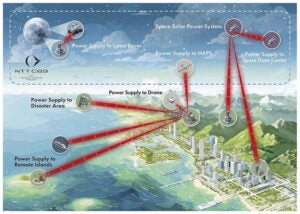
NTT Inc. and Mitsubishi Heavy Industries Ltd. (MHI) conducted an optical wireless power transmission experiment using a laser beam to wirelessly transmit energy over a distance of one kilometer. By irradiating a laser beam with an optical power of 1 kW, the team succeeded in receiving 152 W of electric power. This marks the world’s […]
-
 Research and Development
Energy Startups Receive Funding from Wells Fargo Technology Program
The Wells Fargo Innovation Incubator (IN2), a $55-million energy technology program funded by Wells Fargo & Company and co-administered by NREL, the U.S. Department of Energy National Renewable Energy Laboratory, has announced the selection of three startups for its next cohort in the Emerging Tech track. This cohort focuses on enhancing resiliency in the built environment through innovative technologies that strengthen building operations, heating and cooling systems, and grid reliability.
-
 Hybrid Power
Magnetar Investment Supports Torus’ Deployment of Modular Power Plants
Torus, a full-stack energy platform offering storage, management, security, and generation solutions, on September 9 announced a $200-million investment by Magnetar, an alternative asset manager. The investment is expected to accelerate the deployment of Torus’ proprietary modular power plants for utilities, data centers, and commercial and industrial customers across the U.S. Torus builds small, inertia-based […]
-
 Microgrid
AZZO Announces Launch of Standardized, Scalable Microgrid Solutions
AZZO, a global leader in energy integration and management technologies, announced the launch of a new offering of standardized, scalable microgrid solutions for the U.S. commercial and industrial market. This initiative is supported by Schneider Electric, whose EcoStruxure Microgrid Flex platform forms the foundation of the solution. The offering, announced September 9 at the RE+ […]
-
 Solar
SolarNextracker Acquires Origami Solar in $53 Million Deal
Solar technology major Nextracker announced the company would expand into the solar power frame market with the acquisition of Origami Solar. Origami is a pioneer in roll-formed steel frame technology. The deal, announced September 8, is an all-cash transaction of about $53 million, including future contingent earnout consideration. “The shift from aluminum to steel is […]
-
 Geothermal
Horizontal Drilling Powering Zero-Carbon Baseload with Geothermal
Advances in horizontal drilling, adapted from the oil and gas (O&G) sector, are opening up deep geothermal resources once considered inaccessible. As a result, geothermal is emerging as a viable source of zero-carbon baseload power capable of delivering round-the-clock energy to a grid increasingly reliant on intermittent renewables. In a decarbonizing economy, geothermal is no longer an afterthought. It’s becoming essential infrastructure.
-
 Energy Storage
Analytics Can Help Energy Storage Operators Find More Revenue
Using modeling through analytics, battery energy storage system operators can determine exactly what size system they need for their site with advanced predictive software.
-
 Distributed Energy
Behind-the-Meter DERs: A Practical Strategy to Offset Rising Grid Construction Costs
With national electricity demand surging—driven by artificial intelligence (AI) and data center developments, widespread electrification, and challenging legislative and regulatory policy shifts—utilities are scrambling to keep pace. Add to that mounting supply chain strain and aging infrastructure, and it’s no wonder utilities are facing a costly balancing act.
-
 Solar
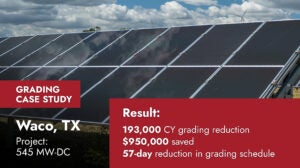
SolarWhere Are All the Solar Engineers? How to Ease Utility-Scale Solar’s Technical Bottleneck with Smarter Software
Solar dominates new energy generation in the U.S., accounting for 69% of new capacity additions in Q1 of 2025. But although most of this added capacity comes from utility-scale projects, the engineering labor force hasn’t scaled to match this demand. Only a limited number of qualified engineers, particularly those with experience as Engineers of Record (EORs), can support the complexity and speed required for current utility-scale solar projects.
-
 Nuclear
Policy Shift, Private Sector Drive Put Nuclear Recycling Back on the Table
Over nearly five decades, nuclear waste has been treated as an intractable problem, locked in dry casks, relegated to repositories that are slow to materialize, and generally viewed as a costly liability
-
 Engineering
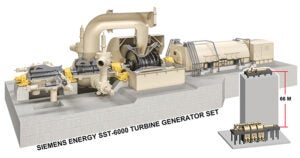
Advancements in Steam Turbine Efficiency for Modern Power Generation: Reducing Costs and Emissions
Steam turbine technology is not stagnant. Advanced designs are incorporating innovations in blade design, advanced materials, precision manufacturing, and high-energy steam cycles, delivering significant
-
 Trends
Beyond Basic Sealing: Advanced Carbon Seal Rings Are Driving Industrial Decarbonization
Carbon seal rings are silently revolutionizing industries—from oil rigs to rocket engines. Carbon seal rings can have significant effects. Take a recent upgrade by ExxonMobil. By switching to advanced carbon seals in refineries, the company cut fugitive emissions by almost 30% and saved millions of dollars in downtime. Or SpaceX, which relies on ultra-durable carbon-graphite […]
-
 Hydrogen
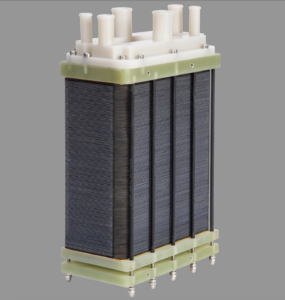
Power Density, Not Just Cost, Will Define Next Generation of Hydrogen Fuel Cells
For decades, fuel cell innovation has been guided by two main benchmarks: cost per kilowatt and stack durability. These remain important, especially in applications driven almost entirely by project economics. However, in many of the sectors where fuel cells are poised to make the biggest impact—including aviation, long-haul mobility, and distributed energy—traditional metrics no longer […]
-
 Trends
AI and the Energy Transition: Building a Smarter, Decarbonized Energy System
Solar energy generation from a rooftop panel system can be monitored quickly and easily, an example of how artificial intelligence (AI) and digital tools are empowering businesses to optimize energy use and contribute to a decentralized, decarbonized grid. The energy transition is accelerating. Electrification is surging, renewable power generation is expanding and energy consumption patterns […]
-
 Hydrogen
Carbon Removal Company Closes on Major Investment
A California-based carbon removal company said it has completed a funding round in support of the company’s first 100-kilotonne carbon dioxide removal (CDR) commercial facility. Equatic, which is considered a pioneering company in combined carbon dioxide removal and green hydrogen production, on August 11 announced the successful closure of its Series A round, with Catalytic […]
-
 Instrumentation & Controls
Achieving maximum reliability with drive systems
This white paper explores how using a holistic, application-driven approach can help minimize drivetrain failures, reduce Total Harmonic Distortion (THD), enable predictive maintenance, and deliver long-term cost savings via lower total cost of ownership (TCO). It explains how an integrated approach to drive system design ensures maximum efficiency, reliability, and performance.
-
 Legal & Regulatory
Trump Administration to Overhaul Drone Rules, Fast-Track Nuclear Reactor Deployment on the Moon
The Trump administration has proposed new drone regulations that will eliminate case-by-case approval processes for beyond visual line of sight (BVLOS) operations, while Acting NASA Administrator Sean Duffy confirmed accelerated plans to deploy a nuclear reactor on the moon by 2030. The Federal Aviation Administration (FAA), Department of Transportation (DOT), Transportation Security Administration (TSA), and […]
-
 Renewables
Lightstar Announces Agrivoltaics Project at New York Farm
An agricultural farm in New York will add solar power at the site in a project designed to benefit both farmers and the solar energy community. Lightstar Renewables LLC on August 4 announced the launch of the Plains Road Agrivoltaics project, which integrates solar energy with agriculture on the DiMartino Farm in Montgomery, New York. […]
-
 Commentary
Beyond Co-Location: The Emerging Opportunity for Vertically Integrated Utilities in the Data Center Boom
The explosive growth of hyperscale data centers is reshaping the power sector at unprecedented speed. In just a few short years, load requests from data center operators have gone from occasional filings to a full-on wave of gigawatt-scale development across North America. While much attention has been paid to the trend of co-locating data centers […]
-
 Electrification
Watch a Preview of the Microgrid Demonstration Featured at RE+ 2025
EMerge Alliance, along with its industry partners, each year builds an operating microgrid that is displayed at the RE+ renewable energy conference. This year’s show is scheduled Sept. 8-11 in Las Vegas, Nevada. The microgrid demonstration is part of the Grid Edge Theater at RE+. Each year, different technologies are used in the microgrid, and […]
-
 Nuclear
Westinghouse, Radiant Selected for First Fueled Nuclear Microreactor Tests at INL’s DOME Facility
Nuclear microreactors developed separately by Westinghouse and Radiant are poised to become the first fueled designs tested at the Demonstration of Microreactor Experiments (DOME) facility—the world’s first dedicated microreactor test bed slated to open at Idaho National Laboratory (INL) in early 2026. The first fueled experiment is expected to begin as early as spring 2026. […]
-
 Technology
NASA Empowers Energy Projects by Providing Global Earth Observation Data
NASA strives to understand the universe, whether that be the stars above us or Earth around us. One way NASA focuses on the Earth is through satellite, ground, and airborne Earth observations and modeling. NASA’s Earth Science projects work to further understand the Earth and its systems to better help humanity now and in the […]
-
 Commentary
Data Is the New Diesel: Understanding the Role of Telematics in the EV Transition
The fleet industry is approaching a pivotal juncture, with electrification increasingly positioned as a potential path forward for businesses working to reduce emissions and operating costs. Yet, during this period with evolving expectations and uncertain environmental regulations, the direction and pace of this transition remain fluid. While momentum is building around the shift from traditional […]