Nuclear
-
 Nuclear
Post-Fukushima Nuclear Power Development in China
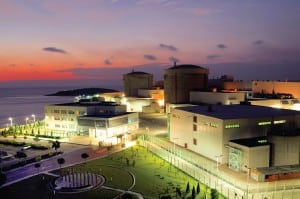
China regards nuclear energy as a critical part of its strategic goal of achieving sustainable economic development while reducing environmental pollution. An analysis by North China Electric Power University predicts that the pace of nuclear power development may slow for a short time as a result of the Fukushima accident, but nuclear power is still a top development priority.
-
 Coal
CoalPotential Impacts of Closed-Cycle Cooling Retrofits at U.S. Power Plants
The Clean Water Act Section 316(b) rule changes regarding cooling water intake structures that are expected next year could affect up to 428 power plants, representing 1,156 individual units, according to the Electric Power Research Institute. Depending on plant size and the complexity of the retrofit project, retrofit capital costs could range from very low to over $500 million for large nuclear plants. The power industry total cost is projected to be over $100 billion.
-
Nuclear
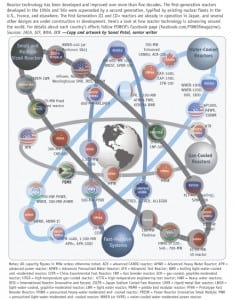
THE BIG PICTURE: Water-Cooled Reactors
A “who’s doing what” addendum to "THE BIG PICTURE: Advanced Fission" in our November 2012 issue.
-
Nuclear
Too Dumb to Meter, Part 5
As the book title Too Dumb to Meter: Follies, Fiascoes, Dead Ends, and Duds on the U.S. Road to Atomic Energy implies, nuclear power has traveled a rough road. In this POWER exclusive, we present the sixth and seventh chapters, “The Bomber to Nowhere” and “The Road to Jackass Flats,” which begin the “Up in the Air: Flights of Radioactive Fancy” section.
-
 Nuclear
France Considers Departure from Iconic Stance on Nuclear Energy
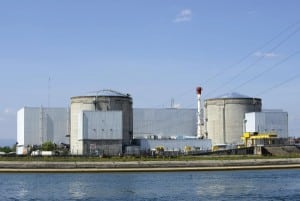
No other country has been as frequently cited as an example of exploiting the virtues of a nuclear-heavy energy policy as France. Deriving more than 75% of its electricity from 58 operational nuclear reactors with a total capacity of about 63 GW, France has one of the lowest costs of generation and is the world’s largest net exporter of power, earning €3 billion ($3.9 billion) a year from sales of surplus power to buyers beyond its borders. But that is all about to change.
-
 Nuclear
Seismic Instrumentation at Nuclear Power Plants
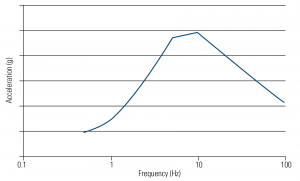
When a nuclear power plant experiences ground motion due to an earthquake, an evaluation may be needed before allowing the plant to continue operating or to resume operating if it has been shut down, as was the case after the seismic event that shut down both units at Dominion’s North Anna Power Station on August 23, 2011.
-
 Nuclear
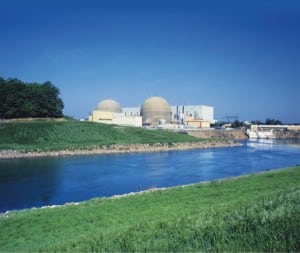
Top Plant: North Anna Power Station, Louisa County, Virginia
In 2007, Dominion Resources contracted Alstom to perform steam turbine retrofits on two generating units at its North Anna nuclear power station. The Unit 1 retrofit, with its ongoing instrumentation upgrade, was the second to be completed at the North Anna plant and the fourth overall for Dominion. Completion of this project marked a significant milestone in terms of both technical achievement and investment in providing clean, safe, and reliable baseload electricity for Dominion customers.
-
 Nuclear
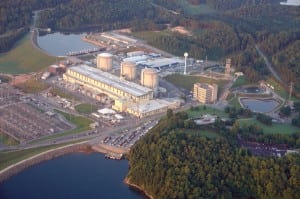
Top Plant: Oconee Nuclear Station, Seneca, South Carolina
With license extensions for its three units in hand, Duke Energy’s Oconee Nuclear Station began a digital controls upgrade program in 2006, and in January 2010, AREVA became the first supplier to receive Nuclear Regulatory Commission approval for a safety-related digital instrumentation and controls system.
-
 O&M
O&MDominion’s North Anna Station Sets New Standard for Earthquake Response
On August 23, 2011, at 1:51 p.m., a magnitude 5.8 earthquake knocked both units at Dominion’s North Anna Power Station off-line—the first time such an event has occurred in the U.S. After 80 days of extensive evaluation and inspection by plant staff and representatives from the U.S. Nuclear Regulatory Commission, both units were back online. What occurred during those days is a remarkable story.
-
 Nuclear
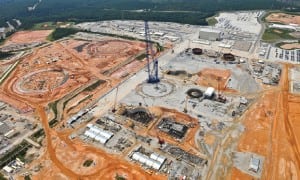
What Worldwide Nuclear Growth Slowdown?
Data detailing plans for new nuclear reactors worldwide show few effects of the March 2011 Fukushima accident. China and Russia in particular continue to be hot spots for nuclear development, but cost overruns, construction glitches, and ongoing safety reviews are slowing construction projects elsewhere.
-
Nuclear
Calif. Regulator Begins Formal Investigation of San Onofre Outages
The California Public Utilities Commission (CPUC) has opened a formal investigation into the extended outages of Units 2 and 3 at the San Onofre Nuclear Generating Station (SONGS). The investigation will determine whether to remove all costs related to SONGS from the rates of Southern California Edison (SCE) and San Diego Gas and Electric (SDG&E) going forward, and whether to refund SONGS-related costs already collected in rates back to Jan. 1, 2012.
-
Nuclear
Sandy Slashes Power to Millions, Nuclear Plants in Stable Condition (Updated)
On Tuesday morning, half a day after Hurricane Sandy made landfall in New Jersey, the enormous storm, now being called a superstorm or a post-tropical cyclone, was still causing destruction far inland while as many as 6 million electric customers from Maine to North Carolina and west to Pennsylvania and West Virginia were without power.
-
Nuclear
Dominion to Decommission Kewaunee Nuclear Plant, Cites Poor Economics
The Kewaunee Power Station—a 556-MW nuclear facility in Carlton, Wis.—will be shut down and decommissioned starting in the second quarter of 2013, its owner Dominion said on Monday. The company said the decision to shutter the plant was based “purely on economics.”
-
Nuclear
Report: Crystal River Repair Technically Feasible, But Costs Could Surge to $3.5B
Repair of the damaged containment structure at Progress Energy’s Crystal River nuclear power plant in Florida will likely hover at $1.5 billion, but it could escalate to as much as $3.5 billion and take eight years to complete in the worst-case scenario, an independent review of a potential repair plan shows.
-
 Coal
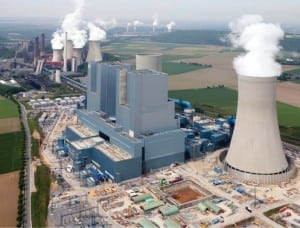
CoalGermany’s Reliance on Coal Grows
This August, instead of the usual fanfare at the official commissioning ceremony of RWE’s twin-unit 2.2-GW coal-fired BoA Units 2 and 3—a $3.3 billion lignite-fired power plant in Grevenbroich-Neurath near Cologne (Figure 1)—Germany’s premier of the state of North Rhine–Westphalia, Hannelore Kraft, and the newly installed federal minister of the environment, Peter Altmaier, requested a rapid cutback in power production. As 400 guests watched, the output of one unit was reportedly reduced by more than 150 MW in five minutes, and then restored just as fast. The demonstration was to show how quickly the plant could offset the intermittency of wind and solar power, the officials said, proclaiming the plant an “important element” of Germany’s energy strategy.
-
 Nuclear
South Korea Connects Two New Reactors to the Grid
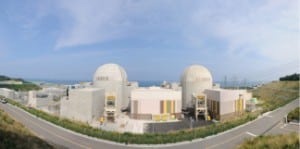
3. An atomic leap. South Korea is looking to boost nuclear capacity to 43.4% of its total power profile by 2020. Two new reactors became commercially operational this summer, the 960-MW Shin Kori 2 plant near Nae-ri and the Shin Wolsong 1 (shown here) in the southwest city of Gori. Courtesy: Korea Hydro and Nuclear […]
-
 Nuclear
Plant Vogtle Moves Forward, as Do Costs and Schedules
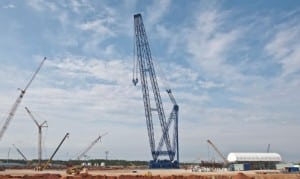
At Plant Vogtle in Georgia, where Southern Co. subsidiary Southern Nuclear is building two new 1,100-MW AP1000 units for Georgia Power and co-owners Oglethorpe Power Corp., the Municipal Electric Authority of Georgia, and Dalton Utilities, work on the first new nuclear units built in the U.S. in 30 years is progressing—albeit with hiccups.
-
Nuclear
FPL Gets NRC OK for 10% Extended Uprate of St. Lucie Unit 2
Florida Power & Light (FPL) on Monday got the Nuclear Regulatory Commission’s (NRC’s) approval to increase power¬¬¬ output of St. Lucie Unit 2 by 17%, from 853 MWe to 1,002 MWe. The regulator had in July approved a similar uprate for St. Lucie Unit 1, and its decision on Monday means FPL can fully proceed with its $3 billion plan to boost nuclear output and save on future fossil fuel costs.
-
Nuclear
NRC Says Wolf Creek’s January Loss of Power Was of Substantial Safety Significance
An inspection has shown that loss of offsite power at the Wolf Creek nuclear power plant near Burlington, Kan., in January had substantial safety significance and will result in additional inspections and regulatory oversight, the Nuclear Regulatory Commission (NRC) said on Friday.
-
Nuclear
Three Mile Island Trips Due to Flow Imbalance in Coolant Pump
Exelon’s 852-MW Three Mile Island Generating Station near Harrisburg, Pa., on Thursday automatically tripped owing to a flux to flow imbalance of the "C" reactor coolant pump, a filing with the Nuclear Regulatory Commission (NRC) shows.
-
Nuclear
GE-Hitachi’s Global Laser Enrichment Plant Gets NRC OK, Other Projects Falter
A license issued by the Nuclear Regulatory Commission (NRC) on Tuesday greenlights operation of a proposed plant that will use laser technology to enrich uranium for fuel in commercial nuclear power reactors. If built as proposed on a 1,600-acre site at General Electric–Hitachi Global Laser Enrichment’s (GLE’s) global headquarters in Wilmington, N.C., where GLE currently operates a fuel fabrication plant, the facility would be one of two new enrichment plants expected to be operational by 2020, even though several others have received NRC approval and federal government funding.
-
Nuclear
New Bill to Limit Timespan for Reactor License Renewal Applications
A bill introduced by U.S. Reps. John Tierney and Ed Markey on Wednesday could prevent the Nuclear Regulatory Commission (NRC) from granting operating license renewals to reactor owners that apply more than 10 years before a current facility license expires.
-
Nuclear
Quebec’s Only Nuclear Plant to Close
The Canadian province of Quebec’s newly elected Parti Quebecois government announced on Tuesday that it has decided to shutter the province’s 30-year-old Gentilly-2 nuclear plant.
-
Nuclear
NRC to Start EIS, Revise Waste Confidence Rule for Spent Nuclear Fuel
The Nuclear Regulatory Commission (NRC) on Thursday directed its staff to develop an environmental impact statement (EIS) and a revised waste confidence decision and rule on the temporary storage of spent nuclear fuel (SNF). Last week’s decision was in response to a June 8 federal court ruling, which said the NRC had erred in deciding that SNF from the nation’s power plants could be stored as long as 60 years after a plant’s operating license expires.
-
Coal
Congressional Briefs: Back from Recess
Congress has returned from its summer break. As the House prepares to vote on its Upton-Stearns "No More Solyndras Act," lawmakers also expect to focus on a bill that could prohibit finalization of any Environmental Protection Agency (EPA) power plant rules that curb greenhouse gas emissions while carbon capture and storage technology is commercially unavailable. House Democrats, meanwhile, called for hearings to examine the impacts of climate change on the nation’s generators.
-
Nuclear
Too Dumb to Meter, Part 4
As the book title Too Dumb to Meter: Follies, Fiascoes, Dead Ends, and Duds on the U.S. Road to Atomic Energy implies, nuclear power has traveled a rough road from its origin as a tightly controlled military program to civilian applications meant to benefit society as a whole. In this POWER exclusive, we present the fourth and fifth chapters, “What Friendly Atom?” and “The Atomic Chimera.”
-
Nuclear
Troubled Fort Calhoun Reactor Restart Delayed Again
Omaha Public Power District (OPPD) has postponed restart of its troubled 478-MW Fort Calhoun nuclear plant for the third time since it was shut down 16 months ago. Restart of the reactor, located 19 miles north of Omaha, Neb., requires regulatory approval, and that is now tentatively anticipated early next year.
-
Nuclear
Exelon Withdraws Early Site Permit Application for Victoria County Reactor
Exelon on Tuesday said it plans to withdraw its Early Site Permit (ESP) application for construction of a new reactor at an 11,500-acre tract of land southeast of Victoria, Texas, saying “low natural gas prices and economic and market conditions . . . have made construction of new merchant nuclear power plants in competitive markets uneconomical now and for the foreseeable future.”
-
Nuclear
On Katrina’s Anniversary, Generators and Regulators Respond to Hurricane Isaac
Hurricane Isaac soaked the Gulf Coast of Louisiana and Mississippi after making landfall Tuesday night with sustained winds of up to 80 mph, leaving thousands without power in five states. On Tuesday, Entergy took its Waterford 3 nuclear plant offline as a precautionary measure.