
Nuclear
-
 Nuclear
EPRI Plans High-Burnup Spent Fuel Demonstration
A study proposed by the Electric Power Research Institute (EPRI) could shed more light on how safe it is to store high-burnup used nuclear fuel in dry casks. In an August 2013–released draft test plan
-
 Renewables
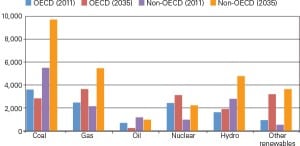
IEA’s World Energy Outlook 2013: Renewables and Natural Gas to Surge Through 2035
By 2035, renewables will hold a 30% share of the global power mix, but only 1% of the world’s fossil fuel–fired power plants will be equipped with carbon capture and storage (CCS), reports the
-
 Nuclear
NRC Issues Notice of Violation for San Onofre
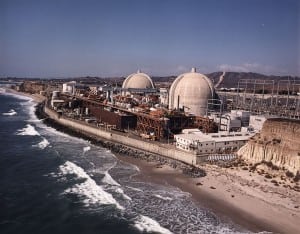
The Nuclear Regulatory Commission (NRC) on Dec. 24 formally issued a Notice of Violation to Southern California Edison (SCE) for failing to properly vet the design of replacement steam generators at the San Onofre Nuclear Generating Station in California. The steam generators later developed excessive tube wear, forcing SCE to shut down the plant in […]
-
 Nuclear
New Finnish Nuclear Plant Moves Forward
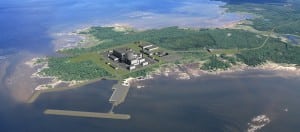
JSC Rusatom Overseas and Fennovoima have signed a plant supply contract to construct a nuclear plant of the AES-2006 pressurized water reactor design (Figure 1) in northern Finland, the companies announced on Dec. 21. 1. The AES-2006 is the latest upgrade to the Russian VVER unit. Currently, 18 VVER units operate in European Union countries. […]
-
 Nuclear
After Almost Three Years Offline, Fort Calhoun Nuclear Plant Gets NRC OK to Restart
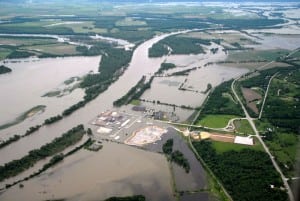
The Fort Calhoun Station, Omaha Public Power District’s (OPPD’s) 478-MW nuclear reactor that was offline for nearly three years to address longstanding issues, including flooding from the Missouri River in 2011, is ready to restart, the Nuclear Regulatory Commission (NRC) has deemed. The federal regulatory body on Tuesday concluded OPPD was ready to safely restart the […]
-
 Nuclear
USEC to Restructure, Seek Bankruptcy to Stimulate American Centrifuge Project
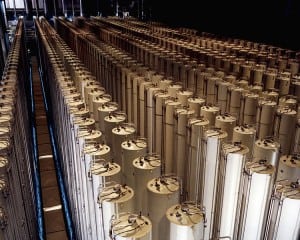
U.S. nuclear reactor enriched uranium fuel supplier USEC will voluntarily file for bankruptcy protection as part of a restructuring plan to boost financial support for its much-watched gas centrifuge uranium enrichment project at the American Centrifuge Plant in Piketon, Ohio. The company announced on Dec. 16 that it had reached an agreement with majority shareholders […]
-
 Nuclear
NuScale Triumphs in Second DOE SMR Funding Contest
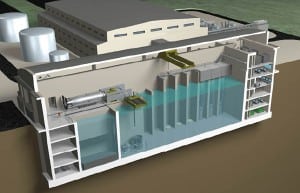
NuScale Power is the winner of the Department of Energy’s (DOE’s) March 2013–announced funding opportunity to help design, certify, and commercialize small modular reactors (SMRs) in the U.S. The DOE’s long-awaited second award announcement means the government will invest up to half of the total project cost required to help NuScale Power’s 45-MWe SMR design […]
-
 Nuclear
NRC Issues Final Environmental Impact Statement for South Texas Project License Renewal
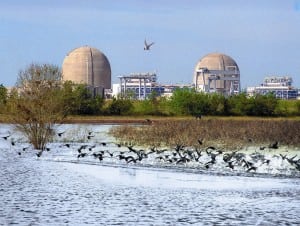
No environmental impacts would preclude renewing the operating licenses for two pressurized water reactors (PWR) at the South Texas Project nuclear plant in Bay City, Texas, the Nuclear Regulatory Commission (NRC) concluded on Friday. The federal regulatory body issued a final environmental impact statement (SEIS) for the proposed renewal of operating licenses for Units 1 […]
-
 Nuclear
Transformer Fire Takes Down Nuclear Plant
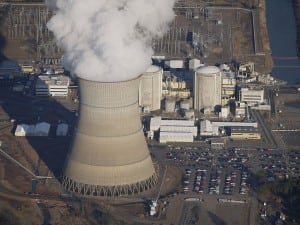
Arkansas Nuclear One Unit 2 was taken offline the morning of Dec. 9 due to a transformer fire in the site switchyard. Operators at the plant declared an “Unusual Event” at 8 a.m. CST and notified the Nuclear Regulatory Commission (NRC) of the situation. An Unusual Event is the lowest of four nuclear emergency classifications […]
-
 Nuclear
Crystal River $1.18B Decommissioning Plan Submitted to NRC
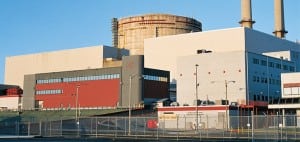
Duke Energy submitted its decommissioning plan to the Nuclear Regulatory Commission (NRC) this week for the company’s retired Crystal River nuclear plant in Florida. The 860-MW plant, located about 85 miles north of Tampa, went into service on March 13, 1977. It has been shutdown since September 2009 when engineers discovered a delamination, or separation […]
-
 Renewables
FERC Addresses Industry Change in House Hearing
“No industry stays static over time. Change is inevitable,” said the Federal Energy Regulatory Commission’s (FERC) John Norris in a house subcommittee hearing today. For the electric sector, he said in prepared remarks, “The time of incremental change is clearly over.” The Dec. 5 hearing before the House Energy & Commerce Committee, Subcommittee on Energy and Power was […]
-
 Nuclear
DOE in Talks with GLE, AREVA for Depleted Uranium Hexafluoride
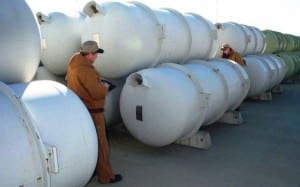
The Department of Energy (DOE) last week said it would enter negotiations with Global Laser Enrichment (GLE) for the sale of the depleted uranium hexafluoride inventory after it selected the GE-Hitachi division’s proposal to build and operate a laser enrichment facility at the shuttered Paducah enrichment site in Kentucky. The DOE will also enter into […]
-
 Nuclear
Construction Permit Extended (Again) for Watts Bar Unit 2
The Nuclear Regulatory Commission (NRC) has extended the expiration date of the construction permit for the unfinished Unit 2 at the Watts Bar Nuclear Power Plant (WBN) to Sept. 30, 2016. WBN is located about 10 miles south of Spring City, Tenn., and is owned by the Tennessee Valley Authority (TVA). TVA requested the extension […]
-
 Nuclear
When It Comes to Nuclear Plants, Is Small Beautiful?
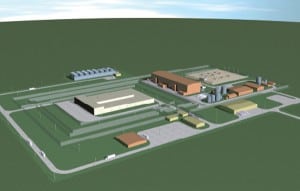
In 1973, an obscure economist from Britain’s National Coal Board, which then owned and operated all the coal mines in the country, published a book that posited—as the title proclaimed—that Small Is
-
Renewables
POWER Digest (December 2013)
First Kundankulam Unit Synchronized to Grid. The state-owned Nuclear Power Corporation of India Limited (NPCIL) on Oct. 22 synchronized to the grid the first of two units at the Kundankulam Nuclear Power
-
 Nuclear
Basemat Milestone for Plant Vogtle Unit 4
Georgia Power has completed placement of the basemat structural concrete for the nuclear island at the Vogtle Unit 4 site, where it is the second of two units currently under construction. Georgia Power says that the basemat concrete placement was completed in just under 41 hours, an efficiency it says matches the best time achieved […]
-
 Nuclear
NRC Directs Staff to Proceed with Yucca Mountain License Review
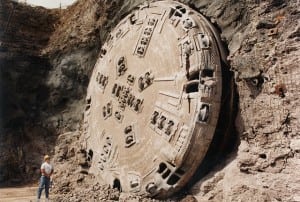
The Nuclear Regulatory Commission (NRC) on Monday directed agency staff to complete the long-delayed safety evaluation report (SER) for the Department of Energy’s (DOE’s) license application to build the Yucca Mountain permanent waste repository. Reflecting the Obama administration’s opposition to the repository, the DOE in 2010 withdrew from the NRC its June 2008–submitted application to […]
-
 Nuclear
Federal Court Suspends Nuclear Waste Fee Payments
So long as the federal government has no viable alternative to Yucca Mountain as a repository for nuclear waste, nuclear power ratepayers should not be charged an annual fee to cover the cost of that disposal, the U.S. Court of Appeals for the D.C. Circuit ruled on Tuesday. Finding for petitioners that include the National Association […]
-
 Nuclear
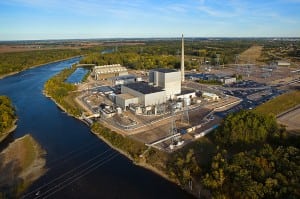
Public Utilities Commission Scrutinizes Xcel Cost Overruns
The Minnesota Public Utilities Commission (MPUC) will hire a nuclear engineering consultant to investigate cost overruns associated with Xcel Energy’s Monticello Nuclear Generating Plant Life Cycle Management/Extended Power Uprate Project. The project, at an estimated cost of $320 million, was authorized by the MPUC in 2009 and included necessary upgrades to increase the 600-MW plant […]
-
 Nuclear
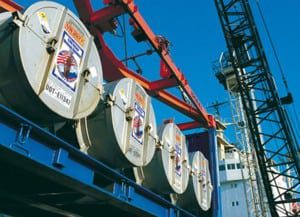
20,000 Nuclear Weapons Later, Megatons to Megawatts Program Complete
U.S. Energy Secretary Ernest Moniz announced last week that the final shipment of low enriched uranium (LEU) derived from Russian nuclear weapons had departed from the port of St. Petersburg, Russia. “For two decades, one in ten light bulbs in America has been powered by nuclear material from Russian nuclear warheads. The 1993 United States-Russian […]
-
 Nuclear
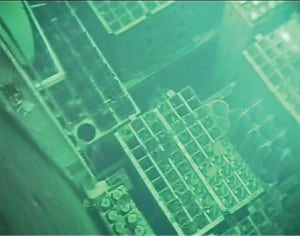
TEPCO Begins Removing Fuel from Fukushima Daiichi Unit 4
Tokyo Electric Power Co. (TEPCO) today began the delicate process of removing spent fuel from Unit 4 of the crippled Fukushima Daiichi nuclear plant. The six-unit site has two reactor groups, comprising Units 1–4 and Units 5 and 6. Unit 4 is the only reactor of its group that did not suffer a meltdown following […]
-
 Nuclear
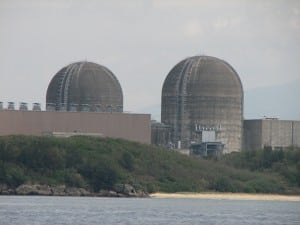
Peers Agree: Taiwanese Nuclear Plants Pass Stress Tests
The European Commission announced last week that safety standards applied in Taiwanese nuclear power plants are generally high and comply with international state-of-the-art practices. The peer review—performed by the European Commission and the European Nuclear Safety Regulators’ Group (ENSREG)—did, however, strongly recommend further improvements in view of Taiwan’s vulnerability to natural hazards, such as earthquakes, […]
-
 Renewables
IEA Forecasts Global Renewables Expansion, Dismal Outlook for CCS
By 2035, renewables will hold a 30% share of the global power mix but just 1% of the world’s fossil fuel–fired power plants will be equipped with carbon capture and storage (CCS), reports the International Energy Agency (IEA) in its newly released World Energy Outlook (WEO-2013). The annual report presents a central scenario in which global […]
-
 Nuclear
V.C. Summer Unit 3 Nuclear Island Basemat Completed
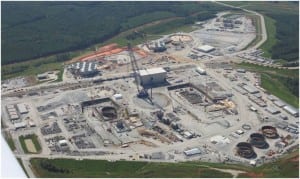
South Carolina Electric & Gas Co. (SCE&G) announced the completion of another major construction milestone at its V.C. Summer Nuclear Station in Fairfield County, S.C. Having completed the first new construction nuclear concrete pour just seven months earlier, SCE&G finished the nuclear island basemat for Unit 3 on Nov. 4. “This successful basemat placement is […]
-
Nuclear
South Korea Ramps Up Nuclear Exports
After decades of developing indigenous nuclear reactor technology, South Korea in 2010 voiced ambitions that entail exporting 80 nuclear reactors by 2030. In 2009, the country saw its first major deal, winning a lucrative $20.4 billion contract to build four APR-1400 reactors in the United Arab Emirates. That technology is an advanced version of the […]
-
 Nuclear
Top Plant: Bruce Nuclear Generating Station, Kincardine, Ontario, Canada
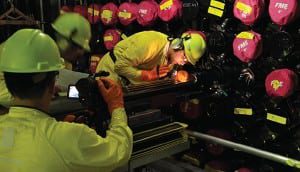
Owner/operator: Bruce Power According to Duncan Hawthorne, president and CEO of Bruce Power, 2012 was one of the most successful years in the company’s history. The $7 billion investment to revitalize four
-
 Nuclear
Top Plant: Turkey Point and St. Lucie Nuclear Plants, Florida
Owner/operator: FPL Florida Power & Light (FPL) announced the afternoon of April 17, 2013, that its Turkey Point Unit 4 had completed its planned outage and was resynchronized to the grid earlier in the
-
 Nuclear
Top Plant: Waterford 3 Steam Electric Station, Killona, Louisiana
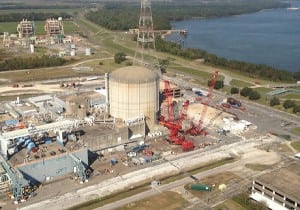
Owner/operator: Entergy Corp. Courtesy:Entergy Corp. The Waterford 3 Steam Electric Station has been providing power to the Gulf Coast since 1985, when Entergy—then Louisiana Power & Light—first
-
 Nuclear
Luminant Tests First Nuclear Industry Large-Scale Wireless Monitoring System
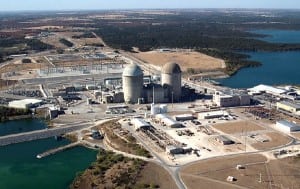
In June of this year, the global remote monitoring company Azima DLI and Luminant, the Dallas-based power generation division of Energy Future Holdings, announced the launch of a pilot program to evaluate a
-
 Nuclear
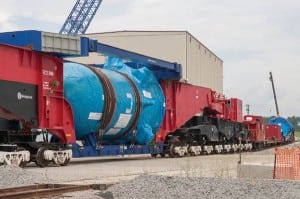
V.C. Summer Nuclear Station Construction Update
On Mar. 30, 2012, South Carolina Electric & Gas Co. (SCE&G), principal subsidiary of SCANA Corp., and Santee Cooper, South Carolina’s state-owned electric and water utility, received approval for