
News
-
News
Myanmar Halts Construction of 4-GW Coal Plant on Environmental Worries
Myanmar’s government on Monday cancelled construction of a 4,000-MW coal-fired power plant proposed by Thai company Italian-Thai Development on public concerns about the plant’s environmental impact.
-
News
DOE Launches New Power Sector Cybersecurity Initiative
The newest initiative to protect the nation’s power grid from cyber attacks is the “Electric Sector Cybersecurity Risk Management Maturity” project, led by the U.S. Department of Energy (DOE) and Department of Homeland Security (DHS). The project is expected to leverage the insight of private and public sector grid experts and build on existing cybersecurity measures and strategies.
-
News
FERC, NARUC Launch Forum on Reliability, Environment
The Federal Energy Regulatory Commission (FERC) and the National Association of Regulatory Utility Commissioners (NARUC), an organization representing state public service commissioners, joined forces to launch a forum to explore reliability issues that could crop up as a result of new and pending environmental rules for the power sector.
-
News
Report: Utilities Major Force Behind Energy Efficiency Savings
A new report published by the Institute for Electric Efficiency (IEE) finds that electric energy efficiency savings are on the rise in the U.S.—and that electric utilities accounted for a vast majority of ratepayer-funded electric efficiency expenditures in 2010.
-
News
Federal Court Blocks Implementation of CSAPR
The U.S. Court of Appeals for the District of Columbia Circuit temporarily blocked the Cross-State Air Pollution Rule (CSAPR) just two days before it was set to go into effect. The federal court ordered the Environmental Protection Agency (EPA) to continue administering the previously promulgated Clean Air Interstate Rule (CAIR) until a final decision can be made on the merits of the rule, likely this summer or fall.
-
News
AES New York Subsidiary Declares Bankruptcy on Coal Woes
An AES Corp. subsidiary that owns more than 1,000 MW of coal-fired capacity at six facilities in New York last week filed for Chapter 11 bankruptcy protection, citing falling power prices and heightened costs from compliance with environmental regulations.
-
News
Mass. Supreme Judicial Court Affirms Cape Wind–National Grid PPA
The Massachusetts Supreme Judicial Court (SJC) last week upheld a decision by the state’s Department of Public Utilities (DPU) that a Power Purchase Agreement (PPA) between Cape Wind and utility National Grid would be a cost-effective use of ratepayer money. The decision means Cape Wind is closer to building North America’s first offshore wind farm.
-
News
Sunbury to Shutter Five Coal Units, Make Switch to Gas
Pennsylvania’s Sunbury Generation, a company that owns the Shamokin Dam plant—the nation’s oldest coal-fired power plant—last week reportedly said it would close five of its six coal-fired generation units and replace them with two natural gas–fired turbines by 2015. The company cited stricter regulations on power plant emissions.
-
News
DOI Approves Renewable Projects in Calif., Ore.
The Department of the Interior (DOI) on Thursday approved a 275-MW solar plant in California and a 104-MW wind farm in Oregon that will be built on private lands and use power lines that cross public lands to connect to their respective grids. The projects are the 26th and 27th renewable projects approved by the DOI in the past two years.
-
News
BPA to Begin Construction of Six 500-kV Lines at Grand Coulee
The Bonneville Power Administration (BPA) plans to begin construction of six new 500-kV overhead transmission lines at the Grand Coulee Dam—the nation’s largest hydropower facility—next month, the public service organization said last week. The new lines will help ensure continued safe and reliable transmission of power between Grand Coulee Dam’s third power plant and the BPA’s vast high-voltage power grid.
-
News
PJM Rings in New Year with Two New Grid Systems
PJM Interconnection on Sunday began operational control of the transmission systems of Duke Energy Ohio and Duke Energy Kentucky, both subsidiaries of Duke Energy, and began administering open, competitive wholesale electricity markets in those areas, the regional grid operator said on Jan 1.
-
 News
NewsA Wireless Cellular Controller
Xenon has introduced the T925 Wireless Cellular Controller for connecting remote sites with central control and monitoring stations through cellular networks. A T925 remote communications network eliminates the need to make hardwired Ethernet connections to the Internet or an intranet at each remote site and the central control and monitoring station. The network operates from […]
-
 News
NewsNonmetallic Pump/Tank Carts Caustics, Acids
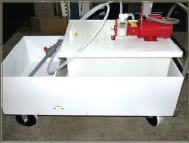
A new nonmetallic Mobile Pump/Tank Cart from Vanton Pump and Equipment Corp. transfers wastewater and caustic/acidic chemicals with no corrosion and ultrapure fluids with no contamination. All fluid contact surfaces of the tank, base plate, and secondary containment chamber are of solid polypropylene, polyethylene, PVC, or other inert thermoplastic, precluding corrosion across the entire pH […]
-
 News
NewsUniversal Voltmeter Kit
HDE’s newly launched DVM-80UVK Universal Voltmeter Kit expands features of the DVM-80 series voltmeter and includes several accessories that enable voltmeter and phasing operations for virtually all overhead and underground applications. HDE is offering the kit as a complete, ready-to-use universal voltmeter package. It includes a dual-stick phasing voltmeter with overhead hook probes for use […]
-
 News
NewsV-Return Style Conveyor Belt Tracking System
ASGCO, a manufacturer of proprietary bulk conveyor components and accessories, announced a new addition to its line of Tru-Trainer conveyor belt tracking idlers: a V-Return style of the company’s Dual Return Tru-Trainer Conveyor Belt Tracker. Tru-Trainer idlers react as the conveyor belt moves off center, maintaining the belt’s original position, minimizing belt wear and conveyor […]
-
 News
NewsAdvanced PV Tracking System
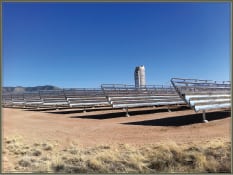
SunPower has introduced the SunPower C7 Tracker, a solar photovoltaic (PV) tracking system that concentrates the sun’s power seven times to achieve what the company claims could be “the lowest levelized cost of electricity (LCOE) for utility-scale solar power plants available today.” The C7 Tracker combines single-axis tracking technology with rows of parabolic mirrors, reflecting […]
-
 News
NewsHandheld Vibration Meter
Columbia Research Laboratories has introduced the Model VM-300 vibration meter, a general purpose vibration-measuring instrument designed for periodic routine checks of industrial equipment where portability and ease of use are required. Acceleration, velocity, and displacement measurement modes are provided, along with a number of value-enhancing features. Dual power allows the VM-300 to be powered from […]
-
News
Condenser Life Cycle Seminar
The November issue of POWER featured a special section titled “Condenser Life Cycle.” That set of four articles covered topics including condenser performance, operation and maintenance (O&M), failure mechanisms, and retubing—topics you will surely find useful at some time in your career. The authors of those four articles work for companies that are part of […]
-
News
My Top 10 Predictions for 2012
The New Year will be pivotal for the power generation industry, as you will read in our 2012 Industry Forecast (p. 26) and my list of predictions below. Looking back over the past year, I again gave myself a B+ on my 2011 predictions (see p. 33 for a rundown of my individual scores).
-
News
Correction
In “Siemens Releases ‘ShapingPower’ Option for Renewables Integration” (December 2011), the Figure 3 callouts for wind and solar were reversed. POWER regrets the error. A corrected version can be found in the online version of the article. â–
-
News
Justice Department Orders Exelon, Constellation to Divest Coal Plants Before Merger
Exelon Corp. and Constellation Energy Group must sell three electricity generating plants in Maryland before the companies can proceed with their proposed $7.9 billion merger to level competition for wholesale electricity in the mid-Atlantic region, the U.S. Department of Justice (DOJ) said last week.
-
News
DOE Report: Wind Turbine Makers to See Critical Rare Earth Metal Supply Disruptions
A report released on Thursday by the Department of Energy (DOE) examining the role that rare earth metals play in the manufacture of wind turbines, electric vehicles, and photovoltaic (PV) thin-film solar cells finds that these clean energy technologies may see supply disruptions for five rare earth metals (dysprosium, neodymium, terbium, europium, and yttrium) in the short term, though risks will generally decrease in the medium and long term.
-
News
NRC Endorses AP1000 Amended Design
Reaching a major milestone, the Nuclear Regulatory Commission (NRC) on Thursday granted a final Design Certification Amendment to Westinghouse’s AP1000 pressurized water reactor design, paving the way for utilities in the U.S. to build nuclear plants using the third-generation reactor design.
-
News
MACT Reactions: Renewed Concerns About Costs, Reliability
The Environmental Protection Agency’s (EPA’s) issuance of its final Mercury and Air Toxics Standards (MATS)—a rule that will mandate all coal- and oil-fired power generating units limit emissions of heavy metals and acid gases using “maximum achievable control technology” (MACT)—last week provoked a range of reactions, including renewed concerns about its costs and impact on grid reliability.
-
News
Turk Settlement Results in Coal Plant Closure, Millions in Conservancy Fees
In a key settlement that will resolve all environmentally based legal challenges against its 600-MW ultrasupercritical John W. Turk Jr. power plant under construction near Texarkana, Ark., Southwestern Electric Power Co. (SWEPCO) on Thursday agreed to several conditions, including phasing out a 528-MW coal-fired unit in Texas, building 400 MW of renewable power, and limiting new transmission lines in natural areas.
-
News
FERC Action Freezes Duke-Progress Merger
The Federal Energy Regulatory Commission (FERC) stunned officials of Duke Energy and Progress Energy on Thursday when it refused to unconditionally approve a $13.7 billion merger deal of the two companies that would have created the largest U.S. electric utility. The regulatory body cited concerns about the merger’s impact on power markets in North and South Carolina—where both companies are based—for its decision.
-
News
EPA Finalizes Air Toxics Rule
The Environmental Protection Agency (EPA) today issued its final Mercury and Air Toxics Standards (MATS), which will require about 40% of all coal-fired power plants in the U.S. to deploy pollution control technologies to curb emissions of mercury and other air pollutants such as arsenic and cyanide within three years. The regulation has been called the “most expensive order” aimed at companies that has been considered by the Obama administration.
-
News
Final Amended Rule Includes More States in CSAPR
The Environmental Protection Agency (EPA) last week issued a final rule amending its Cross-State Air Pollution Rule (CSAPR) to include five more states in the ozone season nitrogen oxide (NOx) program. The final rule adds Oklahoma to the CSAPR program (for its ozone-season NOx emissions only), bringing the total number of states covered by the rule to 28.
-
News
TEPCO: Daiichi Units in Cold Shutdown, But Crisis Continues
Nine months after the Daiichi nuclear power plant in Japan’s Fukushima Prefecture was rocked by a magnitude 9.0 quake and an ensuing massive tsunami that plunged it into the worst nuclear crisis since Chernobyl, 25 years earlier, Japan’s prime minister, Yoshihiko Noda, on Friday said in a televised address that the plant’s four afflicted units have been brought to a state of cold shutdown. However, the crisis is far from over, he said.
-
News
EU Energy Roadmap Calls for Energy Efficiency, Power Prices to Reflect Costs
A report was released last week by the European Commission that outlines possible ways European Union (EU) members can ensure energy security and competitiveness while meeting an ambitious goal of reducing their greenhouse gas (GHG) emissions from 80% to 95% below 1990 levels by 2050.