Legal & Regulatory
-
 Legal & Regulatory
Experts: More Nuclear Power Is Needed
“You can’t take a clean source of energy off the table.” That was the conclusion that a panel of four experts came to as they discussed the role that nuclear power should play in the battle to fight climate change. The panelists met on May 14 as part of the 62nd Annual Industry Conference and […]
-
 Legal & Regulatory
DGR Is Preferred Nuclear Waste Solution for Canada, Scary for U.S.
A Canadian joint review panel issued an environmental assessment report on May 6 for a deep geologic repository (DGR) for long-term management of low- and intermediate-level radioactive waste (L&ILW), concluding that the project is “not likely to cause significant adverse environmental effects.” Ontario Power Generation (OPG) proposed the DGR, intending to locate the facility at […]
-
 Legal & Regulatory
Murkowski Introduces Array of Energy Bills
In the opening move of what is certain to be a long and contentious process, Sen. Lisa Murkowski (R-Alaska), chairman of the Senate Energy and Natural Resources (ENR) Committee, introduced a suite of bills covering a broad range of energy issues, from infrastructure to regulatory reform to civil enforcement. Along with several others introduced by […]
-
 Legal & Regulatory
Legal Challenges to Clean Power Plan Begin to Take Shape
Attorneys general from three states—Oklahoma, Texas, and West Virginia—stepped forward on May 5 to present their objections to the Environmental Protection Agency’s (EPA’s) proposed Clean Power Plan. During testimony before the Senate Environmental and Public Works Subcommittee on Clean Air and Nuclear Safety, West Virginia Attorney General Patrick Morrisey presented three specific problems he sees […]
-
 Legal & Regulatory
Sen. King Introduces Bill to Promote Distributed Energy Interconnection Neutrality
A new bill unveiled on May 6 by Sen. Angus King (I-Maine) champions a general right to neutrality of the interconnection of distributed energy resources (DER) and seeks to establish a set of national parameters for how DERs are governed. The day 30 on clomid no period Free Market Energy Act of 2015 would amend […]
-
Legal & Regulatory
New York’s Reforming the Energy Vision
The digital economy has changed the way we shop for clothing, travel, communicate with friends and family, consume news, and watch television—among so many other things. But the innovative potential of the digital economy has not yet found a place within the electric system. With that important goal in mind, New York has embarked on […]
-
 Legal & Regulatory
Expert: OSHA’s Arc Flash Final Rule Will Save Lives
For Samy Faried, an ABB expert who has spent 15 years analyzing arc flash hazards, a new rule recently finalized by the Occupational Safety and Health Administration (OSHA) will save lives. In April 2014, OSHA published its Final Rule for Electric Power Generation, Transmission and Distribution Standards (29 CFR 1910.269 and 1926 Subpart V), which […]
-
 Legal & Regulatory
FERC Issues Final Gas-Electric Coordination Rule
The Federal Energy Regulatory Commission (FERC) has approved a final rule to improve coordination of wholesale natural gas and electricity market scheduling in light of the nation’s increased reliance on natural gas generation. FERC’s March 2014 Notice of Proposed Rulemaking for Order No. 809 proposed changes to nationwide gas scheduling practices, but it gave the […]
-
 Legal & Regulatory
NERC: EPA’s Clean Power Rule Could Transform Coal Power Use
Implementation of the Environmental Protection Agency’s (EPA’s) proposed Clean Power Plan (CPP) could change the use of the U.S. coal-fired generating fleet from baseload to seasonal peaking—and pose grave implications for plant economics and operating feasibility, the North American Electric Reliability Corp. (NERC) suggests in new special assessment. The new report is the second […]
-
 Legal & Regulatory
Maryland to Mandate Emergency NOx Reductions at Coal Plants
An emergency action proposed by Maryland regulators on Friday will require 14 coal-fired units in the state to minimize nitrogen oxide (NOx) emissions every day during the 2015 summer ozone season, starting as soon as May 1. The rule submitted on April 17 by the Maryland Department of the Environment (MDE) to the Joint Committee […]
-
 Legal & Regulatory
CAISO and PacifiCorp to Explore Adding Firm as Transmission Owner
The California Independent System Operator (CAISO) and Portland, Ore.–based utility PacifiCorp announced on April 14 that they had signed a memorandum of understanding to explore the possibility of PacifiCorp joining the ISO as a participating transmission owner. The move would be a big one for both entities. PacifiCorp, a subsidiary of Berkshire Hathaway Energy (BHE), […]
-
 Legal & Regulatory
Short- and Long-Term Economic Impact of the Clean Power Plan on Texas Debated
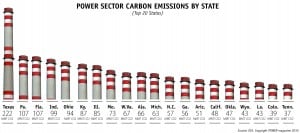
While fuel switching may be the easiest option for hitting the 2020 and 2030 goals set by the Environmental Protection Agency’s (EPA’s) proposed Clean Power Plan, it may impede reaching longer-term climate targets said experts at an April 8 symposium hosted by the Central Texas Association for Energy Economics and the Energy Institute at the […]
-
 Legal & Regulatory
NRC To Begin Expedited Cybersecurity Rulemaking for Nuclear Fuel-Cycle Facilities
Staff at the Nuclear Regulatory Commission (NRC) should expeditiously complete and implement cybersecurity rulemaking for nuclear fuel-cycle facilities, the regulatory agency’s commissioners have ordered. In a March 24 agency memorandum to Mark Satorius, NRC executive director for operations, the commission disapproved the one option, which was the staff’s recommendation, to issue a security order to […]
-
Legal & Regulatory
The “Dark Side” of Reliability Regulation
Reliability of the bulk power system may not be as sexy as news of “got-rich-quick” energy traders and alleged insidious market manipulation. But for those on the ground balancing the practicalities of ensuring electricity arrives when and where it is needed with a carousal of mandatory regulations, it can be every bit as interesting. Cue […]
-
 Legal & Regulatory
Proposed Ozone Rule May Be the Most Costly Regulation Ever
Estimates vary widely, but even the Environmental Protection Agency acknowledges that lowering the ozone standard will cost billions. How will it affect power companies? It could make approval of new projects much more difficult. Even in the annals of expensive environmental regulations and the hyperbole that often accompanies them, the numbers are eye-popping: $140 billion […]
-
 Legal & Regulatory
The State of U.S. Mercury Control in Response to MATS
As this month marks the compliance date for the Mercury and Air Toxics Standards (MATS), it’s a good time to take a step back from the many months of concern and consideration of options to see how coal-fired power plants are actually responding to the new rule. It’s also a good time to acknowledge that […]
-
 Legal & Regulatory
SolarCity Files Antitrust Suit Over SRP Rooftop Solar Fee
Rooftop solar company SolarCity on Mar. 2 filed suit in federal court in Arizona seeking to overturn a new rate structure approved by the Salt River Project (SRP) that levies additional charges on customers with rooftop solar panels. On Feb. 26, the SRP board voted to approve a change in how it bills customers who […]
-
 Legal & Regulatory
Illinois Mulls Low Carbon Portfolio Standard
A bipartisan group of Illinois legislators have introduced bills that propose a market-based solution to curb carbon emissions and ensure continued operation of the state’s nuclear power plants. The bills SB 1585 and HB 3293 introduced in the state Senate and House would enact the Illinois Low Carbon Portfolio Standard. That measure, like a renewable […]
-
 Legal & Regulatory
10 Industry Leaders Comment on the Future of Energy, Electricity, and the Grid
Here are selected thought-provoking (and even unexpected) comments made by presenters at the 10th annual MIT Energy Conference on Feb. 27 and 28 in Cambridge, Mass. Comments are summarized and paraphrased unless presented in quotes. For more on the event, see “Exelon: The Utility of the Future Views Change as Enabling, Not Disruptive” and the […]
-
Legal & Regulatory
FERC’s Work on the Clean Power Plan
Cheryl A. LaFleur One of the most controversial issues facing the energy world today is how our electric sector will respond to the U.S. Environmental Protection Agency’s (EPA’s) proposed Clean Power Plan
-
Legal & Regulatory
Cape Wind Finally Blows Out
If ever there were a case of winning all the battles and losing the war, it would be the saga of the long-delayed-and-now-probably-dead Cape Wind offshore wind project in Massachusetts. As I wrote last year
-
 Legal & Regulatory
Ohio Regulators Deny AEP’s Coal Plant Cost Recovery Plan
The Public Utilities Commission of Ohio (PUCO) approved an electric security plan (ESP) for AEP Ohio—a unit of American Electric Power—on Feb. 25, but declined to adopt the company’s proposed power purchase agreement (PPA) as it relates to the Ohio Valley Electric Corp. (OVEC). The PPA rider was a point of contention with several groups […]
-
 Legal & Regulatory
Duke Fined $102.2 Million for Mishandling Coal Ash
Duke Energy has been charged by federal authorities with nine misdemeanor counts of violating the Clean Water Act and other federal regulations stemming from improper disposal of coal ash at multiple sites in North Carolina. Duke said in a statement on Feb. 20 that it had entered a plea agreement with federal prosecutors to settle […]
-
 Legal & Regulatory
Ameren Comments on Suggested Revisions to the EPA’s Clean Power Plan
Although there has been plenty of discussion in the U.S. power industry about the challenges posed by the Environmental Protection Agency’s (EPA’s) proposed Clean Power Plan (CPP), Missouri-based Ameren Corp. is the first generating company to go public with a specific set of proposed revisions. On Feb. 11, Ameren released a white paper that proposed […]
-
Legal & Regulatory
Fixed Solar Fees Are Tesla’s Best Friend and a Utility Own Goal
Two developments yesterday, one quiet, one rather loud, suggest the long-predicted existential threat to the traditional utility model may be at hand. The quiet news came from the California Independent System Operator (CAISO), which reported that utility-scale solar generation crossed the 5-GW mark for the first time yesterday. Between 10 a.m. and 2 p.m. PST, […]
-
 Legal & Regulatory
Mississippi Supreme Court Strikes Down Kemper County IGCC Rate Increase
In yet another black eye for the long-delayed and hugely over-budget Kemper County integrated gasification combined cycle plant (IGCC), the Mississippi Supreme Court ruled on Feb. 12 that the Mississippi Public Service Commission (MPSC) erred in granting plant owner Mississippi Power rate increases in 2013 and 2014, and ordered that the increases be refunded to […]
-
 Legal & Regulatory
States Can “Just Say No” to the EPA’s Carbon Rule, Expert Says
According to Peter S. Glaser, partner with Troutman Sanders LLP, who practices in the energy and environmental law fields, saying “no” is an option that states have in response to the Environmental Protection Agency’s (EPA’s) Clean Power Plan proposal. Speaking during a panel discussion at George Mason University’s Law and Economics Center on Feb. 4, […]
-
 Legal & Regulatory
Activists Show Up in Droves for EPA Ozone Hearing
The Byron Sher Auditorium in Sacramento, Calif., was filled at times with students, parents, and other concerned citizens as the Environmental Protection Agency (EPA) held the last of three public hearings on proposed updates to the national air quality standards for ground-level ozone on Feb. 2. The hearings were scheduled as part of the policymaking […]
-
Commentary
Removing Regulatory Roadblocks for PEVs
One oft-cited roadblock to widespread adoption of plug-in electric vehicles (PEV) is a lack of charging infrastructure, commonly referred to as electric vehicle supply equipment (EVSE), or charging stations. While Tesla is well known for designing electric vehicles that can travel more than 250 miles on a single charge, most PEVs can only travel 60 […]