International
-
 Legal & Regulatory
Germany Puts the Brakes on Rapid Renewables Expansion
In July 2016, the German parliament approved three major pieces of legislation specifically laying out the future of the celebrated Energiewende: the 2017 revision of the Renewable Energy Sources Act, the Electricity Market Act, and the Act on the Digitization of the Energy Transition. “These three pieces of legislation will ensure that the transition of […]
-
 Safety
Puerto Rico Substation Fire Causes Three-Night Blackout
This September, Puerto Rico suffered an island-wide blackout that left 1.5 million utility customers without power for more than 50 hours and reportedly resulted in multimillion-dollar losses for its already troubled economy. The blackout in the U.S. territory with a population of about 3.5 million occurred on September 21, when a blaze erupted in a […]
-
O&M
Technical Guidance Documents Provide Global Standards
The International Association for the Properties of Water and Steam (IAPWS) is an international nonprofit association of national organizations concerned with the properties of water and steam, particularly
-
 Nuclear
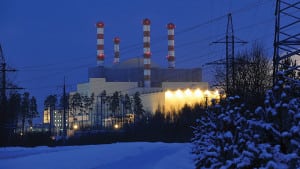
TOP PLANT: Beloyarsk Nuclear Power Plant Unit 4, Sverdlovsk Oblast, Russia
Owner/operator: Rosenergoatom Fast-neutron reactors are pivotal to Russia’s ambitious nuclear power plans. The successful construction, grid-connection, and testing of the country’s first BN-800 reactor at its Beloyarsk nuclear plant is a major achievement in the right direction. Since the Soviet Union began its first experimental nuclear power projects in the 1940s, Russia has embraced nuclear’s […]
-
 Nuclear
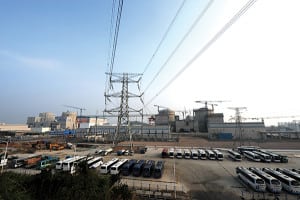
TOP PLANT: Ningde Nuclear Power Plant, Fujian Province, China
China is on an epic build-out of its nuclear generating capacity, and developing indigenous expertise and technology is central to that goal. The first completed plant leveraging the nation’s CPR-1000 design
-
 Coal
CoalChina Stops Construction on 17 GW of Coal Capacity
In yet another sign of China’s overcapacity problem, especially in its coal sector, the central government has reportedly ordered a halt to construction on at least 30 coal-fired plants totaling 17 GW of capacity. A continuing slowdown in China’s economy has thrown its power-sector planning into chaos, as estimates of future demand growth made in […]
-
 Coal
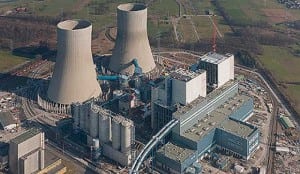
CoalLow River Water Could Cause Problems for German Coal Power Plants
German utility RWE warned energy markets this week that low water levels on the Rhine River may affect the delivery of hard coal to some of its plants.
-
 Coal
CoalPilot Test of Pressurized Fluidized Bed Combustion Carbon Capture Technology Kicks Off in Canada
In a major development for a novel carbon capture technology, developers are preparing to commission a 1-MWt oxy-fired pressurized fluidized bed combustion (oxy-PFBC) pilot test facility in Canada’s capital city, Ottawa. The U.S. Department of Energy (DOE) and its Canadian counterpart, Natural Resources Canada, commemorated the facility’s construction and commissioning in a ribbon-cutting ceremony on October 18 […]
-
 Coal
CoalNew Technology Offers Hope for Cost-Effective Carbon Capture and Storage Systems
Academics at the University of Sheffield—a public research university in the UK—have begun two new carbon capture and storage (CCS) projects, searching for cheaper methods of capturing carbon dioxide (CO2) from fossil-fueled power plants. The work is being funded by the European Commission’s (EC’s) Horizon 2020 Low Carbon Energy program. Solvents Could Be Game-Changing The […]
-
 Legal & Regulatory
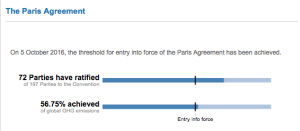
Paris Agreement Meets Final Requirement to Enter into Force
As of October 5, the Paris Agreement—the first global agreement on efforts to limit and mitigate the effects of climate change—had been ratified by a sufficient number of countries, representing at least 55% of global greenhouse gas (GHG) emissions, to bring the agreement into force.
-
 Nuclear
A World View of New Nuclear Power Plant Construction [Slideshow]
According to the International Atomic Energy Agency (IAEA), there are 60 nuclear reactors currently under construction around the world. China leads the way with 20 units in progress, followed by Russia with seven, and India with five. Twelve other countries, including the U.S., round out the list. The IAEA predicts that nuclear power generating capacity […]
-
Coal
Sasan’s Shadow: An Ultra Mega Power Project’s Dark Side
For all its record-breaking achievements for speed, innovation, and efficiency, the 3,960-MW Sasan Ultra Mega Power Project should have been a POWER Top Plant. But the unique project has been plagued by serious setbacks—including loss of life—that show how perilous the plant construction journey can be. A decade ago, India was suffering a power crisis […]
-
 Renewables
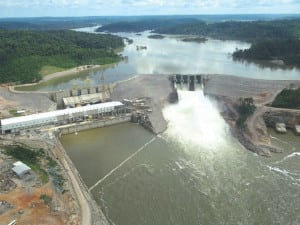
Brazil’s Environmental Agency Halts 8-GW Amazon Hydropower Project
Brazil’s environmental protection agency, IBAMA, in early August canceled development permits for an 8-GW hydroelectric project on concerns about its social and ecological impacts. If built as proposed by a consortium of multinational companies—including Brazilian parastatal Eletrobras and private sector partners GDF Suez/Engie, EDF, Camargo Correa, Neoenergia, COPEL, and Endesa Brasil—the São Luiz do Tapajós […]
-
 Renewables
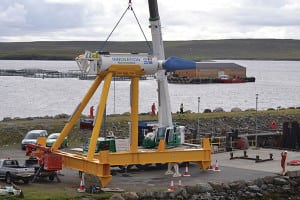
First Scottish Tidal Energy Array Is Connected to the Grid
One of the world’s first offshore tidal energy arrays was connected to Scotland’s grid this August. On its heels is the grid connection of a second array that is owned by a different company. Nova Innovation, a Scottish tidal energy company founded in 2010, on August 28 grid-connected the second of three 100-kW Nova M100 […]
-
International
POWER Digest
Mexico to Launch Pilot Carbon Trade Program. Mexico will launch a yearlong simulation of a cap-and-trade program this November. The pilot program will involve up to 60 companies, allowing them to adapt a
-
 Nuclear
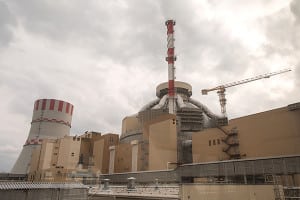
Russia Accelerates Efforts to Build Advanced Nuclear Reactors
Under a government decree published in early August, Russia will build up to 11 new nuclear reactors by 2030, including two BN-1200 sodium-cooled fast-neutron reactors. Russia already has 36 operating reactors
-
 Technology
Chronic Tardiness at South Africa’s Eskom Could Be Its Downfall
South Africa’s state-owned utility faces recent generation shortages, plant construction problems, load shedding, and uncertainty at the African continent’s only nuclear power plant. And that’s just on the generation side. Moves on the business planning and regulatory side are painfully slow and could, some argue, be writing the utility’s obituary. Eskom, South Africa’s state-owned monopoly […]
-
 Legal & Regulatory
Dutch Parliament Vote Could End Coal Power Generation in the Netherlands
The Dutch parliament’s vote in favor of a motion to cut carbon emissions 55% by 2030 could spell the end of coal-fired power generation in the European nation. Although nonbinding, the measure would bring the Netherlands in line with agreements negotiated during the Paris climate talks that took place late last year. What it means […]
-
 Legal & Regulatory
LIVE UPDATES: The Clean Power Plan at the D.C. Circuit
Oral arguments on the merits of the Environmental Protection Agency’s (EPA’s) Clean Power Plan were concluded before an en banc panel (10 judges, rather than the anticipated three) at the D.C. Circuit Court of Appeals on September 27. West Virginia v. Environmental Protection Agency (No. 15-1363) is arguably the most important environmental case in nearly […]
-
 Nuclear
Japan Kills Monju but Not Breeders
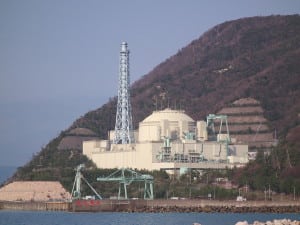
In a widely expected move, the Japanese government finally killed the ill-fated Monju breeder reactor project on September 21, but reasserted its faith in breeder reactor technology as a component of the nation’s future power mix. The Monju plant was an ambitious project that never came close to meeting its backers’ expectations. Launched in 1980, […]
-
 Renewables
Major Challenges in Further Renewable Integration, Report Says
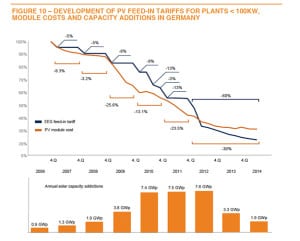
Global resources of variable renewable energy—primarily wind and solar—despite breakneck growth over the past two decades, are beginning to run up against technological and policy limitations on further deployment, and future growth will depend on significant changes in policy and grid design, according to a new report. Released on September 20, Variable Renewable Energy Sources […]
-
 Slideshows
SLIDESHOW: An Alarming Trend Affecting U.S. Baseload Power
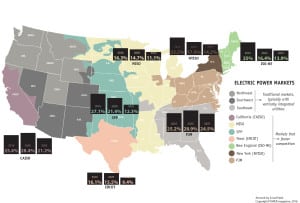
States, regulators, and market participants have in recent years called attention to a trend concerning uneconomic baseload generation in organized wholesale markets, specifically in ISO New England, New York Independent System Operator (NYISO), MISO, PJM, the Electric Reliability Council of Texas (ERCOT), and the California Independent System Operator (CAISO). Cheap natural gas, low power demand […]
-
 Nuclear
UK Approves Hinkley Point C Construction—with Caveats
The $23.8 billion Hinkley Point C nuclear project has received the UK government’s green light, but the country wants to ensure that project’s ownership cannot change without government agreement. After a “comprehensive review” of the project and a revised agreement with French power generator EDF, the UK Department for Business, Energy, and Industrial (DBEI) Strategy […]
-
 Gas
GasSouth Korean Nuclear Plants Shut Down After Record Earthquake
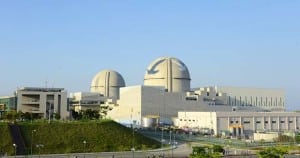
In response to what was a record earthquake for the country, four of South Korea’s 25 nuclear power plants have been shut down as a precautionary measure.
-
 Renewables
Interest Builds for DONG Energy’s Bioresource Power Technology
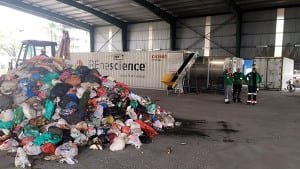
Danish firm DONG Energy has begun building one of the world’s first bioresource power plants that will produce electricity from household waste by using enzymes to convert the waste to biogas. The commercial 5-MW plant under construction in the UK city of Northwich could be commissioned in early 2017. It will use the company’s proprietary […]
-
 Nuclear
Japan Extends Reactor Lifetimes for First Time Since Fukushima
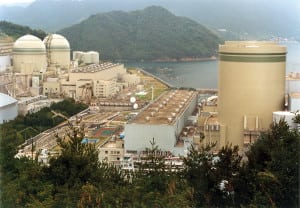
Japan’s Nuclear Regulation Authority (NRA) this June approved 20-year license extensions for the aging Takahama 1 and 2 reactors, a first for the power-strapped country that has been conflicted about the future of its nuclear power plants since the Fukushima Daiichi catastrophe in 2011. A regulatory system established in the aftermath of Fukushima limits the […]
-
 Nuclear
The Nuclear Power Industry Is Increasingly Global—and Complicated
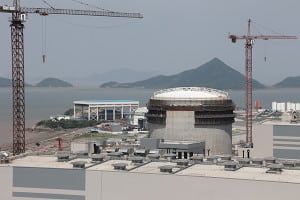
The second World Nuclear Exhibition was held at a moment in time when the prospects for nuclear power are both tantalizing and frustrating. One thing is clear: The dynamics of the nuclear power industry have changed recently—and so have the solutions proposed for achieving greater certainty. One of the strongest arguments nuclear power has going […]
-
 Legal & Regulatory
U.S. and Canada Follow Different Climate Policy Paths—Does One Offer a Competitive Advantage?
Although the U.S. and Canada are both aiming for similar greenhouse gas (GHG) emissions reductions, the two countries are embarking on decidedly different approaches to reaching their goals, according to a report released on August 23. IHS Markit—a company that provides information, analytics, and solutions to customers in business, finance, and government—developed the report, titled […]
-
 Nuclear
Reports: Fukushima Ice Wall Is Showing Little Success at Preventing Groundwater Inflows
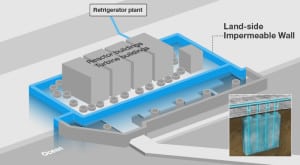
An “ice wall” put up by Tokyo Electric Power Co. (TEPCO) around its four crippled reactor units at Fukushima Daiichi reportedly isn’t working as planned to keep out groundwater flowing into the devastated nuclear plant. According to The Asahi Shimbun, an expert panel at Japan’s Nuclear Regulation Authority on August 18 said that though five […]