
Commentary
-
 Commentary
AI’s Energy Hunger Demands an All-of-the-Above Strategy
Here’s a fundamental truth: there is no AI without energy. And as the technology grows, its demand for energy, and carbon footprint, may never again be as small as it is today. Against this backdrop, debates over which energy source should power AI miss the point. AI’s appetite for energy—relative to what the grid has […]
-
 Commentary
Fusion: The 24/7 Solution Renewables Can’t Match
For decades, renewables like solar and wind have been hailed as the answer to our looming climate and infrastructure challenges. However, persistent issues have surfaced—especially with surging demand from artificial intelligence (AI) data centers and broad electrification. Energy Secretary Chris Wright recently pointed to analysis wind and solar only supply about 3% of raw energy […]
-
 Commentary
Advanced Grid Solutions—Harnessing the Power of Prosumers
Historically, the relationship between energy producers and consumers has been straightforward—energy companies produce energy, grid operators deliver that energy, and end users consume the energy they receive. Energy flowed in one direction, from generators to homes and businesses. Producers and consumers were easy to identify in this market because there was no overlap, and they […]
-
 Commentary
Bill Gates: ‘The Future of Energy Is Subatomic’
I’m lucky to learn firsthand about some of the world’s most cutting-edge technologies. I’ve seen artificial intelligence ace an AP biology test, long before AI became an everyday tool. I’ve seen genetically modified mosquitoes that stop malaria in its tracks. I’ve seen geothermal wells that go 15,000 feet below the surface of the earth. But […]
-
 Commentary
Young Americans Are the Future of Energy—It’s Time to Unleash Them
Throughout the first nine months of the Trump Administration, “energy dominance” has been the agenda. To win the artificial intelligence (AI) race, ensure energy reliability for Americans, and beat China on the world stage, we need more energy – period. But we can’t do it without America’s young people. Fortunately, it’s a dynamic time to get […]
-
 Commentary
Powering AI: From CERA Week Optimism to New York Climate Week Realism
This week, the energy world convenes in New York for the United Nations Climate Week. The gathering will encompass the most vital sectors of the U.S. economy at present—technology firms and utilities will be well-represented, along with a host of consultants, suppliers, experts, and academics, who consistently attend these events. UN Climate Week mirrors another […]
-
 Commentary
Nuclear Power is Not Just About AI—It’s the Linchpin of American Geopolitical Strength
As nations compete for energy dominance, America’s policy framework demands strategic clarity and bold ambition, and nuclear must be at the center of it. As an advocate for an “all-of-the-above” approach where the U.S. invests in energy sources that make sense and are proven economically viable at scale, I champion natural gas for its flexibility, […]
-
 Commentary
How Innovation in Nuclear Power Projects is Rewriting the Business Energy Playbook
Global energy demand is accelerating, and organizations are increasingly turning to nuclear power to secure stable, long-term electricity supplies. Advances in AI, modular design, and predictive analytics are helping overcome legacy hurdles of cost, complexity, and schedule, while business leaders shift capital toward projects that prioritize resilience as much as efficiency.
-
 Commentary
Keep Powering the Energy Transition With Storage Technologies
With the energy transition well underway, energy storage options, including zinc batteries, have been building capacity to meet demand. The International Zinc Association developed the Zinc Battery Initiative to serve as the voice of this safe and sustainable technology and promote its many advantages. Now that zinc batteries have achieved a pivotal milestone–reaching more than […]
-
 Commentary
A Solar Opportunity in C&I: Monetize, Upgrade, Restructure Existing Arrays
In the early 2010s, the “build-to-sell” model dominated the commercial and industrial (C&I) real estate solar market. Building owners, especially REITs (real estate investment trusts), with an understanding and comfortableness in investing in long-term assets, would pay solar developers to build arrays on their roof or parking lot. Owners reaped the benefits associated with solar, […]
-
Commentary
RE+ Opener: Storytelling is Clean Energy’s Missing Link, Says WRISE’s Constance Thompson
As RE+ kicked off America’s largest solar conference on September 8, Constance Thompson, president of WRISE (Women of Renewable Industries and Sustainable Energy), made the case during the “Deep Dive on Storytelling” session that the clean energy transition will stall without one essential ingredient: a compelling narrative. “We are talking about people today,” she opened, […]
-
 Commentary
How Provider Partners Can Help Integrate, Innovate, and Improve Energy Resiliency
We know the current energy grid isn’t enough to handle today’s needs. Across industries, the demand for power is accelerating at rapid-fire speed. Over the next five years, electricity demand from artificial intelligence (AI)-optimized data centers is projected to more than quadruple, according to the International Energy Agency. Fueled by AI use, the U.S. is […]
-
 Commentary
AI and the Grid: Smarter Paths to Renewable Integration and Grid Modernization
According to the U.S. Department of Energy, more than 70% of the nation’s grid transmission lines and transformers are more than 25 years old, straining under the pressures of rising electrification and renewable integration. As power producers, utilities, and grid operators push toward decarbonization targets, the need for more intelligent, responsive, and resilient grid infrastructure […]
-
 Commentary
High Power Prices Are Stoking a Grassroots Wildfire—Here’s How to Respond
As Labor Day beckons, the hottest conversation topic isn’t a hit movie or summer pop anthem, but rather the widespread shock that ratepayers are seeing amidst unexpectedly high power bills. While widely predicted in the spring to those in the industry, this development is already causing headaches for operators and serving as an unpleasant surprise […]
-
 Commentary
Why Grid Hardening Is No Longer Optional
In the past decade, we have seen “once in a century storms” almost every year, flash floods wiping out entire towns, and extreme heat that melts shoes on pavement. Our climate is becoming more extreme, and we need to be proactive in preparing our infrastructure for more to come. The annual average for U.S. billion-dollar […]
-
 Commentary
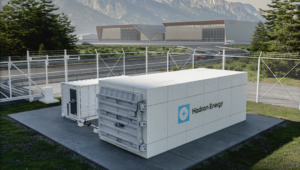
Powering the Data Center Future: Understanding the Resurgence of Nuclear
With billions of dollars pouring into the sector from power players like Google and Amazon, the data center industry is having a moment. But this surge in investment and interest has also brought up serious questions—particularly around how we are going to power these massive computing engines. According to the U.S. Department of Energy, data […]
-
 Commentary
Nuclear Industry Ponders Risks of Building New Reactors
Everybody is now jumping on the pro-nuclear bandwagon. With U.S. electricity demand ramping up due to the rapid build-out of energy-intensive data centers across the country, there is finally broad political and business support for dispatchable 24/7 nuclear power to help meet projected load growth and ensure overall grid reliability. The Trump White House, the […]
-
 Commentary
Transforming Energy Finance Through AI-Driven Processes
The power and utility sector underpins every part of modern life, from residential comfort to industrial productivity. Yet, as the global energy landscape evolves, so must the internal operations that keep these organizations running. COMMENTARY With total U.S. power use expected to reach around 4,189 billion kWh in 2025, and 4,278 billion kWh in 2026, […]
-
 Commentary
How Smarter Cooling Choices Can Cut AI’s Energy Use
Artificial intelligence (AI) is evolving, and so is the demand for the infrastructure behind it. However, for those looking to build a sustainably conscious system, this growth raises a crucial question: What does an energy-efficient data center system look like? While rightfully, much of the attention has focused on controlling energy usage of bigger systems […]
-
 Commentary
Public Safety Power Shutoff? Utilities Must Be Proactive
Yes, you need to shut off the power … 60-plus-mile-per-hour winds whipping down the mountains, ample dry vegetation in their path, and a significant population in the wildland-urban interface (WUI) with unassuming residential areas beyond. These conditions set the stage for catastrophic fires, including those in Eaton Canyon in Los Angeles, California, in 2025, and in […]
-
 Commentary
Beyond Co-Location: The Emerging Opportunity for Vertically Integrated Utilities in the Data Center Boom
The explosive growth of hyperscale data centers is reshaping the power sector at unprecedented speed. In just a few short years, load requests from data center operators have gone from occasional filings to a full-on wave of gigawatt-scale development across North America. While much attention has been paid to the trend of co-locating data centers […]
-
 Commentary
Virtual Power Plants: How to Power the Energy Economy by Stretching Today’s Grid
The challenge posed by surging demand for electricity from data centers and high-performance computing facilities presents an ideal time for innovative energy solutions that efficiently improve grid reliability and increase the availability of clean, affordable electricity. Not only does the U.S. risk missing more than $100 billion of artificial intelligence (AI) market growth over the […]
-
 Commentary
Unlocking Opportunities in AI Through Power Demand, Administration’s Initiatives
The U.S. is bracing for a reality where artificial intelligence and data centers overwhelm the power grid, and rightfully so, as America seeks to lead the global AI race. But this push is coming at the same time that the federal government is reshuffling fiscal priorities and prioritizing energy independence. While that dynamic may seem like a challenging juxtaposition, one thing is clear: regardless of political affiliation or preferred priority, if the U.S. wants to lead the world in AI, it must power it first.
-
 Commentary
Data Is the New Diesel: Understanding the Role of Telematics in the EV Transition
The fleet industry is approaching a pivotal juncture, with electrification increasingly positioned as a potential path forward for businesses working to reduce emissions and operating costs. Yet, during this period with evolving expectations and uncertain environmental regulations, the direction and pace of this transition remain fluid. While momentum is building around the shift from traditional […]
-
 Commentary
Buyer Beware: Deeper Pockets Funding Deeply Speculative Power Sector Expansion
As billions of dollars flood into the historically niche electricity sector, U.S. power generation is having a moment and entering what may be its most consequential investment cycle in decades. The U.S. power space saw record levels of capital investments in 2024. These billions in new investments are coming not just from legacy participants, but […]
-
Commentary
IBEW ‘Strongly Opposes’ GOP’s Draft of ‘Big, Beautiful Bill’; Cites Hundreds of Thousands of Lost Jobs
IBEW International President Kenneth W. Cooper on June 29 issued the following statement on Senate Republicans’ draft reconciliation bill, the so-called “Big Beautiful Bill” that threatens several sectors, including renewable energy: “This budget reconciliation bill is a direct attack on working families, shoveling tax breaks to the rich while turning its back on the people […]
-
Commentary
Energy Policy—We Can’t Afford to Hit ‘Pause’ Now
As Donald Trump took office in January, the administration immediately declared a national energy emergency, explaining that “we need a reliable, diversified and affordable supply of energy to drive our Nation’s manufacturing, transportation, agriculture, and defense industries.” Both ends of the political spectrum agree that the U.S. desperately needs more power on the grid—among other […]
-
 Commentary
Private Equity Reprioritizes for a New Energy Landscape
The advent of President Trump’s second term has heralded significant changes for the U.S. energy industry, and savvy private equity investors are adapting. Six months down the road, the reprioritization of investment opportunities by such savvy private equity investors has delineated some clear—and familiar—near-term winners. Two of the top five private equity investment trends in […]
-
 Commentary
How Digital Modeling of Materials Will Make Next Generation Nuclear Possible
A revolution is underway in the nuclear energy sector. For the first time in decades, the field is brimming with urgency, ambition, and capital. Buoyed by growing energy demands, geopolitical recalibration, and climate pressures, nuclear power is undergoing a renaissance, one that will be driven not just by next-generation reactor designs, but by the materials […]
-
 Commentary
Powering the Future Without Paralyzing It
The future of energy is rapidly evolving. The explosion of artificial intelligence (AI) and the enormous energy infrastructure it demands will continue to drive unprecedented electricity needs. Goldman Sachs projects that U.S. power demand could grow by as much as 20% by the decade’s end, in large part due to the construction of data centers. These […]