
Business
-
Instrumentation & Controls
Quantum Cryptography Promises Un-Hackable Industrial Communications
What if you could send a control message between two points on the electricity grid—say between a control room operator and a turbine or between a system operator and a generating plant—and know that there’s no way that message can be intercepted, altered, or spoofed to effect malicious ends? That possibility may be only a couple of years away.
-
Coal
Edwardsport IGCC Project Start Marks Delayed, Costly Milestone for Coal Generation
Duke Energy’s long-awaited but controversial and cost-overrun-plagued integrated gasification combined cycle (IGCC) coal plant began commercial operation on June 7 in Knox County, Ind.
-
Solar
EU Imposes Antidumping Solar Duties on China as Trade Dispute Escalates
The European Commission (EC) last week imposed a provisional antidumping duty of 11.8% on imports of solar cells, wafers, and panels from China. Manufacturers have welcomed the controversial move, but installers and developers have decried it, saying it escalates a trade war that could drive up the cost of many solar technologies and undermine investment in the sector.
-
Solar
CORRECTED: Challenges to Order 1000 Filed in Federal Court as President Acts on Grid Modernization
Several power companies, state commissions, and trade groups have filed briefs with the U.S. Court of Appeals for the D.C. Circuit challenging parts of the Federal Energy Regulatory Commission’s (FERC’s) Order 1000, a rule they argue will lead to high costs for consumers and diminish the authority of state and regional regulators. Meanwhile last week, the White House issued a memo directing federal agencies to improve siting and permitting process to help modernize the nation’s grid.
-
Coal
FERC Staff: Coal Generation Could See Comeback on Pricier Natural Gas This Summer
A much greater coal power burn is expected this summer in reaction to an anticipated rebound in natural gas prices, suggests a recent reliability assessment from staff at the Federal Energy Regulatory Commission (FERC). Among other key aspects of the new report is that while electric reliability for the rest of the nation will be adequate, Texas could see a significant chance of an energy emergency.
-
Smart Grid
Hudson River 660-MW Transmission Line Begins Service
A 660-MW underground and underwater transmission project linking Ridgefield, N.J., and Manhattan in New York City began operations on Monday.
-
Business
“We’re in This Together Now, and There’s No Going Back.” An Interview with FERC Commissioner Philip Moeller
Commissioner Philip Moeller of the Federal Energy Regulatory Commission talks with Editor Thomas Overton about the progress of gas-electric harmonization, potential risks to reliability in the dash to gas, and the future of gas-fired power.
-
Business
Obama Administration Moves Favor Natural Gas
Dismaying many of its allies and pleasing the gas industry, the Obama administration continued its push in support of natural gas with two recent decisions on fracking and LNG exports. -
Coal
Australia’s New Energy Paradigm
Investments into Australia’s power sector enable the industry to meet the collective goal of becoming a cleaner, greener nation. Download the report.
-
Business
POWER Digest (June 2013)
NRC Poised to Rule on SCE Proposal to Restart San Onofre Unit 2. Southern California Edison (SCE) on April 5 submitted a voluntary request to the U.S. Nuclear Regulatory Commission (NRC) for a license amendment to support restart of Unit 2 of the San Onofre Nuclear Generating Station, and the NRC later said in a […]
-
 History
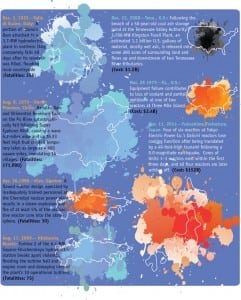
THE BIG PICTURE: Power Accident Impacts
The history of electric power has been stained by several devastating incidents triggered by natural hazards, technological failures, malicious actions, and human error.
-
 O&M
O&MRepower or Build a New Combined Cycle Unit?
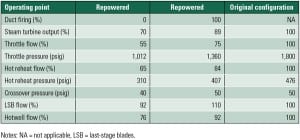
URS recently performed a combined cycle repowering study to determine the feasibility and economics of repowering an existing steam turbine that went into service in the 1950s. The competing option was building a new combined cycle unit. The results of the study provide insight for others considering the same alternatives.
-
Business
Expect U.S. Electricity Consumption to Increase
Lawrence J. Makovich, PhD, IHS CERA’s vice president and senior advisor for Global Power, predicts a rebound in electricity consumption from recession levels. Specifically, the rebound will be stronger than government projections, led by growth in electricity use by industry.
-
 Gas
GasNew England Struggles with Gas Supply Bottlenecks
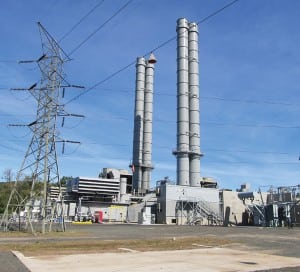
New England’s big push toward gas-fired power collided hard with its historical pipeline constraints this past winter, leaving multiple generators unable to respond to start-up requests from ISO-New England during a major storm. In the wake of the episode, the region is looking for some long-term solutions.
-
 Business
What Is the Worth of 1 Btu/kWh of Heat Rate?
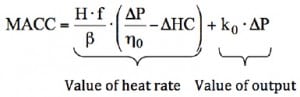
Decisions about design and operational options often are determined by one metric: the impact on the cost of electricity produced. An enhanced screening algorithm for power generation system total ownership cost (capital and operating) and thermal performance (output and efficiency) simplifies the analysis.
-
 Business
Scarce Projects Raise Red Flag for Skilled Labor
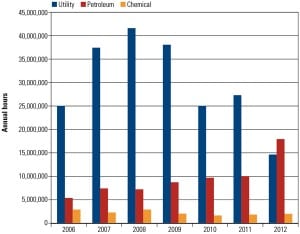
A combination of factors, including a relative scarcity of projects, has cut demand for skilled labor in the power generation sector. Despite the lull, workforce retirements are still expected to challenge the industry.
-
Business
MidAmerican Energy to Buy NV Energy for $5.6 Billion
MidAmerican Energy Holdings Co., a unit of Berkshire Hathaway Inc., is buying NV Energy Inc. for $23.75 a share in cash, or around $5.6 billion. The companies said the deal was unanimously approved by both boards of directors and could be completed in the first quarter of 2014, pending shareholder approval as well as approval by state and federal regulators.
-
Coal
CBO: Carbon Tax Could Be Costly to Economy but Generate Trillions, Avert Climate Change Effects
A carbon tax or cap-and-trade programs could raise trillions of dollars within the first 10 years of their enactment and avert climate change effects, but without accounting for how these revenues will be used, they could take a toll on the U.S. economy, the Congressional Budget Office (CBO) says in a report released on Tuesday.
-
Gas
NERC Calls for Gas Availability to Be Incorporated into Reliability Assessments
The North American Electric Reliability Corp. (NERC), in a special reliability assessment released on Wednesday, called for a number of changes to address the increased reliance on natural gas for power generation, among them incorporating gas availability and gas supply issues into electric reliability assessments.
-
Business
FERC Directs NERC to Develop Reliability Standards Addressing Solar Storm Effects
A final rule issued by the Federal Energy Regulatory Commission (FERC) on Thursday orders the North American Electric Reliability Corp. (NERC) to develop, by the end of the year, reliability standards that address the impact of geomagnetic disturbances (GMD) on the nation’s bulk power system. Those standards will likely require generators and grid operators to develop and implement operational procedures and conduct continuing assessments on equipment to mitigate GMD effects.
-
Gas
DOE Authorizes Second LNG Export Facility (Update)
Freeport LNG Expansion LP and FLNG Liquefaction LLC received conditional authorization on May 17 to export U.S. liquefied natural gas (LNG) from the Freeport LNG Terminal on Quintana Island, Texas, making it the second project to receive federal approval. Meanwhile, Canada is considering a proposed LNG export terminal in British Columbia.
-
Environmental
Moniz Confirmed as Energy Secretary, EPA’s McCarthy Confirmation Nears Full Senate Vote
The full Senate last week confirmed Ernest Moniz as Energy Secretary while a divided Senate Committee on Environment and Public Works (EPW) voted 10–8 to send the nomination of Gina McCarthy as administrator of the Environmental Protection Agency (EPA) to the full Senate for a confirmation vote. Republicans agreed to lift their boycott on the McCarthy vote only after the EPA agreed to meet a number of transparency commitments.
-
Coal
Leadership Changes at Mississippi Power as Kemper IGCC Cost Overruns Soar
Cost overruns of nearly $1 billion to build the 582-MW Kemper integrated gasification combined cycle (IGCC) plant in Kemper County, Miss., were underscored on Monday as Mississippi Power’s Board of Directors took the dramatic step of replacing the Southern Co. subsidiary’s leadership.
-
Gas
FERC Announces Meeting on Coordination of Natural Gas and Electricity Markets
The Federal Energy Regulatory Commission (FERC) announced on May 9 that it will hold a commission meeting on May 16 to address the difficulties posed by inadequate alignment between how natural gas and electricity markets operate.
-
Business
Disruptive Generation: Anxious Utilities Ponder the Threats
Cheap gas-fired power stands to upend more than the dispatch order if some new developments under way bear fruit, as utilities may soon be dealing with generation from home-based fuel cells. -
Coal
Oregon Utility Weighs Gas Power Options as Coal Exports Loom
It’s not all coffee and hydropower in the Northwest, as Oregon’s largest utility looks toward natural gas to help it navigate the shifting shoals of regulation and renewable mandates. -
Wind
Gas Power Needs Wind Generation Too, Says Study
Gas-fired power is due to serve an important role in supporting intermittent renewable generation in the coming decades. But a new study suggests wind power may be able to return the favor—as a valuable hedging resource. -
Business
Flavor of the Decade: What Energy Utilities Can Learn from Verizon
The experience of telecommunications giant Verizon shows why taglines that promise clear, relevant benefits to customers can be invaluable, as long as the company follows through.
-
Supply Chains
TREND: Rare Earth Minerals and Free Markets
Far from precipitating a crisis in high-tech manufacturing, the Chinese attempt to corner the market on rare earth minerals has instead inspired some healthy competition and adaptation.
-
 Business
THE BIG PICTURE: Critical Energy Agendas
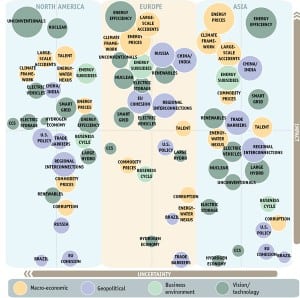
The global energy sector will need to invest half of current world gross domestic product over the next two decades in order to address a number of critical issues and expand and adapt the energy infrastructure, the London-based World Energy Council (WEC) says in its recently released World Energy Issues Monitor. Here are the most […]