
Articles By

-
 News
NewsBusting Myths
The popular television show Mythbusters uses pseudo-scientific means to examine and often expose as fiction familiar urban myths. After made-for-television lab tests, the myth is then classified as either a fabrication (“busted”), entirely possible (“confirmed”), or somewhere in between (“plausible”).
-
 Business
Who Needs an Owner’s Engineer?
In the past, members of a utility’s engineering staff spent their career designing and building new power plants. Today, many utility engineers find that opportunity comes around only once in a career. To fill the experience gap, an “owner’s engineer” company can add to a utility’s team a cadre of highly qualified power engineers who focus on avoiding design errors and keeping the project on schedule.
-
 Smart Grid
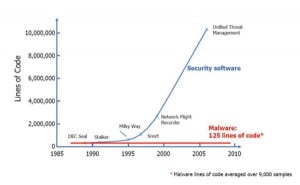
Do Smart Grid Standards Adequately Address Security Problems?
While the cybersecurity threat escalates asymmetrically, federal agencies may be shortchanging cybersecurity while developing smart grid standards designed to protect the emerging smart grid from attack.
-
 O&M
O&MThe Heat Is On at Arctic Air Base
Thule (“Two Lee”) Air Base is a 254–square mile base located in a coastal valley in the northwestern corner of Greenland, within the Arctic Circle. The base, the U.S.’s northernmost military installation, is nestled between mountains and surrounded by icebergs and glaciers as far as the eye can see.
-
 Coal
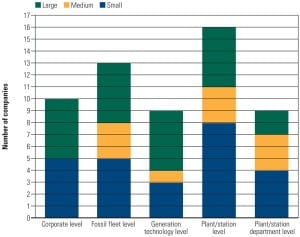
CoalBenchmarking Fossil Plant Performance Measures, Part I: Station-Level Metrics
How does your company prepare and share fossil plant performance data? What data are important, and how much effort is required to collect and report the data? What are the most important statistics for reporting key fossil plant operations? The latest EUCG benchmarking survey reveals the favored fossil performance metrics at several of the largest utilities in eight key categories.
-
Legal & Regulatory
Will Critical Materials Become a Green Roadblock?
Critical minerals—such as rare earth metals—are important to many new energy technologies. However, the U.S. Department of Energy is concerned that foreign control of supply, particularly by China, could limit the ability of these technologies to develop fully, so the DOE is developing a strategy to keep the supply chain open. Meanwhile, some analysts say China is playing a losing game with its hold on the minerals.
-
 O&M
O&MImprove ACC Performance with Automated Pressure Washing
Beginning each spring and continuing through the fall, backpressure readings at Rosebud Operating Services Inc. indicated substantial drops in the condenser’s efficiency. Increased backpressure results in higher net plant heat rate and a corresponding measurable decrease in power generation.
-
 Business
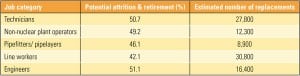
Training Tomorrow’s Power Industry Workers
As U.S. electric utilities watch increasing numbers of older workers leave the workforce, they are left with a shrinking pool of experienced personnel. To meet this growing challenge, a number of educational programs are being offered to help younger workers take advantage of career opportunities in the electric power industry.
-
Supply Chains
Is Peak Coal the Latest Supply Threat?
We’ve heard—endlessly, it seems at times—about "peak oil," the idea that the world is rapidly running out of oil and will face catastrophic consequences. Now talk is emerging about "peak coal."
-
 O&M
O&MPlant Safety: Learn from the Mistakes of Others
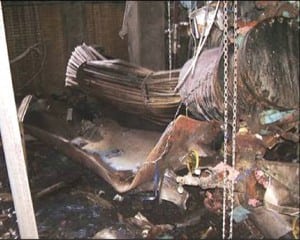
On January 27, the U.S. Chemical Safety Board (CSB) released a case study examining the causes of a heat exchanger rupture and ammonia release at the Goodyear Tire and Rubber Plant in Houston in 2008. Use these lessons learned to check your employee tracking system and to determine whether your plant has installed valves that […]
-
 News
NewsGas-Weighing Scale for Water Treatment Applications
Scale-manufacturer Scaletron Industries added the Model 2305 Digital Single Cylinder Eco-Scale to its product lineup. Designed to provide a more versatile solution for weighing ammonia, carbon dioxide, hydrogen chloride, liquefied chlorine, sulfur dioxide, and other liquid gases used in water and wastewater treatment applications, the scale can weigh cylinders of up 10.5 inches in diameter and […]
-
 Commentary
Why Most Published Research Findings Are False
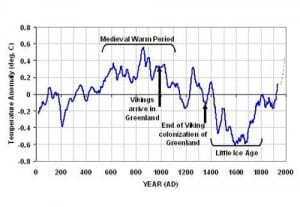
Those aren’t my words—it’s the title of a 2005 article, brought to my attention by Cal Beisner, which uses probability theory to "prove" that "…most claimed research findings are false." While the article comes from the medical research field, it is sufficiently general that some of what it discusses can be applied to global warming research as well.
-
Legal & Regulatory
Proposed Combustible Dust Rule Sparks Debate
A high-stakes dustup is shaping up in connection with the U.S. Occupational Safety & Health Administration’s (OSHA’s) proposed new standard to regulate combustible dust. When and if enacted, this new OSHA regulation will definitely affect the way personnel handle coal at power plants that use it for fuel.
-
 News
NewsIndustrial Vacuum for Combustible Dusts
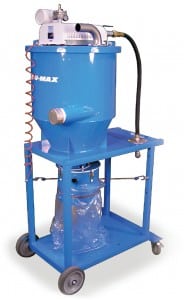
The new VAC-U-MAX Model 860/02 is suited for operators who want to eliminate drum handling and who need to collect and discharge powders in a safe, dust-free, and convenient way. The Model 860/02 uses the field-proven VAC-U-MAX Air-Powered Vacuum cover with manual pulse-jet filter cleaning and nonstick filtration that captures 99.9% of particles as small […]
-
Commentary
Got Remedies? NLRB Acting General Counsel Does, and Employers Should Beware
National Labor Relations Board Acting General Counsel Lafe Solomon is continuing his focus on remedies in unfair labor practice cases involving union organizing campaigns. On September 30, 2010, he issued a memorandum on Section 10(j) injunctions for discriminatory discharges during such campaigns. Now he has released another memorandum, this one targeting remedies regional offices should seek when they issue complaints in ULP cases involving campaign activity.
-
 O&M
O&MTECO’s San José Plant Models Safe and Sustainable Practices
In operation since 2000, TECO Energy Inc.’s 132-MW San José Power Station was the first coal-fired power plant built in Central America and is still the largest one. Used as a baseload plant, the facility successfully combines high availability with a business model that promotes sustainable environmental practices and a safe workplace.
-
 News
NewsMultiparameter Transmitter for Water Purity Monitoring
Mettler-Toledo Process Analytics Division introduced the Thornton model M800 multiparameter transmitter for monitoring water purity. Multiparameter measurement is ideally suited for facilities where precise measurement of conductivity/resistivity, pH, dissolved oxygen, dissolved ozone, flow, and temperature of ultrapure water is critical. As displayed on the device’s full-color, high-resolution touch screen, the M800’s exclusive integral predictive maintenance […]
-
Commentary
Chill Out
Chill out, relax, enjoy the ride, and take the real road to success. It’s the journey that counts and you can’t get to the end of the road without traveling along it.
-
 Coal
CoalCanada’s “Clean” Image Extends to Clean Power
Canada’s extensive natural resources are the driver of its powerful economy, and energy is Canada’s single most important export. Yet policy makers across the nation are currently dealing with the consequences of a generation of under-investment in the electricity system and deciding what the new grid and supply mix should look like. Several provinces are competing to lead the charge in renewable energy and grid intelligence. Policy makers hope that such efforts will not only provide for Canada’s electricity needs but also create the green economy jobs that will drive the nation’s next generation of economic development.
-
 News
NewsMetal Seat Ball Valves for High-Temperature, Abrasive Surfaces
The new M-series metal seat ball valves from A-T Controls are engineered with specially coated matched balls and seats to stand up to high temperatures, high pressures, and abrasive materials encountered in the power generation industry. Valves in the M-series have a temperature range of –20F to 661F and a pressure rating up to ANSI […]
-
 Hydro
HydroTransmission and Distribution in Canada
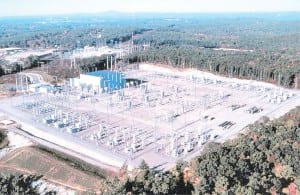
Like its neighbor to the south, Canada faces enormous costs to upgrade and expand its transmission and distribution system. The desire to integrate more renewable power into the grid, build a smarter grid, and export more power are providing the rationale for action, but capital and political will lag behind.
-
 News
NewsTube Fabrication Tools Package
Parker Hannifin Corp. has assembled a comprehensive and complementary package of heavy duty hand-operated tube fabrication tools for small-bore tube assembly. Parker’s new tube fabrication equipment package provides all the equipment necessary to successfully install tube fittings—both CP and A-LOK—in various system applications. Available for a broad spectrum of instrumentation tubing sizes, the tools include […]
-
 Coal
CoalCanada’s Provincial Power Strategies
In Canada, as in the U.S., where you live determines the type of generation technology that provides your power. Here’s how the four most energy-intensive provinces in Canada are responding to the challenge of providing reliable and cheap power in a sustainable way.
-
 News
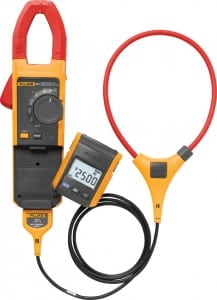
NewsClamp Meters for Technician Safety
Fluke introduced a new family of clamp meters that is engineered to give electricians and maintenance technicians new ways to ways to work safely and reduce their exposure to electrical shock. The new Fluke 381 (shown here), 376, 375, and 374 current clamps and iFlex current probes are rated for use in measurement category IV […]
-
 Coal
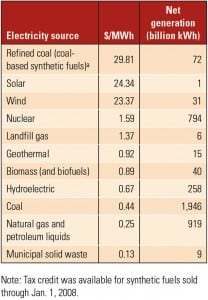
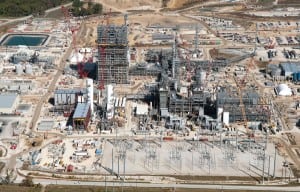
CoalU.S. and China Push Forward with Cleaner Coal Projects, Amid Setbacks
In his January State of the Union speech, President Barack Obama called on Congress to pass legislation that would allow the U.S. to source 80% of its electricity from “clean energy” sources by 2035—including traditional renewable sources like wind and solar as well as nuclear and “clean coal.” That broadened definition of “clean energy” was designed to inspire bipartisan interest, as was widely reported. But, as was also widely pointed out, the speech followed a visit to Washington from Chinese government officials and a series of key agreements aimed at increasing “clean energy” cooperation between the two countries.
-
 Gas
GasRAM Process Optimizes IGCC Design
New methods of reliability, availability, and maintainability (RAM) evaluation help facilitate more-accurate plant output and revenue predictions, identify strengths and weaknesses of possible plant configurations, and determine potential improvements and enhancements for integrated gasification combined cycle plants.
-
Commentary
A Report Card on Stimulus Support for Renewable Energy
Prior to the crash, the renewable energy industry—including wind, solar, geothermal, and other renewable energy sources—was on a roll. In 2007 and 2008, the U.S. wind power sector alone added over 13,500 MW of new projects, enough to power almost 4 million homes.
-
 Nuclear
Small Nuclear Reactor Concept Goes Underwater
France in January announced its contribution to the wave of small and modular reactors (SMRs): a submarine-like nuclear plant that can be submerged in waters 60 meters (m) to 100 m deep and several kilometers offshore.
-
 O&M
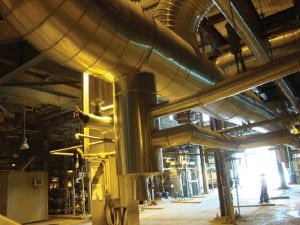
O&MProper Sizing of Steam Header Drains Prevents Water Induction
Steam turbines convert the thermal energy in motive steam to rotating mechanical energy, and the generator converts that energy into electrical power. One important requirement for safe and reliable operation is preventing water induction in the steam turbine and avoiding water hammer in the steam piping system. ASME standards present the design guidelines for removing moisture from steam lines; this article explains a practical design process.
-
 Hydro
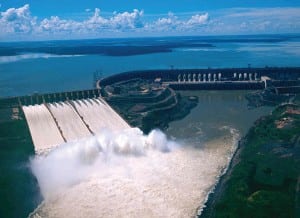
HydroBrazil Greenlights 11-GW Belo Monte Project
Brazil’s environment agency, IBAMA, in January issued a partial installation license that allows for construction of the controversial Belo Monte dam complex, an 11,233-MW project estimated to cost some 19.6 billion reals (US$11.7 billion), to begin on the margins of the Amazon’s Xingu River. Saying the project is needed to meet soaring electricity demand when completed, as planned in 2015, the government gave license to dam-building consortium Norte Energia to begin clearing 238.1 hectares (588 acres) of forestland.