
In the push for more efficient and streamlined permitting processes, recent changes from Congress, the U.S. Supreme Court, and the executive branch have reshaped the National Environmental Policy Act (NEPA) landscape. These changes are particularly important against the backdrop of the emergence of artificial intelligence (AI) and data centers, which is driving significant increased energy demand. This article provides an overview of the new NEPA landscape and implications for the permitting of energy infrastructure needed to power the AI boom.
Congress enacted significant bipartisan changes to NEPA in amendments from the Fiscal Responsibility Act of 2023 (FRA) and the One Big Beautiful Bill Act (OBBBA) in 2025. These amendments streamlined the NEPA review process.
The FRA encouraged more efficient NEPA reviews by, among other things, defining “major Federal action,” clarifying that the scope of NEPA review is focused on “reasonably foreseeable environmental effects,” and establishing page limits and deadlines for environmental impact statements (EIS) and environmental assessments (EA). The OBBBA further amended NEPA by creating a framework that allows developers to opt in to expedited NEPA review if they pay 125 percent of the anticipated costs to prepare or supervise an EA or EIS. Once a developer pays this fee, the OBBBA directs relevant agencies to complete an EA or EIS in 180 days or one year, respectively.
Supreme Court Issues ‘Course Correction’ for NEPA Reviews
The U.S. Supreme Court on May 29, 2025, issued Seven County Infrastructure Coalition v. Eagle County, which constituted a self-proclaimed “course correction” for NEPA jurisprudence. The Court recognized that lower courts have been aggressive in policing agency compliance with NEPA, thereby creating unpredictable judicial review. As a result, even though NEPA is procedural in nature, many critical infrastructure projects have been slowed or abandoned due to ever-increasing review timeframes and the threat of litigation from project opponents. The Court determined that, in approving the construction of a new railroad transporting crude oil, the Surface Transportation Board was not required to consider effects from increased oil drilling upstream or increased oil refining downstream because those impacts were from separate actions over which it did not exercise regulatory authority. The Court held that 1) NEPA requires courts to afford agencies “substantial deference,” and 2) NEPA does not require agencies to analyze “effects from potential future projects or from geographically separate projects.”
This case reinforced longstanding Supreme Court holdings on the limited scope of NEPA reviews and is likely to improve the NEPA process by providing support for agencies to focus their reviews on impacts associated with their authorizations.
In February 2025, following a landmark D.C. Circuit decision holding that CEQ lacks authority to promulgate binding regulations (Marin Audubon Society v. Federal Aviation Administration), and President Trump’s Executive Order (EO) 14154, Unleashing American Energy, the Council on Environmental Quality (CEQ) published an interim final rule rescinding its regulations implementing NEPA. In corresponding guidance, CEQ directed agencies to revise their regulations to expedite permitting approvals and for consistency with the 2023 NEPA Amendments. On September 29, 2025, CEQ issued revised guidance, which included a template for agencies to use to ensure consistency with recent statutory changes, Seven County, and CEQ directives to streamline and improve permitting.
The Trump administration is focused on streamlining the permitting process, particularly for fossil fuel generation and infrastructure that supports energy dominance goals and data center expansion. Consistent with these goals and CEQ’s directives, the Department of Energy (DOE), Army Corps of Engineers (Corps), and the Department of Interior (DOI), among other agencies, have revised their NEPA procedures to include streamlined processes (e.g., EA and EIS deadlines, fewer public comment requirements, expanded categorical exclusions, allowance for applicant-prepared documents) and clarifications on the limited scope of NEPA reviews (e.g., application of Seven County standard for effects to be considered in a NEPA review, examples of actions that are not “major federal actions” requiring NEPA reviews).
Prioritizing Energy Generation and Delivery in the AI Boom
Load demand is projected to increase precipitously in the coming years, with one study projecting a 35% to 50% increase between 2024 and 2040. The causes of increased load demand are many, but in the near term one stands above the rest—the rapid rise of AI and corresponding buildout of data centers. A recent DOE study estimates that data center load growth has tripled over the past decade and is projected to double or triple again by 2028. The demand for electricity from AI data centers is driving investments in new power generation, grid upgrades, and sustainable energy sources. The realization that more capacity is needed, and quickly, has prompted government and industry action.
Increasing the nation’s generation capacity has been a central priority for the Trump administration. On Jan. 20, 2025, President Trump signed two EOs—Unleashing American Energy and Declaring a National Energy Emergency—that recognize a robust generation profile as critical for America’s economy and national security. Pursuant to those EOs, several federal agencies enacted “emergency procedures” to expedite their permitting timelines for energy-related projects under statutes including NEPA, the Clean Water Act, the Endangered Species Act, and the National Historic Preservation Act. Based on the Administration’s directives, agencies are prioritizing permitting for projects that support energy (particularly fossil fuel) development.
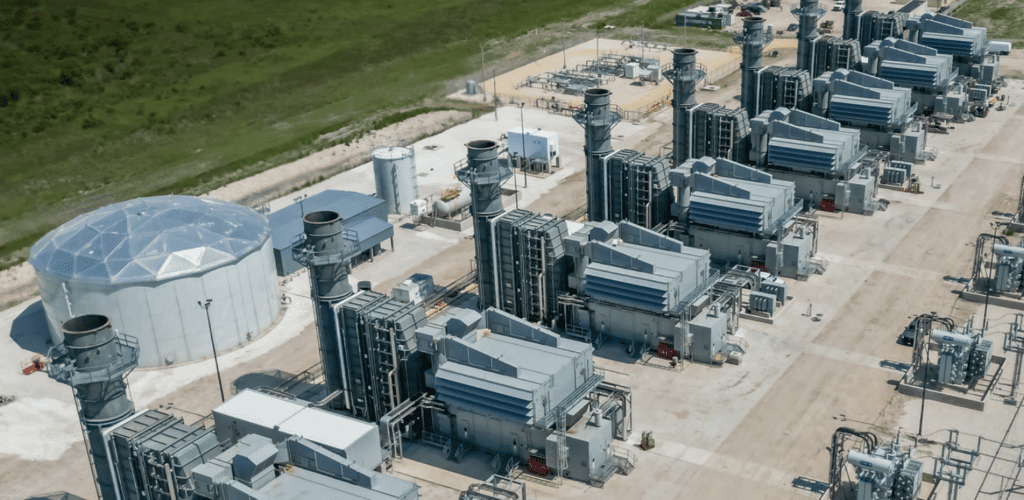
In July 2025, President Trump issued a series of AI-related EOs and an AI Action Plan. The EO titled Accelerating Federal Permitting of Data Center Infrastructure calls for accelerated permitting for projects such as natural gas turbines, coal power equipment, nuclear power equipment, geothermal power equipment, and “any other dispatchable baseload energy resources, including electrical infrastructure (including backup power supply)” serving a data center project. The EO directs CEQ and relevant agencies to identify or establish categorical exclusions that could facilitate the construction of qualifying data center projects without preparing an EIS or EA. The EO also authorizes the designation of qualifying projects as “transparency projects” for the purpose of listing on the FAST-41 permitting dashboard and directs the Corps to develop a Clean Water Act section 404 nationwide permit to facilitate efficient permitting for data centers and associated infrastructure. More recently, the Secretary of Energy directed the Federal Energy Regulatory Commission (FERC) to initiate rulemaking procedures under 42 U.S.C. § 7173 to expedite and facilitate the interconnection of “large loads” (e.g., data centers) to the interstate transmission system.
Power Generation and Data Center Projects Can Benefit from Streamlined Permitting in the New NEPA Landscape
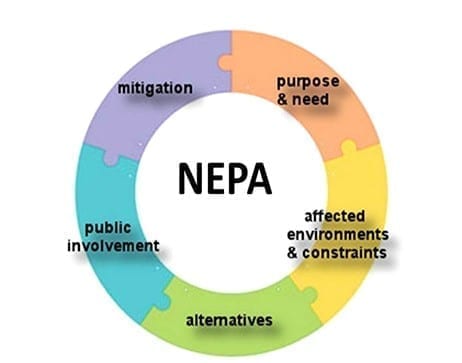
Whether and how NEPA applies to power plant and data center permitting turns on the federal authorizations and/or financing that is required for the project. NEPA is required for “major Federal actions significantly affecting the quality of the human environment.”
“Major Federal actions” are those that are “subject to substantial Federal control and responsibility.”Federal involvement can take many forms, such as authorization from the Bureau of Land Management or National Park Service for projects on or crossing public lands or parks, permits from the Corps for the fill of “waters of the United States,” or DOE grants or loan guarantees.
Depending on the federal agency action required for the project, the agency will determine the appropriate level of NEPA review (if any) and prepare a NEPA analysis in the form of a categorical exclusion determination, EA, or EIS. New agency procedures and the focus on streamlined NEPA reviews for energy development projects should result in opportunities for power generation infrastructure to complete NEPA reviews that are limited in scope and completed efficiently. Project applicants can play a key role in the process by, for example, funding NEPA reviews through the OBBBA provision and/or preparing NEPA documents for agency review. To the extent such NEPA reviews are challenged, the agencies’ analysis will be given substantial deference under Seven County.
In sum, the changes in NEPA and focus on permitting reforms should provide opportunities in the coming years for more streamlined NEPA reviews that facilitate the development of energy infrastructure and the data center buildout.
—Kerry L. McGrath is a partner, Nathan R. Menard is an associate, and Sadie E. Mapstone is an associate, all with the law firm Hunton. McGrath and Menard can be reached at kmcgrath@hunton.com and nmenard@hunton.com, respectively, or via the firm’s website at https://www.hunton.com