
inverter-based resources
-
 blackouts
THE BIG PICTURE (Infographic): Blackouts in 2025
Major power outage events in 2025 reveal a broad spectrum of reliability risks, spanning voltage instability and protection failures to extreme weather and heat-related transmission stress. Compared with recent years, which were largely characterized by weather-driven disruptions and resource-adequacy events, 2025 incidents more clearly highlight vulnerabilities in interconnected system operations, including voltage management, reactive power […]
-
 Legal & Regulatory
NERC’s Summer Grid Outlook Shows Progress, but Elevated Risks Persist as Load Growth Outpaces Flexibility
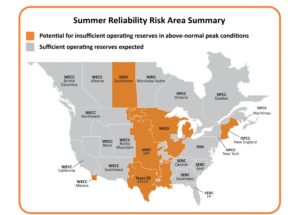
All regions across the North American bulk power system (BPS) are generally positioned to meet peak demand under normal summer conditions, though elevated risks of electricity supply shortfalls could persist under extreme heat, surging demand, and resource variability, the North American Electric Reliability Corp. (NERC) warns. In its May 14–released 2025 Summer Reliability Assessment (SRA), […]
-
 T&D
T&DA New Paradigm for Power Grid Operation
Power grids operate like an intricate ballet of energy generation and consumption that must remain perfectly balanced at all times. The grid maintains a steady frequency (60 Hz in North America and 50 Hz in many other regions) by matching power generation to demand in real-time. Traditional power plants with large rotating turbines and generators […]
-
 Energy Security
Eight Critical Reliability Challenges NERC Is Confronting for Grid Stability
The “hypercomplex” risk environment in which the North American power sector operates is underscoring the urgency for strategic initiatives to enhance grid reliability and security across North America, the head of the North American Electric Reliability Corp. (NERC) told reporters on April 4. NERC CEO Jim Robb, in a briefing, said the hypercomplex risk environment […]
-
 Energy Security
Rethinking Energy Reliability with Modern Power Systems
As the energy transition to inverter-based resources continues, reliability risk increases and requires additional investment to mitigate threats. But what measures should be put in place, what are the