
Latest
-
 Cybersecurity
Survey: Two-Thirds of Energy and Manufacturing Firms Hit By Cyberattacks
A report released July 10 finds alarming gaps in the security of the world’s critical infrastructure. The study—sponsored by Unisys and conducted by Michigan-based security research firm Ponemon Institute—was based on an Internet survey of 599 respondents from 13 countries in the oil and gas, utilities, alternative energy, and manufacturing industries conducted in April and […]
-
 Renewables
Net Metering Not Necessarily a Burden on Those Without Solar
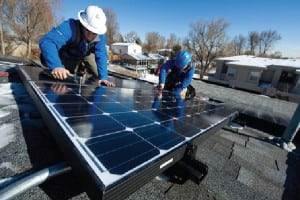
Nevada utility NV Energy’s net metering program does not significantly impact homeowners without rooftop solar, according to a study prepared for the Nevada Public Utilities Commission (NPUC) this month. The study was conducted by San Francisco–based Energy and Environmental Economics (E3) at the request of the NPUC after the passage of a Nevada law last […]
-
 News
NewsAPS Agrees to Pay $3.25M Blackout Penalty
Arizona Public Service Co. (APS), the Federal Energy Regulatory Commission (FERC), and the North American Electric Reliability Corp. (NERC) reached a settlement on July 7 related to the Sept. 8, 2011 blackout that left more than 5 million people in the Southwest without power. As a result of the agreement, APS will pay a $3.25 […]
-
 Gas
GasNatural Gas Inventories Rebounding Strongly, Still Low
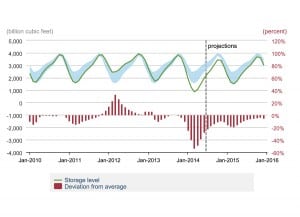
After bottoming out at 822 billion cubic feet (Bcf) the week ending Mar. 28—the lowest level since April 2003—U.S. inventories of natural gas in underground storage have risen sharply this summer, though levels remain below recent averages, according to Energy Information Administration (EIA) data. Following a severe winter in which the country burned through a […]
-
 Coal
CoalLegal Fight Over Sunflower Coal Plant Resumes
The battle over Sunflower Electric Cooperative’s plans to build an 895-MW coal-fired power plant in Holcomb, Kan., returned to court on Friday. The Sierra Club, represented by Earthjustice, filed a lawsuit challenging a new air pollution permit recently issued by the Kansas Department of Health and Environment (KDHE) to Sunflower to build its proposed Holcomb […]
-
 Wind
WindDOE Takes Steps to Offer Cape Wind $150M Loan Guarantee
The much-delayed Cape Wind offshore wind project could be the latest recipient of a federal loan guarantee from the Department of Energy (DOE). The agency on Tuesday announced the first step toward issuing a $150 million loan guarantee with a conditional commitment to Cape Wind Associates. The guarantee will support construction of the 360-MW offshore […]
-
 Nuclear
New Argentine Nuclear Reactor Begins Operation
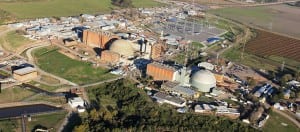
The Atucha II nuclear power plant—a 745-MW pressurized heavy water reactor located in Lima, in Argentina’s Buenos Aires province—was synchronized to the Argentine electrical grid on June 27. Construction on the plant began in 1981, but was halted from 1994 until the government re-launched the Argentine nuclear program in 2006. At the time, expectations were […]
-
 Power
PowerNRC Issues Safety Finding to Wolf Creek Nuclear Plant
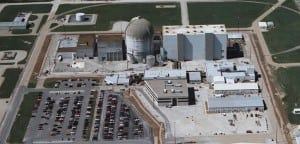
On July 2, the Nuclear Regulatory Commission (NRC) issued a “white” inspection finding to the Wolf Creek Generating Station in Burlington, Kan., in response to a deficiency identified during an emergency preparedness exercise conducted last year. Inspectors observed the biennial exercise on Nov. 5, 2013, to assess if the drill adequately tested elements of the […]
-
 Renewables
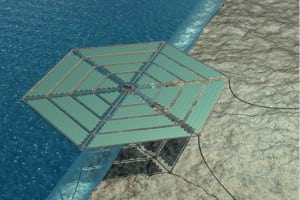
India Plans Large-Scale Floating Solar PV Plant
National Hydro Power Corp. (NHPC) and the Renewable Energy College (REC) of Kolkata have partnered to develop a 50-MW floating solar photovoltaic (PV) plant in the Indian state of Kerala, according to a report in the Economic Times. The project would represent the largest floating solar PV plant in the world, dwarfing a 1.2-MW plant […]
-
 Renewables
Renewables to Dominate Energy Investment through 2030, Says Report
Continually falling costs and tightening emissions regulations are set to drive huge growth in global renewable energy capacity despite flagging support for subsidies in Europe and the U.S., says a new report from Bloomberg New Energy Finance (BNEF). The BNEF report projects global spending on new power generation will be around $7.7 trillion through 2030, […]