
Latest
-
 Coal
CoalEPA Issues Final Cooling Water Intake 316(b) Rule
A final rule released by the Environmental Protection Agency (EPA) today will affect cooling water intake structures at 544 U.S. power plants and provide those plants with lower-cost compliance options than previously proposed to reduce fish impingement and entrainment. The final rule issued under Section 316(b) of the Clean Water Act applies to facilities that […]
-
 Wind
WindCommerce Backs Distributed Wind Growth
The U.S. Department of Commerce on May 13 awarded the Distribution Wind Energy Association (DWEA) a two-year grant to develop a roadmap to identify common manufacturing gaps for distributed wind equipment. The $488,634 grant from the National Institute of Science and Technology (NIST) calls on DWEA to form the “Strategies for Manufacturers Advancing Research and […]
-
 Coal
CoalDuke Energy to Replace Florida Coal Units with Gas Generation
Duke Energy Florida will retire five coal-fired units in response to environmental rules, but it plans to replace them with new gas-fired generation, including a $1.5 billion combined cycle plant in Citrus County that could come online as soon as 2018, the company said on Tuesday. Duke Energy’s Florida-based subsidiary said it would retire Units […]
-
 Legal & Regulatory
Federal Court Hands EPA Legal Victory on Fine Particulate Matter
A three-judge panel of the U.S. Court of Appeals for the District of Columbia last week upheld the Environmental Protection Agency’s (EPA’s) primary National Ambient Air Quality Standards (NAAQS) for fine particulate matter (PM2.5), dispensing to the agency its third major legal victory on air pollution in a month. The EPA in December 2012 issued […]
-
 Coal
CoalStudy Finds Existing Coal Fleet Is Vital for Meeting U.S. Power Needs
In late January, Secretary of Energy Ernest Moniz requested a study of existing U.S. coal-fired power plants to assess options for enhancing capacity, efficiency, and emissions profiles of the present generation fleet. On May 14, the National Coal Council (NCC), an advisory group that provides recommendations to the Secretary of Energy on policy matters relating […]
-
 Nuclear
Lawmakers, Stakeholders Assess Soundness of Nuclear Decommissioning Process
Three U.S. senators on Tuesday introduced a trio of bills to improve the safety and security of decommissioning reactors and the storage of spent nuclear fuel ahead of Wednesday’s full Senate committee hearing on nuclear reactor decommissioning. The three bills were introduced by Sens. Barbara Boxer (D-Calif.), chair of the Senate Committee on Environment and […]
-
 O&M
O&MCoal Silo Fires and Hot Spots: Extinguishing and Preventing Recurrence
Many coal-fired power plants in operation today do not have a fire-extinguishing medium installed in their coal storage silos. CO2 injection would generally be the preferred method, and is used in many plants, but what do you do when your plant was left without this option after construction? Wet or just plain “hot” coal making […]
-
 Partner Content
Advanced Membrane Degassing Technology for Radiation Source Term Reduction and Corrosion Control in Nuclear Power Plants
Dissolved gas control in a nuclear power plant’s water system, including the primary make-up water storage tank and refueling water storage tank, can be essential to reduce radiation source term (defined as a release of radioactive material). Controlling dissolved gases can also help reduce the formation of unwanted radionuclides, such as 14C and oxides of
-
 News
NewsEIA Projects Flat Growth in Electricity Demand, Big Jumps in Gas and Renewables
The Energy Information Administration (EIA) Annual Energy Outlook 2014 (AEO), released on May 7, projects slow growth in electricity demand through 2040, with natural gas and renewables taking an increasing share of the generation mix while coal and nuclear continue to decline. The 2014 AEO sees the current weak growth in electricity demand continuing through […]
-
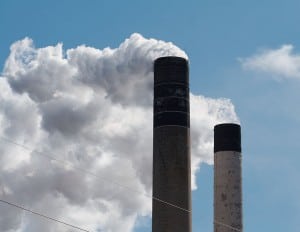 Coal
CoalState Officials to EPA: Allow Energy Efficiency for Compliance with Existing Power Plant Carbon Rule
The Environmental Protection Agency (EPA) should allow states to use energy efficiency programs as a way to comply with its forthcoming rule that will regulate carbon dioxide emissions from existing power plants, state energy officials, regulatory utility commissioners, and clean air agencies from more than 45 U.S. states urged the agency on Thursday. In a […]