
Latest
-
 Renewables
Eleven Hydroelectric Plants in Northwest to Change Hands
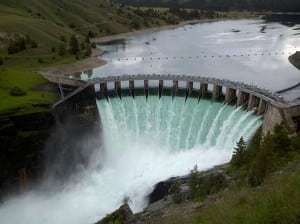
The Montana Public Service Commission (MPSC) on Sept. 4 approved Northwestern Energy Corp.’s request to purchase 11 hydroelectric power plants in the state from PPL Montana for $880 million. The plants, which comprise PPL Montana’s entire hydroelectric profile, total 630 MW of generation. Nine are run-of-river plants; the other two, the Mystic Lake Dam in […]
-
 Partner Content
Taking the Mystery out of Choosing Electrostatic Precipitator (ESP) Power Supplies for MATS PM Control
Many coal-fired power plants will upgrade their aging electrostatic precipitators to meet the particulate matter emissions requirements established by the Mercury and Air Toxics Standards established by the U.S. Environmental Protection Agency…
-
 Partner Content
Intelligent Heat Transfer Management through Individual Sootblowing Optimization
This paper highlights the successful application of individual sootblowing optimization with Babcock & Wilcox Power Generation Group, Inc.’s Powerclean® intelligent sootblowing system on a coal-fired utility boiler in the United States…
-
 Partner Content
Techno-economic Analysis of a 550 MWe Atmospheric Iron-Based Coal-Direct Chemical Looping Process
B&W PGG, in collaboration with The Ohio State University, has performed a techno-economic analysis of a commercial 550 MWe iron-based Coal-Direct Chemical Looping power plant…
-
 Partner Content
Coal Flow Optimization with B&W PGG’s EvenFlow™ System
Coal flow imbalance is an issue of concern for many pulverized coal-fired boilers in the power generation industry…
-
 Partner Content
National Steel City – Ready For Natural Gas Fired Generation
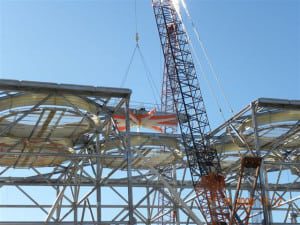
National Steel City (NSC), one of the nation’s leading steel and power industry equipment installation construction companies, is effectively positioned to support the surge in Utility market growth from Natural Gas-Fired projects.
Natural Gas-Fired Generation has been projected to increase by 3 to 4 percent a year for the next 10-plus years. Many of the new -
 Legal & Regulatory
Fracking Fissures: Will Politics Impede Production?
They call themselves “Fractivists.” Environmental and community activists fearful of relatively new natural gas and oil drilling technologies that have transformed the U.S. energy economy have launched a high-profile, highly hyped campaign to shut down new natural gas production. But their prospects of success look dodgy. Ground Zero in the debate over fracking—shorthand for the […]
-
 Legal & Regulatory
EPA Approves Nation’s First Underground Injection Permits for Carbon Sequestration
The Environmental Protection Agency (EPA) on Tuesday granted the nation’s first four Class VI underground injection permits for carbon sequestration to the federally backed FutureGen 2.0 carbon-capture-and-storage (CCS) project. The Department of Energy formally committed $1 billion to the $1.68 billion project being developed by the FutureGen Industrial Alliance, a coalition of coal producers, users, […]
-
 Nuclear
Finland EPR Nuclear Reactor Construction Now Lags Almost a Decade Behind Original Schedule
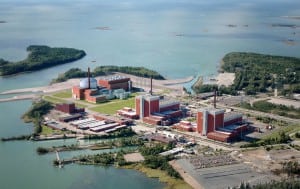
The European Pressurized Reactor (EPR) under construction in Finland may not start operating until late 2018—putting the project nearly 10 years behind its initial schedule. Finnish utility Teollisuuden Voima (TVO) said in a statement on Sept. 1 that the AREVA-Siemens consortium building Olkiluoto 3 had updated its schedule. The schedule review, which “has been going […]
-
 Power
PowerNuclear Plant Deals with Water Shortage Emergency
On Aug. 28, the South Florida Water Management District (SFWMD) approved an emergency order allowing Florida Power & Light (FPL) to divert water from the district’s L-31E Canal system to help moderate unusually high temperatures and salinity that are occurring in the Turkey Point cooling canal system (CCS). The CCS—an approximately 5,900-acre network of unlined […]