
Latest
-
 Partner Content
Generator Rotor Stub Shaft Repair
Sponsored by:
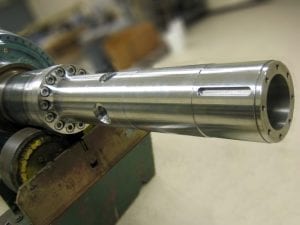
Mechanical Dynamics and Analysis (MD&A) was retained by a utility to perform a stub-shaft repair of a generator rotor collector-end shaft. The customer reported that the generator rotor had suffered a collector ring failure and also a ground to the main shaft. Major arcing and heat damage occurred to the generator rotor forging shaft. The utility weighed […]
-
 Partner Content
Thermodynamic Analysis on a Steam to Combined Cycle Plant Conversion
Sponsored by:
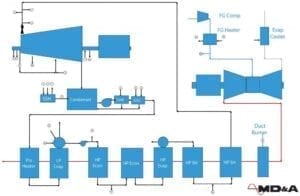
Mechanical Dynamics & Analysis (MD&A) experts recently performed a thermodynamic analysis to assist our client in converting their coal and natural gas plant to combined cycle operation. The customer was able to locate a gray market Gas turbine and Heat Recovery Steam Generator (HRSG). Our team modeled how each component would interact with one another, and were […]
-
 Partner Content
Gas Turbine Parts Lifetime Extension Clinic
Sponsored by:
MD&A’s San Antonio Service Center can extend the service life of gas turbine components whose OEM service limit has passed or whose configuration is no longer suitable to operate. Significant savings can be realized by opting for lower-cost repaired spares instead of new parts. Elevated temperatures take a big toll on gas turbine components. Repair […]
-
 Partner Content
A-10 Rotor Straightening & High Speed Balance
Sponsored by:
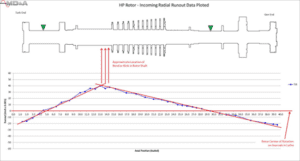
Mechanical Dynamics and Analysis inspected and repaired an A-10 frame High-Pressure rotor. The unit was a 3600 rpm, 90 MW combined cycle unit. MD&A’s Turbine-Generator Repair Facility performed the incoming inspections / evaluations, repair straightening of the rotor, final inspections, as well as high speed balance. Incoming inspections and evaluation consisted of blast cleaning, NDE, visual inspections, […]
-
 Legal & Regulatory
THE BIG PICTURE: Trump’s Regulatory Targets
President Trump campaigned on a promise to reduce regulation and control regulatory costs. One of his first actions after taking office was to issue an executive order calling for the elimination of two existing regulations for every one new regulation issued. Toward that end, the Trump administration has acted or sought to reverse more than […]
-
 O&M
O&MSelect Boiler Chemistry in the Design Phase of Project Life
On many combined cycle projects, the major decisions about boiler chemistry are left until after the plant has been designed, equipment is procured, and construction is well underway. However, the best time to make these chemistry decisions is in the design phase of the project. That enables the engineering, procurement, and construction (EPC) contractor to […]
-
 Renewables
Australia Braces for Power System Transformation, Disruptions
The inaugural integrated system plan (ISP) released by Australia’s Energy Market Operator (AEMO) in mid-July warns that the country is in the midst of a “transformative and unprecedented” rate of change
-
 Renewables
Egypt Brings New Natural Gas and Wind Power Plants Online
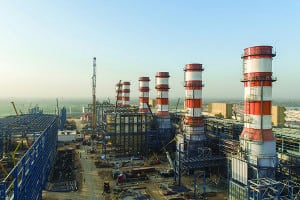
New natural gas-fired power plants and wind farms are part of Egypt’s strategy to increase the country’s power generation by at least 50%. It began delivering on that plan in July as it brought three
-
 Renewables
Award-Winning Pumped-Storage Hydro Facility a Modern Marvel
The Frades II pumped-storage hydro project in Portugal took advantage of existing dams to incorporate a scheme that includes the largest variable-speed reversible units installed in Europe. The facility
-
 IIOT Power
A Reimagined Power Future Enabled by Digital Technologies
The power industry is changing and leading companies are turning to digital technologies to revolutionize their operations. Monitoring and diagnostics centers are leveraging vast amounts of data from around