
Legal & Regulatory
-
 Legal & Regulatory
Expect Legal Challenges to New EPA Rules on Emissions
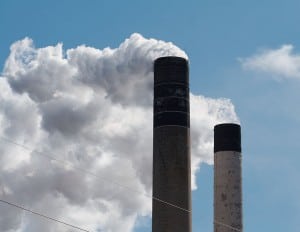
The U.S. Environmental Protection Agency (EPA) in May 2023 published a proposed rule that would establish new source performance standards (NSPS) and existing source performance standards (ESPS) for greenhouse gas (GHG) emissions from new, modified, reconstructed, and existing fossil-fuel fired electric generating units (EGUs). COMMENTARY The proposed rule, which EPA plans to promulgate pursuant to […]
-
 Legal & Regulatory
FERC Can Support Hydrogen by Taking Jurisdiction Over Interstate Pipelines
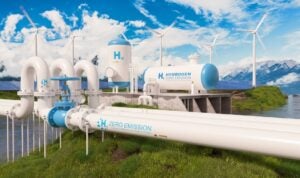
As the U.S. moves toward decarbonization, hydrogen is expected—in its green, blue, and grey varieties—to increasingly be an alternative to conventional fossil fuels. It can be produced in abundance from
-
 Electrification
U.S. Power Sector Trade Groups Flag Critical Electrical Steel Crunch
Nine trade groups—including four representing the power sector—have urged the Biden administration to prioritize actions that support the domestic production of electrical steel, warning that shortages are contributing to “significant and persistent” supply chain challenges. The groups, which include the Edison Electric Institute (EEI), the American Public Power Association (APPA), the National Rural Electric Cooperative […]
-
 Legal & Regulatory
NRC Issues License for Holtec’s New Mexico Consolidated Spent Nuclear Fuel Storage Facility
The Nuclear Regulatory Commission (NRC) has granted Holtec International a license to build and operate a consolidated interim storage facility (CISF) for spent nuclear fuel in southeastern New Mexico, despite the state’s opposition. Granted on May 9 after an eight-year process, the NRC’s license allows Holtec to “receive, possess, transfer, and store” 500 canisters holding […]
-
 Legal & Regulatory
Carbon Capture Key to EPA’s New Power Plant Emissions Rule
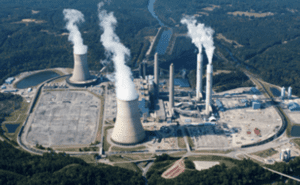
The U.S. Environmental Protection Agency (EPA) has unveiled new greenhouse gas (GHG) standards for the nation’s power plants, moving to require both existing and new facilities to capture emissions of carbon dioxide (CO2) for the first time. The rule announced May 11, if implemented, would mean coal- and natural gas-fired power plants would have to […]
-
 Legal & Regulatory
Regional Greenhouse Gas Initiative: An Unconstitutional Interstate Compact?
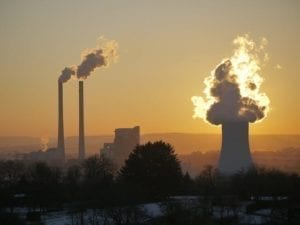
One of the primary objectives of the powerful anti-fossil fuel lobby over the past two decades has been a federally mandated limit on carbon emissions. But the Supreme Court’s recent decision in West
-
 Commentary
More Than Statistics: Maximizing Value From FERC OE’s Annual Report on Enforcement
Each year, pursuant to the Federal Energy Regulatory Commission’s (FERC or Commission) Revised Policy Statement on Enforcement, FERC’s Office of Enforcement (OE) publishes “annual statistical reports” summarizing its enforcement activities during the preceding fiscal year (FY). Consistent with that directive, OE’s Annual Report on Enforcement (Annual Report) contains a range of statistical information about the […]
-
 Commentary
Financing the Energy Transition: Forging Ahead in the Wake of Silicon Valley Bank
Considering the unfathomable costs of unabated climate change, it stands to reason that even the most elementary investment thesis for the energy transition merits sincere consideration. And with the enormous sums of public and private capital committed these last few years toward the companies, technologies, and projects that promise to drive climate change mitigation and adaptation, it would appear […]
-
 Legal & Regulatory
EPA Moves to Significantly Tighten Mercury and Air Toxics Standards
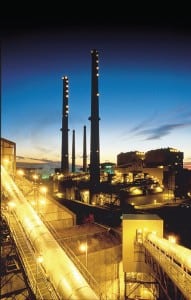
A proposed rule unveiled by the Environmental Protection Agency (EPA) on April 5 could considerably tighten the Mercury and Air Toxics Standards (MATS) for power plants, with specific repercussions for coal- and oil-fired generation. The proposed rule seeks to significantly update the 2012–finalized National Emission Standards for Hazardous Air Pollutants (NESHAP) for Coal- and Oil-Fired […]
-
Legal & Regulatory
CEQ’s New Guidance on NEPA Reviews for Clean Energy Projects
The Council on Environmental Quality (CEQ) earlier this year published its updated “Guidance on Consideration of Greenhouse Gas Emissions and Climate Change,” a document for the assessment and disclosure
-
 Nuclear
BWRX-300 Becomes First SMR to Clear Two Phases of Canadian Nuclear Design Review
GE-Hitachi Nuclear Energy’s (GEH’s) BWRX-300 design has cleared the first two phases of the Canadian Nuclear Safety Commission’s (CNSC) Vendor Design Review (VDR) process, marking a first for a small modular reactor (SMR). The Canadian nuclear regulator’s VDR process is an optional pre-licensing mechanism that allows CNSC staff to give applicants feedback early in the […]
-
 Legal & Regulatory
EPA Projects Final ‘Good Neighbor Plan’ Will Result in 14 GW of Coal Retirements
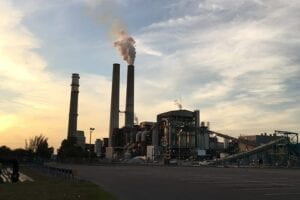
The Environmental Protection Agency (EPA) on March 15 issued the final “Good Neighbor Plan,” its latest iteration of the Cross-State Air Pollution Rule (CSAPR) that could require coal, oil, or gas steam power plants in 22 states to reduce their nitrogen oxide (NOx) emissions levels by 50% by 2027 compared to the 2021 ozone season. […]
-
 Coal
CoalEPA Rolls Out More Stringent Effluent Limitations Guidelines for Coal Power Plants
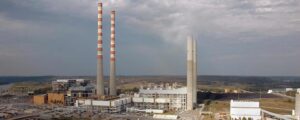
The Environmental Protection Agency (EPA) is proposing more stringent discharge standards for three types of coal power plant wastewater as part of an update to its Effluent Limitations Guidelines (ELGs). However, the agency also proposed compliance flexibilities, and in a separate direct final rule, moved to extend a deadline to allow more coal plants to […]
-
 Legal & Regulatory
Renewables Need More Domestic Production of Minerals
Climate legislation such as the Inflation Reduction Act, which aims to cut U.S. greenhouse gas emissions up to 43% below 2005 levels by 2030, has shifted the already critical need for domestic minerals into
-
 Commentary
Clean Energy Innovation, Not Burdensome Red Tape, Is the Answer for America’s Future
A problematic hurdle imposed by the federal government has long plagued businesses looking to deploy their capital into the American economy: permitting. And while a deal last year between Democrats and Republicans to reform overly burdensome federal rules that delay the development of next generation infrastructure could not be reached, there is still hope on the horizon. The prospect […]
-
 Commentary
States Address EV Charging Infrastructure
In addition to affordability, range anxiety—the ability to access efficient and reliable vehicle charging—remains one of the largest barriers to electric vehicle (EV) adoption. At the federal level
-
 Legal & Regulatory
EPA Moves to Deny Coal Ash Disposal at Six Massive Coal Power Plants
The U.S. Environmental Protection Agency has proposed barring six coal-fired power plants in various states—a combined 11 GW—from disposing coal ash into unlined surface impoundments. The agency, however, also proposed to provide disposal extensions if the coal plants are needed to maintain grid reliability. The EPA’s proposed determinations, issued on Jan. 25, fall under its […]
-
 Technology
NuScale Submits Standard Design Approval Application to NRC for Uprated SMR Design
NuScale Power has submitted a standard design approval (SDA) application to the Nuclear Regulatory Commission (NRC) based on its six-module VOYGR-6 configuration, which will use uprated 250-MWth (77-MWe) modules. The step is crucial for the proposed construction of the 462-MWe Carbon Free Power Plant at an Idaho National Laboratory (INL) site. NuScale’s SDA application submitted […]
-
 Legal & Regulatory
Identifying State-Focused Renewable Energy Tax Exemptions
President Joe Biden last year signed the Inflation Reduction Act (IRA) that, in addition to a number of other actions, extended and enhanced a number of green energy tax opportunities. Notably, it extended the
-
 Legal & Regulatory
Biden Administration Rolls Out ‘Durable’ WOTUS Definition in Final Rule
The Biden administration has rolled out in a final what it says is a “durable” definition of “waters of the U.S.” (WOTUS), potentially capping a legal and political battle that has raged for nearly two decades. The final rule issued by the U.S. Environmental Protection Agency (EPA) and the U.S. Department of the Army on […]
-
 Legal & Regulatory
DOE Proposes New Distribution Transformer Standards as Crippling Shortages Persist
Almost all distribution transformers produced or imported into the U.S. could require amorphous steel cores starting in 2027 under new energy efficiency standards proposed by the Department of Energy (DOE). The measure, unveiled as industry grapples with a crippling shortage of distribution transformers, will serve a longer-term role in boosting grid resiliency as a “strategic […]
-
 Power
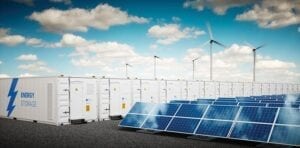
PowerThe Tales of Battery Energy Storage System Permitting Process
According to Elon Musk, solar and batteries go together like peanut butter and jelly. The sustainability of renewable energy relies on the deployment of energy storage systems for the storage of energy harnessed by renewable sources. The reduction in the cost to manufacture battery energy storage systems (BESSs) has catapulted the use of these types […]
-
 Commentary
IRA’s Impact on Power Generation: Clock Is Ticking to Maximize New Tax Credits
The Inflation Reduction Act of 2022 (IRA) includes the largest clean energy incentive effort in U.S. history. It builds on the energy initiatives included in 2009’s American Reinvestment Recovery Act
-
 Legal & Regulatory
Labor Department Shuns Trump-Era ‘Anti-ESG’ Measures
The Biden administration has reversed a controversial Trump-era rule that barred plan fiduciaries from considering climate change and other environmental, social, and governance (ESG) factors when choosing retirement investments and exercising shareholder rights, such as proxy voting. A final rule issued by the Department of Labor (DOL) on Nov. 22 removes restrictions issued in two […]
-
 Legal & Regulatory
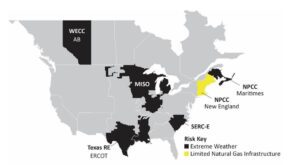
NERC Warns of Tight Generation Resources, Fuel Supply Issues This Winter
Power shortfalls could be rife over the next three months across a large portion of the North American bulk power system (BPS), particularly during extreme and prolonged cold conditions, the North American Electric Reliability Corp. (NERC) has warned. The nation’s designated Electric Reliability Organization (ERO) in its latest Winter Reliability Assessment, issued on Nov. 17, said […]
-
 Legal & Regulatory
Four Large-Scale Solar Projects Fined $1.34M for Alleged Clean Water Act Violations
The Environmental Protection Agency (EPA) and the Department of Justice (DOJ) have settled to resolve alleged violations of the Clean Water Act with four separate large-scale solar farm owners in Alabama, Idaho, and Illinois. The solar farm owners—all subsidiaries of large international finance and investment companies—used a common construction contractor for their farms. The federal […]
-
Legal & Regulatory
FERC: Investors with Utility Board Members are Affiliates
Building on analysis in its February 2021 Public Citizen, Inc. v. Centerpoint Energy, Inc. opinion, the Federal Energy Regulatory Commission (FERC) recently issued decisions in Evergy Kansas, Inc. (Evergy) and Transalta Energy Marketing (U.S.), Inc. (Transalta) analyzing whether investments that were under 10% of outstanding voting shares, but were paired with appointment of directors that […]
-
 Commentary
The Reasons Behind the Strong Support for Renewable Wood Energy
President Biden recently laid out a detailed plan to strengthen America’s forests. Renewable wood energy—that is, biomass energy produced from wood that is not suitable for higher-value products—is an
-
Press Releases
WFW advises Vattenfall on HVDC grid connection infrastructure delivery
Watson Farley & Williams (“WFW”) has advised long-standing client Vattenfall on its signing of a contract with Siemens and Aker Solutions to deliver grid connection infrastructure for the Norfolk Boreas Offshore Wind Farm off the east coast of the UK. Under the contract, Siemens and Aker Solutions will be responsible for the engineering, procurement, construction […]
-
 News
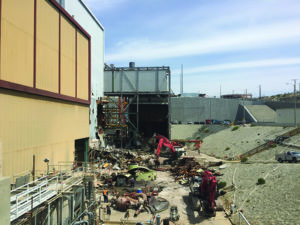
NewsBalancing the Scales: Disparities in Decommissioning Practices for Renewable and Non-Renewable Energy
There have been historic initiatives within the U.S. to create a sustainable energy economy and to address major environmental concerns created by fossil fuels. The Inflation Reduction Act contains $369 billion in climate and energy provisions, which will have a meaningful impact on climate change. Meanwhile, the Bipartisan Infrastructure Law seeks to remedy environmental issues […]