
Commentary
-
Commentary
How to Fix a Hiring Mistake
Have you ever made a hiring mistake? The candidate had the right credentials, experience, and the price was right. When the new employee never meets minimum expectations, what should you do?
-
Commentary
U.S. Nuclear Operations in a Post-Fukushima World
Perhaps more than for any other industry, a nuclear accident in any part of the world affects nuclear operations elsewhere. Such an incident necessarily and inevitably results in industry self-examination, heightened regulatory oversight, and third-party scrutiny.
-
Commentary
Your Guide to Retirement
Someone once said that "life begins at retirement." For people, perhaps, but not for our aging inventory of coal-fired power plants that are slated for retirement during the next decade.
-
Commentary
In Cap and Trade Fight, Environmentalists Had Spending Edge over Opponents
New research challenges the commonly held view that cap and trade legislation failed because of the spending advantages of opponents and false balance in news coverage. The report, "Climate Shift: Clear Vision for the Next Decade of Public Debate," released by American University Professor Matthew Nisbet on April 25, also shows how well funded both sides of the debate were.
-
Commentary
Stop the "Anti-Transmission" Bill
When it comes to energy, the new Congress has a whole host of challenges and opportunities. But there is at least one complex challenge that has a straightforward solution. If we want a secure, reliable, and affordable energy mix, we must modernize our nation’s energy grid.
-
Commentary
Customers Know What Customers Know Best
Wish you could get inside your customer’s head? If so, forget data and go to the source.
-
Commentary
Prudence: Who’s Minding the Store?
Regulators are asked to balance a societal need with the cost burden placed on those who pay for the service. Sometimes they forget that it’s other people’s money at stake.
-
Commentary
Solving the Challenges of Growing Energy Demand
The electric power generation landscape in both America and the rest of the world is poised to undergo a fundamental transformation in the next several decades. Global energy consumption is projected to rise dramatically by 2035, and the methods by which we generate electricity and the fuels we choose to use will begin to change as well.
-
Commentary
How to Hire an Honest Staff
It’s not just hard finding good help these days. It’s hard finding honest help, too.
-
Commentary
Disaster Management
The events in Japan, including the catastrophic destruction of a major nuclear power station, remind us of something we don’t like to think about: how to manage a physical disaster. But manage we must.
-
Commentary
Electricity: A Fuel of the Future
The recent tensions in the Middle East and their impact on oil and gasoline prices remind us that the U.S. remains heavily dependent on foreign nations—some of them unstable—to meet many of our energy needs. Of course, oil will continue to have an important place in our energy mix, and expanding our domestic reserves makes sense.
-
Commentary
Frisbees to Flatulence
I recently outlined the top four regulatory obstacles facing existing U.S. coal-fired power plants in the coming years. That list, although not comprehensive, covered issues that owners of coal plants should be concerned about in the near term. However, in the long term, there is one regulatory development that dwarfs all others.
-
Commentary
Australians Say "No" to Carbon Tax
Australian prime minister Julia Gillard invited Jill Duggan, of the European Commission Directorate General of Climate Action and the UK government’s head of international emissions trading, to help bolster Gillard’s push for support of a carbon tax early in March. However, when interviewed on a morning show, Duggan was unable to estimate either the cost or the benefits of the UK’s program. In fact, the interview was a complete disaster.
-
Commentary
Put the REINS on EPA
The "Regulations from the Executive in Need of Scrutiny" Act could put the kibosh on the EPA’s greenhouse gas regulatory surge.
-
Commentary
A Report Card on Stimulus Support for Renewable Energy
Prior to the crash, the renewable energy industry—including wind, solar, geothermal, and other renewable energy sources—was on a roll. In 2007 and 2008, the U.S. wind power sector alone added over 13,500 MW of new projects, enough to power almost 4 million homes.
-
Commentary
Energy, GDP, and Thomas Malthus
A new article in Bioscience looks again at the connection between economic growth and energy demand, shedding little light on the subject and further demonstrating the limits of neo-Malthusianism. Of course there is a relationship between energy and economic growth, but what is it? No answers here; only a doomsday prediction.
-
 Commentary
Why Most Published Research Findings Are False
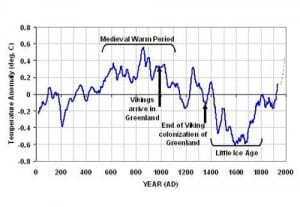
Those aren’t my words—it’s the title of a 2005 article, brought to my attention by Cal Beisner, which uses probability theory to "prove" that "…most claimed research findings are false." While the article comes from the medical research field, it is sufficiently general that some of what it discusses can be applied to global warming research as well.
-
Commentary
Got Remedies? NLRB Acting General Counsel Does, and Employers Should Beware
National Labor Relations Board Acting General Counsel Lafe Solomon is continuing his focus on remedies in unfair labor practice cases involving union organizing campaigns. On September 30, 2010, he issued a memorandum on Section 10(j) injunctions for discriminatory discharges during such campaigns. Now he has released another memorandum, this one targeting remedies regional offices should seek when they issue complaints in ULP cases involving campaign activity.
-
Commentary
Chill Out
Chill out, relax, enjoy the ride, and take the real road to success. It’s the journey that counts and you can’t get to the end of the road without traveling along it.
-
Commentary
State of the Union: Recycling a Failed Energy Policy
President Obama’s Jan. 25th State of the Union address proposed that the nation commit itself to developing "clean energy" sources of electricity over the next two decades. A critical assessment of his proposal finds that it’s just a rehash of previously rejected legislative proposals. In fact, to me, it sounds like Waxman-Markey all over again. I have a better idea.
-
Commentary
Stream Conductivity: It’s Not Just a Mining Issue
Coal mining, and related industries that consume coal, have attracted quite a bit of attention from the federal government as of late. Most of that attention has focused on how to further, or "better," regulate the industry. The EPA is now moving to regulate downstream conductivity of surface mining runoff.
-
Commentary
EPA Expands Climate Agenda to the Current Fleet of Power Plants and Refineries
On December 23, 2010, one day before the Yuletide season, when members of Congress, the media, and Tea Party activists are least likely to watchdog the federal bureaucracy, the U.S. Environmental Protection Agency (EPA) announced rulemakings to establish New Source Performance Standards (NSPS) for greenhouse gas (GHG) emissions from power plants and refineries. Or maybe "whispered" would be more accurate.
-
Commentary
Pre-Combustion Technologies: A Key Environmental Compliance Tool
Arizona Public Service’s (APS) plan to close three older coal-fueled units at the Four Corners Power Plant in New Mexico and buy out Southern California Edison’s 48% share of the two remaining units is a creative means of surviving the U.S. Environmental Protection Agency’s (EPA) committed action against coal-fueled generation.
-
Commentary
Outsource Management?
Whatever happened to the venerable military institution of KP? It’s been outsourced, along with a lot of other tasks in the work environment. Outsourcing often makes sense, but it isn’t a panacea.
-
Commentary
The Art of Ruthless Focus
A million possibilities and distractions are in the business environment. Tom Hall and Wally Bock, authors of the new book Ruthless Focus, say the companies that win in the long term are the ones that can drown out the background noise and keep dancing with the strategy that brought them to the party.
-
Commentary
Double A Energy Policy
With climate legislation dead in the U.S., it is worthwhile to take a look at how discussions of energy and environmental policy ebb and flow in the country, generally without reaching serious resolution.
-
Commentary
Stop "Doing" and Start Leading
A key challenge for new leaders is to make a transition from actually doing the work to making sure that the work gets done. That takes a mind shift.
-
Commentary
Anticipating the New Utility MACT Rules
It’s been almost three years since the U.S. Court of Appeals for the D.C. Circuit issued its decision vacating the Environmental Protection Agency’s (EPA) Revision Rule and the Clean Air Mercury Rule. Since then, the utility industry has been in a holding pattern with respect to the control of hazardous air pollutant (HAP) emissions.
-
Commentary
Restructuring Key to Cheaper, Cleaner Electricity
As the United States grapples with how best to address climate change and conservation—whether by taxing carbon, cap and trade, or setting higher renewable portfolio standards—an effective approach exists at the state level to reduce electricity producers’ carbon emissions: restructuring.
-
Commentary
Regulating the Regulators: WVDEP Forced to Issue Permits to Itself
On November 8, 2010, the U.S. Court of Appeals for the Fourth Circuit issued its decision in West Virginia Highlands Conservancy, et al. v. Huffman. It’s an opinion that should be of great interest to government agencies and others who find themselves in a position of seeking to remediate water quality problems left by third parties.