
Commentary
-
Commentary
Keys to Improving Customer Communication
Utility organizations are struggling to find a way to more effectively and efficiently communicate with their customers about basic information, including their amount due, ways to lower energy usage, and promotions.
-
Commentary
Power Grid Cyber Security Strategies
This is the second of two articles addressing the security of the U.S. power grid. Part one outlined the nature of the cyber threat, described the existing regulatory framework for protecting the grid against cyber threats, and identified the uncertain legislative and regulatory future for additional protection. This article presents 10 strategies that grid infrastructure owners can take now to help ensure greater security of the grid.
-
-
 Commentary
The Boss and Leadership
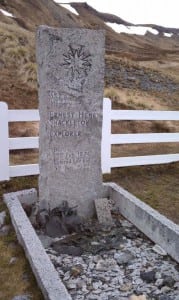
Friends, colleagues, and co-workers uniformly called him "The Boss." His life was a story of failure after failure. His greatest fame was his greatest failure—a journey begun nearly 100 years ago, in 1914, to cross the desolate Antarctic continent by land. His doughty ship Endurance became trapped by the encroaching ice in the Weddell Sea north of the continent, isolating Sir Ernest Shackleton and his 27-man crew.
-
 Commentary
Switching from Coal to Natural Gas Does Little for Global Climate
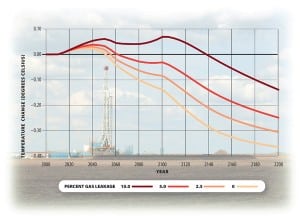
Although the burning of natural gas emits far less carbon dioxide than coal, a new study concludes that a greater reliance on natural gas would fail to significantly slow down climate change.
-
Commentary
Surprise: China’s Energy Consumption Will Stabilize
As China’s economy continues to soar, its energy use and greenhouse gas emissions will keep on soaring as well—or so goes the conventional wisdom. A new analysis by researchers at Lawrence Berkeley National Laboratory now is challenging that notion, one widely held in both the United States and China.
-
Commentary
Divide and Conquer
The U.S. Environmental Protection Agency (EPA) is expected to release new air quality standards for coal-fired power plants this month. Division in the power industry is encouraging the EPA to set an unachievable compliance timetable.
-
Commentary
Wind Energy: Dealing with Intermittency Challenges
The wind power industry has exploded over the past decade. In the U.S. alone, almost 40,000 MW of wind power have come online since 2000. As more wind generation has been added, grid operators have been challenged to integrate a large amount of intermittent generation. As the state with by far the most installed wind power capacity, Texas has had to face this problem head on.
-
Commentary
Hazard Recognition and Control: Improving Safety’s Bottom Line
The power generation industry is a highly competitive one in which players continue to change and the race for profits is a tough one with the challenge of heavy environmental regulations. One of the most overlooked areas for cost savings is safety. Notwithstanding the moral and legal responsibilities that power plant management has for creating a workplace where everyone can work without injury, reducing and eliminating workplace injuries and illnesses is good for business.
-
Commentary
The Lesson of Procrustes
Procrustes the metal worker—not to be confused with Krusty the Klown—was an important figure in Greek mythology. A son of Poseidon, Procrustes was an iron smith, thief, murderer, and inn keeper. He offered hospitality to strangers passing his place on the sacred byway between Athens and Eleusis. For a price.
-
Commentary
A Renaissance for U.S. Nuclear Power? Not Anytime Soon
In many quarters, nuclear power generates enthusiasm. A single pound of reactor-grade uranium oxide produces as much electricity as 16,000-plus pounds of coal—enough to meet the needs of the average U.S. household for more than one year. And whereas burning coal emits carbon dioxide, sulfur dioxide, and nitrogen oxides, nuclear power generation is virtually emissions […]
-
Commentary
California’s RAM for Small Renewables
With its powerful new renewable portfolio standard, California will boost the market for small renewable technologies. The key is the reverse auction mechanism, which fine-tunes the regulatory regime.
-
Commentary
Power Grid Cybersecurity: How to Achieve Results in an Uncertain Regulatory Environment
Cybersecurity of U.S. electric infrastructure has become a major issue on the national agenda, posing challenges to how we structure, construct, and regulate our power system. This is the first of a two-part article looking at legal and regulatory issues surrounding electric system cybersecurity.
-
 Commentary
Not a Clue
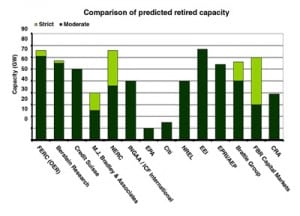
U.S. Environmental Protection Agency (EPA) rules are being processed at a furious pace in 2011. Unexpectedly, the new greenhouse gas and ozone rules were stayed by President Obama. However, it’s the Utility MACT Rule and the Cross-State Air Pollution Rule that leave utilities on unsteady ground. The result has been a number of plant closure announcements that far exceed the magnitude of the coal-fired generation losses predicted by the EPA. The predicted losses vary greatly.
-
Commentary
Is Coal a Fuel of the Future?
Few reasonable people can dispute that the U.S. Environmental Protection Agency (EPA) is conducting a war against coal. If you doubt that conclusion, just look at the large number of new regulations affecting coal-fired power plants that have been proposed in rapid-fire succession by the EPA.
-
Commentary
Recent Blackout Highlights Nation’s Rickety Power Grid
Experts say the cascading blackout that put millions of Westerners in the dark in early September was no surprise: Major power outages have more than doubled in the last decade
-
Commentary
Shaping America’s Energy Policy
America’s energy and environmental policies have been dysfunctional for decades. Obsessively moving toward “green” has made America weaker and has damaged our economy. During POWER’ s first 100 years (1882–1982), the magazine chronicled the U.S. growing into the strongest industrialized economy in the world. America designed and built products for the world using raw materials and energy from within our own borders. Now we are in a recession and the U.S. Environmental Protection Agency’s (EPA) “War on Coal” continues. Does anyone get the connection? Ever-worsening regulations are killing jobs by the thousands.
-
Commentary
Advancing America’s Nuclear Infrastructure
It is fair to say that 2011 is bringing some uncertainty into the nuclear energy industry. The tsunami and subsequent events at Fukushima present Japan and our industry with new challenges but also serve as a catalyst for continuous improvement. In the U.S., we are learning from these events and improving our operations, designs, and emergency response approaches to make our plants safer, more efficient, and more environmentally friendly.
-
Commentary
Demand Response Demands Response
What the summer heat wave, and one utility’s less-than-stellar response, teaches us about communicating with customers.
-
 Commentary
The Development of U.S. Shale Gas Resources: Regulation and Litigation
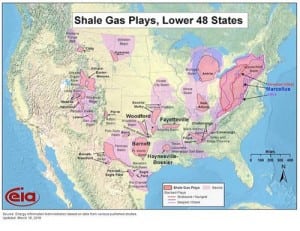
The rise of shale gas in U.S. energy markets has profound economic implications. It has the potential to transform the existing market and bring opportunities for new markets. But shale gas also raises regulatory challenges and the likelihood of litigation. Here’s an introduction to the issue and a primer on the regulatory and legal ramifications of the shale revolution.
-
Commentary
Climate Pragmatism: Introduction
Last summer, an international group of scientists and policy analysts under the auspices of the London School of Economics launched an ambitious effort to reshape the debate over global warming policy in a document known as The Hartwell Paper. This July, a similar group followed up with a new report, titled "Climate Pragmatism: Innovation, Resilience and No Regrets," which puts the earlier work into a North American context.
-
Commentary
Get Creative, Skip the Path of Least Resistance
In training for a sport, the common wisdom is "no pain, no gain." The same is true when it comes to fostering creativity in the workplace. Force yourself and your organization out of the easy path, break out of the rut, and gain as a result.
-
Commentary
Carbon Markets Take Flight (in Europe)
The European Union has adopted a greenhouse gas cap-and-trade system as part of its Emissions Trading Scheme (ETS). Beginning January 2012, aircraft flight engines will be added to the emissions sources regulated by the ETS. A Solutions Fellow at the Pew Center on Global Climate Change believes these regulations are an important step in regulating carbon emissions. You be the judge.
-
Commentary
Which Comes First?
Proponents of carbon dioxide emission reductions from power plants are lamenting the decision by American Electric Power to cancel the carbon capture and sequestration plant at its Mountaineer facility in West Virginia. It’s not politics, it’s just business.
-
Commentary
Coal: A Key Part of Our Clean Energy Future
With the U.S. economy still struggling, few things are as important as having an abundant, reliable supply of energy to help drive our recovery. Many American families are hurting and our businesses are being challenged to create new jobs. That’s why federal, state, and local public policies must balance the need for broader economic prosperity, […]
-
Commentary
Water Issues, Carbon, and Price of Power Top Utility Concerns
In a clear sign of growing industry unease about the availability of water for power plant operations, utility officials recently surveyed by Black & Veatch on a host of policy and business issues ranked water supply as their second-highest environmental concern and identified water management as the business issue that could have the greatest impact on the utility industry in the near future.
-
Commentary
The Fallacy of Energy Independence
Is the term "energy independence" merely an oxymoron, or is it a national imperative? Opinions differ. Either way, the goal is practically impossible to achieve.
-
Commentary
Geothermal Projects Race to Meet Incentives Deadlines
At the close of 2009, the U.S. geothermal industry had seen seven new geothermal power plants come online in the previous 12 months. In 2010, only one new power plant was completed.
-
Commentary
Planning for a Major Trading Counterparty Bankruptcy
Central banks in the past 18 months have injected a flood of money into financial markets. This liquidity in the system has allowed many marginal companies to issue bonds and avoid looming bankruptcy. Now is the time to take steps to protect yourself from the effects of a failed business relationship.
-
Commentary
Five Reasons Why Leaders Need a Closed Door Policy
Many leaders believe that an open door policy will improve employee communications and group productivity. On the other hand, there are five reasons why a closed-door policy may have more benefits to your organization.