
Articles By

-
 News
NewsSelf-Improvement Strategy
POWER marks its 130th year of service to the power generation industry with this issue. Instead of cake for the staff, we decided to celebrate the milestone in a way that will benefit our readers and supporters for many years to come.
-
 History
Japan Scrambles to Revamp Its Electricity Sector
The March 2011 Japanese earthquake and tsunami that destroyed a number of Japanese power plants—most notably, four nuclear units—hit quickly. Almost as speedy were calls to take all other nuclear units out of service for safety reviews. What will take much longer is developing a new, sustainable energy plan to fill the generation gap left by a potential total lack of nuclear power.
-
 Gas
GasTHE BIG PICTURE: A Shale Gas Revolution
Large circles represent technical reserves and small (blue) circles represent potential reserves of shale gas, both in trillion cubic feet. Bars on the right represent each region’s existing natural gas–fired generation in 2008 (yellow) and the amount projected for 2035 (blue) in TWh. OECD = Organisation for Economic Co-operation and Development. Data source: Energy Information […]
-
 Business
Going the Distance: Online Courses for Power Industry Professionals
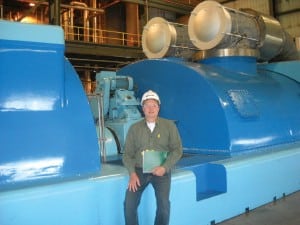
Online learning is opening up new opportunities for those unable to attend classes on campuses. Bismarck State College and the University of North Dakota, for example, offer innovative online courses and degree programs to students who want successful careers in the electric power industry.
-
 Gas
GasEurope Dallies with Shale Gas Exploration
Massive offshore shale gas reserves exceeding 1,000 trillion cubic feet (tcf) discovered in the UK in April could catapult that country to the top ranks of global producers.
-
 O&M
O&MStartup Purge Credit Benefits Combined Cycle Operations
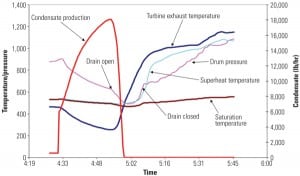
Combined cycle power plants use fuels and other materials that can cause fires or explosions in the combustion turbine, ducting, or heat recovery steam generator. Purging that equipment with ambient air to displace residual combustible gases before starting is a normal safety practice. But when plants are cycled, the disadvantages of purging often outweigh the advantages.
-
Nuclear
Japan’s Nuclear Infrastructure
This overview of Japan’s nuclear fleet is a web supplement to the June 2012 feature “Japan Scrambles to Revamp Its Electricity Sector.” For a list of major Japanese generating companies, see Figure 1 in that article.
-
 Coal
CoalDenmark Extends Renewables Standard to 100% by 2050
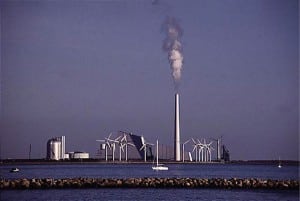
Denmark’s parliament in late March agreed to a new energy strategy seeking to wean the country off oil and gas. It could result in the Nordic country cutting its greenhouse gas emissions 34% by 2020, compared to 1990 levels, and decreasing energy consumption by more than 12%, compared to 2006.
-
 O&M
O&MImprove Condenser Performance Through Better Instrumentation
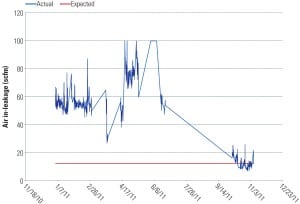
Most power plants use some form of condenser performance-monitoring protocol. Some of those protocols are deficient because the proper instrumentation is not installed to collect the necessary data. Three case studies illustrate how collecting good condenser performance data enabled plant staff to troubleshoot problems and make good plant performance improvement decisions.
-
 Gas
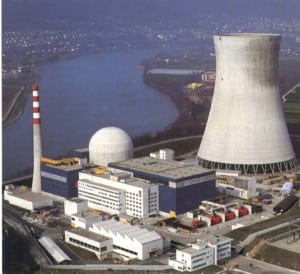
GasSwitzerland Contemplates Filling Future Nuclear Energy Gap
A model of Switzerland’s energy future to 2050 that abides with the country’s post-Fukushima decision not to build any new nuclear power plants suggests the phase-out could cost nearly $33 billion.
-
Nuclear
Too Dumb to Meter, Part 2
As the book title Too Dumb to Meter: Follies, Fiascoes, Dead Ends, and Duds on the U.S. Road to Atomic Energy implies, nuclear power has traveled a rough road. In this POWER exclusive, we present the second chapter, “Manhattan Transfer,” which covers the open fight for control of the development of nuclear power between the newly created Atomic Energy Commission and the military services, with the politicians playing both sides against each other.
-
 Coal
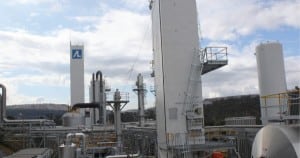
CoalCallide Oxyfuel Carbon Capture Plant Retrofit Moves Forward
Oxyfuel technology has been retrofitted at a 700-MW coal-fired power plant in Queensland, Australia, and is now capturing carbon dioxide from one of the plant’s six steam boilers.
-
 News
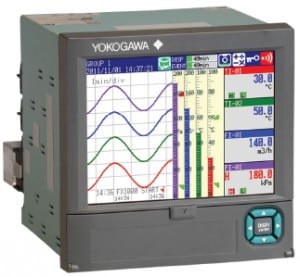
NewsNew Paperless Recorder
Yokogawa’s new FX1000 paperless recording system provides premium features and performance for cost-sensitive OEM suppliers and end user process recording applications. Delivering a high level of measurement, recording, and networking functionality in a compact package, the shallow 6.5-inch case depth behind the panel allows for installation in tight locations and easy system integration. A high-precision, […]
-
 Gas
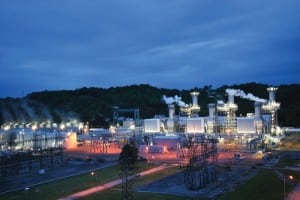
GasTVA Begins Operation of John Sevier CCGT Plant
The Tennessee Valley Authority (TVA) has begun commercial operation of the natural gas–fired 880-MW John Sevier Combined Cycle Plant, located near Rogersville, Tenn.
-
 News
NewsSmart Welding Helmet
South Carolina–based ESAB Welding & Cutting Products introduced the Aristo Tech 5-13 Welding Helmet with Variable Shade ADF. Designed for the professional welder, the helmet features Auto-Darkening Filter Lens Technology (ADF) and has a variable 5-13 digital control for adjustment of shade level, sensitivity, and delay. The helmet’s Quick Set feature allows for easy change […]
-
Business
POWER Digest (June 2012)
ABB to Refurbish Generators at Two Swiss Hydro Plants. ABB on April 20 said it had received $20 million of orders from two power utilities managed by Axpo, a leading Swiss power utility, to refurbish the generators at two of its hydroelectric power plants. The plants are located in the mountainous canton of Wallis (Valais) […]
-
 News
NewsDust Suppression for Slag or Ash Handling
The new DustBoss from Dust Control Technology DB-M is designed for applications in which a fan-driven mist could generate undesirable turbulence and is well-suited to operating conditions involving very fine dust particles, including slag dust or fly ash. The unit generates an umbrella-shaped cloud of atomized droplets averaging 50 to 200 microns in size and […]
-
 Gas
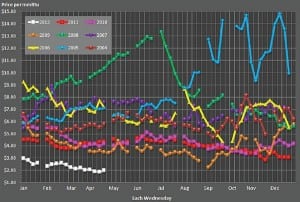
GasThe Quest at CERAWeek 2012
In March, Cambridge Energy Research Associates hosted its 30th annual CERAWeek, a conference that is renowned for high-profile attendees from around the world.
-
 News
NewsNew Diesel Generator Sets
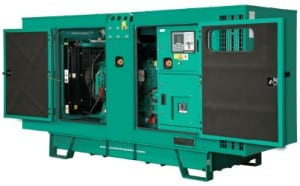
Cummins Power Generation announced two new internationally styled and designed diesel generator set ranges for global markets. Powered by Cummins engines, both are maintenance-friendly. CE-certification and compliance with international standards make them ideal for a wide variety of applications, including in remote locations. The new low-range 40- to 75-kVA generator sets feature the Cummins S3.8 […]
-
 O&M
O&MCombustible Dust Management Training: Rely on Best Practices, Not Shifting Regulatory Winds
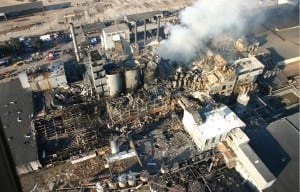
None of you reading this magazine needs an article—or new governmental regulations—to tell you that flash fires and explosions involving coal dust can cause catastrophic incidents, fatalities, facility damage, and financial consequences.
-
Commentary
Climate and Energy Policies: Two Sides of the Same Coin?
In a 2006 statement, former UK Prime Minister Tony Blair said, “We must treat energy security and climate security as two sides of the same coin.” Are energy security and climate change best addressed by reducing fossil fuel combustion, as he suggested?
-
Legal & Regulatory
Can California’s Cap-and-Trade Program Turn Manure into Gold?
California’s Cap-and-Trade Program is the only cross-industry, market-based climate change regulatory program in the United States. This program may provide a good investment opportunity for dairy farmers, livestock owners, and others if the program’s Livestock Project protocol for offsets can get off the ground and maintain a viable price for greenhouse gas (GHG) allowances.
-
 Instrumentation & Controls
Ensuring the Cybersecurity of Plant Industrial Control Systems
Industrial control systems (ICSs) manage global industrial infrastructures, including electric power systems, by measuring, controlling, and providing a view of control processes that once were visible to the operator but now are not. Frequently, ICSs are not viewed as computers that must operate in a secure environment, nor are they often considered susceptible to cybersecurity threats. However, recent cybersecurity failures have proven these assumptions wrong.
-
News
Commerce Dept. Imposes Tariff on Chinese Wind Towers
Just weeks after the U.S. Commerce Department slapped a 31% tariff on 61 Chinese crystalline silicon photovoltaic (PV) cell producers and exporters, it imposed preliminary duties of as high as 26% on imports of utility-scale wind towers from China.
-
News
Supreme Court Briefs Filed in FERC Market-Based Rate Case
The U.S. Supreme Court is considering whether to hear a case filed by several states and citizen groups against the Federal Energy Regulatory Commission (FERC) that contends that FERC Order 697, issued in 2007 to improve market-based rate regulations, exceeds FERC’s authority under the Federal Power Act (FPA).
-
News
NERC: Texas, California, New England Could Face Reliability Issues This Summer
Planning reserve margins in California and Texas will be "tight" this summer, and New England generators could face uncertain supplies of liquefied natural gas (LNG), the North American Electric Reliability Corporation’s (NERC’s) newly released 2012 Summer Reliability Assessment finds.
-
News
Report: 8 Large-Scale CCS Projects On Track To Begin Operations Within Five Years
Over the next five years, at least eight advanced large-scale demonstration carbon capture and storage (CCS) projects will enter operation—five in North America and three in Europe, a Bloomberg New Energy Finance analysis shows. Leading the pack is Pennsylvania-based Air Products & Chemical’s CCS demonstration at a refinery in Port Arthur, Texas, a project that could be operational as soon as next year.
-
News
NRC Renews Pilgrim Nuclear Plant’s Operating License Despite Jaczko Opposition
The Nuclear Regulatory Commission (NRC) on Tuesday said it renewed the operating license for the 1972-commissioned Pilgrim Nuclear Power Station in Plymouth, Mass., for 20 more years despite objections by outgoing NRC Chair Gregory Jaczko.
-
News
Project Set-Up Issues Behind Chronic Watts Bar 2 Cost Overruns, Delays, TVA Inspector General Finds
A three-year schedule delay and cost overruns of about $2 billion plaguing the Tennessee Valley Authority’s (TVA’s) project to build a second Watts Bar reactor are directly attributable to deficiencies in the “project set-up” and “ineffective management oversight,” the federal corporation’s Office of the Inspector General (OIG) said in a report last week.
-
News
Illinois Regulators Reject Ameren Smart Grid Plan
Illinois regulators on Tuesday rejected Ameren Illinois’ $625 million plan to deploy smart grid improvements in its service territory, saying the company not only failed to show it could deliver a cost benefit to customers, but that the deployment plan was “vague and incomplete” and bordered on being more a “general statement of intention to install smart meters in some parts of its service territory.”