
Articles By

-
Legal & Regulatory
Daylight Saving: Energy Policy or Placebo?
In December 1973, President Richard Nixon explained to the American people his administration’s critical initiative to confront the “energy crisis” du jour (precipitated by the 1973–74 Arab oil embargo): “Many [energy savings measures] require inconvenience and sacrifice. But daylight saving time… will mean only a minimum of inconvenience and will involve equal participation by all. […]
-
Commentary
Fuel Diversity Is Critical in Industry Transition
Success in life and business is all about seizing the right opportunities at the right time. Opportunities abound today in the electric utility business. Our industry is in the midst of an extraordinary period of transformation and investment that will affect how we produce and deliver electricity—and what customers pay for it—for decades. By 2020, […]
-
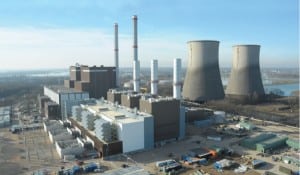 Gas
GasTOP PLANTS: Claus C Combined Cycle Power Plant, Massbracht, Limburg Province, Netherlands
The 1,309-MW Claus C power plant showcases the successful repowering of an existing steam power plant by upgrading it and adding a highly efficient combined cycle plant that doubles the original plant’s power output for just a 35% increase in fuel consumption. In addition, the newly retrofitted plant is cutting CO2 emissions by 40% compared with a simple-cycle gas-fired plant of equal capacity.
-
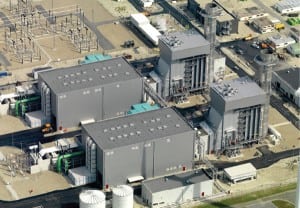 Gas
GasTOP PLANTS: Enecogen Power Station, Rotterdam, Netherlands
The Dutch utility Eneco and the Danish energy group DONG Energy recently collaborated in building the 870-MW Enecogen Power Station that has a thermal efficiency above 59% and is designed for maximum operational flexibility. As part of Eneco’s strategy to lower emissions across its fleet, the combined cycle plant is designed to quickly compensate for intermittent power produced by the utility’s wind turbines.
-
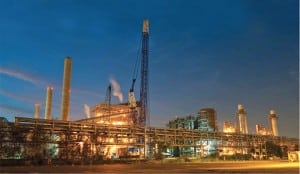 Gas
GasTOP PLANTS: Glow Phase 5 Combined Cycle/Cogeneration Project, Rayong, Thailand
Glow Energy’s 382-MW Glow Phase 5 power plant in Thailand exceeded early expectations by packing into a tightly constrained space more capacity than anyone thought possible. The plant’s engineering feat earns it recognition as a POWER Top Plant for 2012.
-
Nuclear
Troubled Fort Calhoun Reactor Restart Delayed Again
Omaha Public Power District (OPPD) has postponed restart of its troubled 478-MW Fort Calhoun nuclear plant for the third time since it was shut down 16 months ago. Restart of the reactor, located 19 miles north of Omaha, Neb., requires regulatory approval, and that is now tentatively anticipated early next year.
-
Coal
Federal Court Holds TVA Liable for Kingston Coal Ash Spill
A federal district court on Thursday ruled in favor of more than 800 plaintiffs when it held the Tennessee Valley Authority (TVA) liable for the December 2008 failure of coal ash containment dikes at its Kingston Fossil plant in Roane County, Tenn., that resulted in the spill of more than a billion gallons of coal ash sludge.
-
Coal
Carbon Dioxide Injection Begins at Fully Integrated Coal-Fired CCS Project
Injection of carbon dioxide began last week at one of the world’s first fully integrated coal-fired carbon capture, transportation, and geologic storage projects. The "Anthropogenic Test" conducted by the Southeast Regional Carbon Sequestration Partnership (SECARB) transports carbon dioxide via a 12-mile pipeline from a 25-MW post-combustion carbon capture facility at Southern Co.’s 2,657-MW Plant Barry in Bucks, Ala., and sequesters it within a saline Paluxy Formation at the nearby Citronelle Oil Field operated by Denbury Resources.
-
Nuclear
Exelon Withdraws Early Site Permit Application for Victoria County Reactor
Exelon on Tuesday said it plans to withdraw its Early Site Permit (ESP) application for construction of a new reactor at an 11,500-acre tract of land southeast of Victoria, Texas, saying “low natural gas prices and economic and market conditions . . . have made construction of new merchant nuclear power plants in competitive markets uneconomical now and for the foreseeable future.”
-
Solar
Trade Representatives Request Investigation on U.S. Renewables in Global Context
The U.S. Trade Representative on Monday asked the U.S. International Trade Commission (ITC) to investigate how U.S.-provided renewable energy services affect development of renewable energy projects worldwide. The ITC’s report, expected by June 28, 2013, will focus on the development, generation, and distribution of renewable energy—specifically onshore and offshore wind and solar energy.
-
Nuclear
On Katrina’s Anniversary, Generators and Regulators Respond to Hurricane Isaac
Hurricane Isaac soaked the Gulf Coast of Louisiana and Mississippi after making landfall Tuesday night with sustained winds of up to 80 mph, leaving thousands without power in five states. On Tuesday, Entergy took its Waterford 3 nuclear plant offline as a precautionary measure.
-
News
DHS Warns of Potential Control System Vulnerability
The U.S. Department of Homeland Security (DHS) on Tuesday issued an alert warning that industrial Ethernet switches and other devices made by network equipment manufacturer RuggedCom and widely used by power companies could be vulnerable to compromise.
-
News
OPT Gets FERC’s First Wave Power License
The Federal Energy Regulatory Commission (FERC) on Tuesday approved a full build-out of a 1.5-MW gird-connected wave power station that is planned by Ocean Power Technologies’ (OPT’s) Oregon subsidiary Reedsport OPT Wave Park. The license is the first issued for a wave power station in the nation.
-
News
Canadian Nuclear Regulator Awards License to Proposed Darlington Reactors
Canada’s nuclear regulator on Friday issued a 10-year nuclear power reactor site preparation license to Ontario Power Generation’s (OPG’s) proposed reactor at its Darlington nuclear site in Ontario. The license, described as "an important milestone in Canada’s nuclear history," is the first of its kind in nearly 25 years.
-
News
GAO: EPA Rules Could Spur Retirements, Increased Power Prices
Four rules recently proposed or finalized by the Environmental Protection Agency (EPA) could prompt power companies to retrofit most coal-fired generating units and retire 2% to 12% of coal-fired capacity. The rules would also likely increase power prices in some regions, though they may not cause widespread reliability concerns, a new report by the Government Accountability Office (GAO) suggests.
-
News
Federal Court Strikes CSAPR, Reactions Swift
In a landmark ruling that has been seen as a major victory for thermal generators, the U.S. Court of Appeals for the District of Columbia Circuit on Tuesday vacated the Environmental Protection Agency’s (EPA’s) Cross-State Air Pollution Rule (CSAPR), finding that it violated federal law. The EPA must now continue implementation of the Clean Air Interstate Rule (CAIR) until it can promulgate a replacement, which likely will not happen until at least 2014, industry analysts said.
-
Environmental
Natural Gas Is a Much-Needed Tool in the Battle to Slow Global Warming
That natural gas is the cleanest burning fossil fuel isn’t news. But recent scientific studies are showing that it’s also a key tool in the efforts to reduce climate change.
-
Business
Floating LNG: The New Revolution in Offshore Gas
Gas production by hydraulic fracturing has upended the global energy markets, and talk of liquefied natural gas (LNG) exports has major producers astir. But on the horizon is another game-changer: enormous floating LNG platforms that could again reset the equation.
-
Power
Playing Ball
Science costs money, and someone has to pay the bill. When that someone is a corporation or industry group, certain hackles get raised. But does “industry-funded” research really deserve the condemnation it gets? The answer isn’t a simple yes or no.
-
Business
Pipeline Problems Cloud Future of Gas Power
These are heady days for gas-fired power, as record low prices have turned natural gas from an also-ran into possibly the leading source of electricity generation. But lurking in the background is a potential roadblock—the pipelines that bring gas to the plants, which have lagged behind in capacity.
-
Business
The Economics of Coal-to-Gas Switching
Gas is up and coal is down. The why of it is not so clear, nor is the degree to which it’s likely to continue. Here’s a review of the nuts and bolts, which suggests coal may be poised for a comeback.
-
Business
NRG Braves Headwinds in Replacing Aging California Plant
Building almost any kind of power plant takes a lot of careful public relations. But NRG Energy has traveled a long and winding road in its attempts to replace a coastal plant in Southern California.
-
 News
NewsNext Generation of Gas-Fired Power Starts to Take Shape
Incremental advances in gas turbine technology have made these industry workhorses bigger, more efficient, and more powerful. But some developments on the horizon suggest the industry is now poised to make some major leaps forward.
-
O&M
Self-Regulating Condensate Pumps Power Austrian CHP
When Verbund Thermal Power needed reliable and flexible condensate pumps for its new combined heat and power plant in Mellach, Austria, it used a new type of self-regulating centrifugal unit.
-
Environmental
IEA Chief: Policy Uncertainties Could Halt Natural Gas Revolution
In an exclusive interview with GAS POWER, International Energy Agency Executive Director Maria van der Hoeven explained how natural gas is poised to revolutionize the world’s energy business—but only if producer and policy officials make the right choices.
-
Business
Quarterly Status Report on Global Gas Power Projects
A review of the global gas power industry shows a slight dip in activity over Q1 2012, but some big projects are still in the works.
-
Environmental
California Suspends Cap-and-Trade Provision for Electricity Imports
The California Air Resources Board (CARB) on Thursday said it would suspend, for 18 months, enforcement of part of its carbon trading rule as it applies to electricity imported to the state. The measure would help avoid a "negative" impact on energy supplies and reliability for the power-strapped state, the state air regulator said.
-
Solar
Solyndra Story Doesn’t Get Stearns Reelected
Washington, 17 August 2012 — Poor Cliff Stearns. The soon-to-be-former Republican congressman from Florida found out Tuesday that voters in his district didn’t much care about the ruckus he’s been raising about the Obama administration and its funding of the failed Solyndra solar photovoltaic maker.
-
Nuclear
Report: Implementing Federal Dry Storage Program by 2020 Is Nation’s Best Waste Storage Option
Implementation of a new federal nuclear spent fuel–handling program starting in 2020 to remove 6,000 metric tons of uranium (MTU) per year for 10 years and 3,000 MTU per year thereafter could allow for full decommissioning of U.S. sites awaiting fuel removal. It would also enable retirement of all private Independent Spent Fuel Storage Installations by 2030, and achieve approximately a 10% reduction in average wet pool density, a new study from consulting firm The Brattle Group suggests.
-
Nuclear
Warm Water, Repairs, and a “Dropped” Control Rod Separately Prompt Reactor Shutdowns
As warmer-than-average waters in Connecticut’s Long Island Sound last week prompted Dominion to shut down one unit at its Millstone Nuclear Plant, an ammonia release caused an evacuation of part of Tennessee Valley Authority’s Watts Bar Unit 1, and Constellation Energy shut down of its Calvert Cliffs Unit 1 reactor after a control rod unexpectedly dropped into the reactor’s core. Then, on Tuesday, Xcel Energy shut down its Monticello Nuclear Generating Plant and Unit 1 of its Prairie Island Nuclear Generating Plant for repairs.