
nuclear licensing
-
 Partner Content
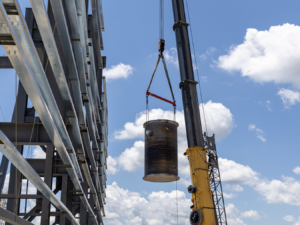
160 Days to Fission: Nuclear Power’s Sprint to Execution
Sponsored by:
For the first time in decades, a wave of nuclear projects across the U.S. is advancing in parallel—from test reactors to early construction. POWER examines how first movers are navigating execution risk, supply chain constraints, and the race to achieve criticality by 2026. For the first time since the 1970s, multiple nuclear projects are under […]
-
 Nuclear
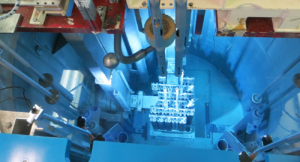
INL Enlists NVIDIA on ‘PROMETHEUS’ AI Effort to Halve Nuclear Deployment Timelines Under DOE Genesis Mission
Idaho National Laboratory (INL) has teamed up with artificial intelligence (AI) computing giant NVIDIA to advance “PROMETHEUS,” INL’s first-of-its-kind demonstration of an autonomous nuclear reactor driven by AI, to execute a key challenge under the Department of Energy’s (DOE’s) Genesis Mission. The move adds momentum to DOE’s push to apply AI across the full reactor […]
-
 Nuclear
NRC Launches Major Reorganization as Licensing Deadlines and Reform Workload Intensify
The U.S. Nuclear Regulatory Commission (NRC), the federal agency responsible for licensing and oversight of civilian nuclear facilities, on Feb. 4 said it would launch a sweeping organizational restructure intended to consolidate decision-making authority, integrate licensing and inspection teams, and align the agency with presidential directives for accelerated nuclear technology deployment. The reorganization will create […]
-
 Nuclear
Deadline vs. Deployment: Can U.S. Advanced Reactors Meet DOE’s 2026 Criticality Goal?
In a new pilot program, the U.S. Department of Energy (DOE) issued an ambitious challenge: bring at least three advanced nuclear test reactors to criticality by July 4, 2026. Announced in June, the program sidesteps traditional Nuclear Regulatory Commission (NRC) licensing, seeking instead to authorize full-scale reactors on private sites through DOE’s internal review process. […]
-
 Legal & Regulatory
DOE Pilot Program Targets Three Nuclear Test Reactors for 2026 Criticality Under Department Authorization
The U.S. Department of Energy (DOE) has launched a novel pilot program that will allow private developers to build and operate full-scale advanced nuclear test reactors outside of the national laboratory system, without a license from the Nuclear Regulatory Commission (NRC). Through a new authorization model grounded in the Atomic Energy Act and a Trump-era […]
-
 Nuclear
Canada Approves First Grid-Scale SMR Construction at Darlington
The Canadian Nuclear Safety Commission (CNSC) has given Ontario Power Generation (OPG) the green light to begin building a 300-MW GE-Hitachi BWRX-300 small modular reactor (SMR) at the Darlington New Nuclear Project (DNNP) site in Clarington, Ontario. The historic approval marks the first time Canada has approved the construction of a grid-scale SMR. The federal […]
-
 Nuclear
U.S. Air Force Selects Fast Microreactor for Nuclear Power Pilot
The U.S. Air Force’s first nuclear microreactor planned for Eielson Air Force Base in Alaska under a federal nuclear microreactor pilot program will be an Oklo liquid metal-cooled fast reactor. The Defense of Logistics Agency (DLA), acting on behalf of the Department of Air Force (DAF), on Aug. 31 issued a Notice of Intent to Award […]
-
 News
NewsBipartisan Nuclear Modernization Bill Clears Congress
A bipartisan bill to modernize regulation of the nation’s nuclear power fleet passed in the U.S. Senate on Dec. 20 and the House on Dec. 21 without much opposition. It now heads to President Trump. S.512, better known as the Nuclear Energy Innovation and Modernization Act (NEIMA), seeks to provide a program to develop […]
-
Nuclear
Nuclear Relicensing: The Best of Times, the Worst of Times
There is perhaps no industry in the U.S. experiencing a greater range of fortunes than nuclear power. Across much of the country, nuclear plants that must compete in deregulated markets are often economically
-
 Legal & Regulatory
American Physical Society Pushes for Reactor Licensing Beyond 60 Years
Allowing nuclear generators to operate some of the existing 100 U.S. nuclear reactors longer than their 60-year licensed limit could help offset a potentially massive power supply gap that could ensue as those