
Latest
-
 O&M
O&MTwo Units at Coal Power Plant Back Online Following Spring Fire
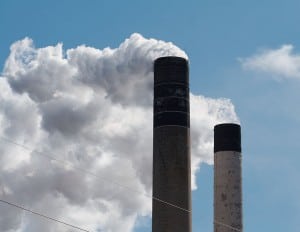
With Units 6 and 7 back in operation, Colorado Springs Utilities (CSU) has restored 80% of the generation capacity at its Martin Drake Power Plant located in downtown Colorado Springs. The plant was taken offline after sustaining significant damage during a May 5 fire. Most of the damage occurred in the area surrounding Unit 5, […]
-
 Legal & Regulatory
Seven Coal-Fired Units to Be Retired as Result of Settlement
Consumers Energy—Michigan’s largest utility—reached an agreement with the U.S. Environmental Protection Agency (EPA) and the U.S. Department of Justice that will result in more than $2 billion being spent on upgrades at its power plants and the closure of seven coal-fired units, according to the company. The settlement resolves claims that Consumers Energy violated the […]
-
 Legal & Regulatory
Congressional Watchdog Foresees Greater Coal Retirements, Fewer Retrofits Through 2025
Power companies will retire more coal-fired generating capacity and retrofit much fewer units with environmental controls than estimated just two years ago, the Government Accountability Office (GAO) reveals in a new report. The report released on Tuesday finds that in response to shifting market conditions and four Environmental Protection Agency (EPA) rules (not including the […]
-
 Legal & Regulatory
EPA Extends Clean Power Plan Public Comment Period
The Environmental Protection Agency (EPA) has extended the public comment period for its proposed rule to limit carbon dioxide emissions from existing power plants by 45 days. Janet McCabe, acting assistant administrator for the EPA’s Office of Air and Radiation, today told reporters in a press call that the EPA’s comment period for its Clean […]
-
 Legal & Regulatory
NRC Certifies GE Hitachi ESBWR Design
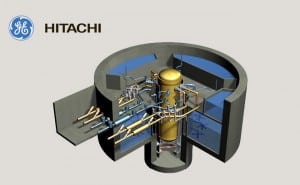
The U.S. Nuclear Regulatory Commission (NRC) on Sept. 16 issued design certification for GE Hitachi’s Economic Simplified Boiling Water Reactor (ESBWR), the company announced. The ESBWR is a Gen-III+ advanced boiling water reactor (BWR) that employs true passive safety systems and a simplified design utilizing natural circulation. These attributes allow the reactor to cool itself […]
-
 Distributed Energy
DOE Announces $8M to Improve Grid Resiliency
The Department of Energy (DOE) will designate $8 million for seven microgrid projects to help cities and towns better prepare for extreme weather events and other power disruptions. The funding will help develop advanced microgrid controllers and system designs for microgrids of less than 10 MW. Each projects includes a company cost-share, ranging from 20% […]
-
 Nuclear
Japan Sendai Nuclear Units Inch Even Closer to Restart
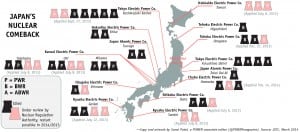
Japan’s Nuclear Regulation Authority (NRA) has approved Kyushu Electric Power’s application to make changes to its Sendai reactors, putting them a step closer to resuming operations. The regulatory agency this July said in a 400-page draft report that Kyushu’s No. 1 and No. 2 reactors at its Sendai plant in southern Japan’s Kagoshima prefecture passed […]
-
 Legal & Regulatory
Six States Sound Off on EPA’s Clean Power Rule
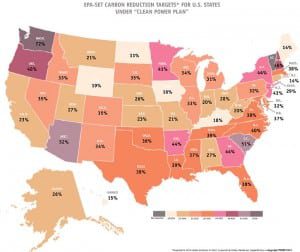
Regulators from six states shared starkly different views on the Environmental Protection Agency’s (EPA’s) proposed carbon rules for existing power plants at a House hearing on Tuesday. Some state-level officials said the EPA’s overall emission targets and suggested means to achieve them are based on unworkable and unrealistic assumptions about how state and regional power […]
-
 Coal
CoalCoal Supply Crisis Continues for Midwest Plants
The coal supply picture for Midwest power plants darkened again this summer as deliveries of Powder River Basin (PRB) coal to the region fell for a second consecutive quarter due to unreliable rail service, according to a report by SNL Energy. Midwest generators have been plagued by coal supply issues this year because of ongoing […]
-
 Gas
GasSolar Gains But Gas Still King of New Utility-Scale Capacity, Says EIA
The U.S. added 1,146 MW of utility-scale solar generation in the first half of 2014—the most ever for a first- and second-quarter period—but natural gas continued to lead new additions, though its margin may be shrinking, according to Energy Information Administration (EIA) data. Through the first six months of 2014, the U.S. added 2,179 MW […]