
Latest
-
 Legal & Regulatory
New Coal Ash Bill Unveiled in the Senate
Senators John Hoeven (R-N.D.) and Joe Manchin (D-W.Va.) have introduced a much-awaited coal ash bill in the Senate that they say will provide more certainty than will the Environmental Protection Agency’s (EPA’s) final rule alone. The bill introduced on July 17 is companion legislation to a measure introduced by Reps. John Shimkus (R-Ill.) and David […]
-
 Distributed Energy
Report: Distributed Generation, Energy Storage, Microgrids Pose Grid Reliability Risks
Emerging energy technologies such as rooftop solar, microgrids, and distributed generation could adversely affect reliability of the nation’s grid, a new report from the Electric Markets Research Foundation (EMRF) warns. The non-profit research entity whose mission it is to fund studies on significant electric market issues notes in its report, “Changing Uses of the Electric […]
-
 Renewables
IPL to Retire or Repower Coal Units in Iowa Under PSD Settlement With Feds
Interstate Power and Light (IPL) will be forced to spend $620 million to retire 10 coal-fired units and retire, refuel, or install pollution controls at several others in Iowa under a settlement reached with the federal government. The Alliant Energy subsidiary has long anticipated the settlement announced on July 15 by the Environmental Protection Agency […]
-
 Renewables
Report: Power Plant Air Emissions Continue Steady Decline
In a report released this week, M.J. Bradley & Associates found that in 2013 power plant SO2 emissions were 80% lower and NOx emissions were down 74% compared to releases in 1990—the year Congress passed major amendments to the Clean Air Act. The report, Benchmarking Air Emissions of the 100 Largest Electric Power Producers in […]
-
 Coal
CoalDOE Funds New Gasification Projects As Existing IGCC Projects Face Turmoil
Seven gasification projects will receive about $7.5 million in funding from the Department of Energy’s (DOE’s) National Energy Technology Laboratory. The projects will reduce the cost of coal conversion and mitigate the environmental impacts of fossil-fueled power generation, the DOE said in a statement on July 14. The projects fall under two subtopic areas: development […]
-
 Cybersecurity
Cyber Attack on U.S. Grid Could Destroy Dozens of Plants, Cost Billions, Report Says
A cyber attack on the U.S. power grid could potentially destroy dozens of generating units, leave 93 million people without power for weeks, and result in nearly $250 billion dollars in economic damage, according to a new report from Lloyd’s of London. Prepared to enable insurers to gauge and prepare for potential risks, the report […]
-
 Coal
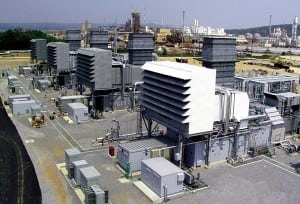
CoalGas Passes Coal as Top U.S. Power Source
King Coal has lost his crown—at least temporarily. Electricity generation data from the Energy Information Administration (EIA) for April 2015 showed the U.S. generated 92.5 TWh from natural gas and 88.8 TWh from coal, the first time the nation has gotten the largest share of its power from anything other than coal. That represents a […]
-
 Coal
CoalDOE Suspends Funding for California Clean Coal Project
The Department of Energy (DOE) has suspended funding for the Hydrogen Energy California (HECA) polygeneration clean coal plant, saying the company has failed to meet required milestones, according to a report in E&E Greenwire on July 10. The HECA project, in development since the late 2000s, is intended as a next-generation integrated gasification combined cycle […]
-
 O&M
O&MNew Renewable Projects Face Old Safety Hazards
Many of the dangers existing at conventional power plants also threaten personnel in the wind and solar energy sectors. All workers can benefit by reviewing lessons learned and implementing corrective actions to improve health and safety performance. The expanding wind and solar energy sectors are not immune to industrial hazards affecting all energy generation markets. […]
-
 Nuclear
Report: Losing Nuclear Would Blight Economy
The nation’s 99 nuclear plants produce about 19% of the country’s power, but they also contribute about $60 billion annually to gross domestic product (GDP), a new Brattle Group report finds. The report, “The Nuclear Industry’s Contribution to the U.S. Economy,” prepared for pro-nuclear group Nuclear Matters says, “Several factors are at play that may […]