
Latest
-
 T&D
T&DD.C. Circuit Again Upholds FERC Order No. 1000
A three-judge panel for the D.C. Circuit on April 18 unanimously upheld Order No. 1000, denying multiple challenges by New England power firms and state regulators to the Federal Energy Regulatory Commission’s (FERC’s) controversial mandate that requires utilities to remove certain “right of first refusal” provisions from existing tariffs and agreements. The decision in Emera […]
-
 Legal & Regulatory
DOE Issues First-Ever Emergency Order to Keep Open a Unit That Is Noncompliant with MATS
The Department of Energy (DOE) issued an unprecedented emergency order on April 14 to keep open a power plant that had been slated for shutdown under the Mercury and Air Toxics Standards (MATS) in a bid to secure electric reliability. The DOE’s order was issued under the Federal Power Act Section 202(c). It inaugurates the […]
-
 Legal & Regulatory
Energy Secretary Perry: War on Coal Is Over
The Barack Obama administration waged war on the coal industry, but that’s all over now, recently confirmed Secretary of Energy Rick Perry told the National Coal Council (NCC) during its annual spring meeting. The NCC is an advisory board to the secretary of energy tasked with providing expert advice on matters of the coal industry. […]
-
 Renewables
Natural Gas Projected to Fuel Largest Share of U.S. Summer Power Generation
The U.S. Energy Information Administration (EIA) expects natural gas–fueled electricity generation will exceed all other fuel sources once again this summer, marking the third year in a row that gas has been the leader. However, the EIA anticipates electricity generation from both gas and coal will be less this summer than in 2016. The reason […]
-
 Coal
CoalEPA Rescinds Effluent Limitations Guidelines Rule
The Environmental Protection Agency (EPA) will review and reconsider revisions to technology-based effluent limitations guidelines (ELG) and standards finalized by the Obama administration in September 2015. Power generators around the nation have been readying to comply with the rule that sets the first federal limits on the levels of toxic metals in wastewater discharges from […]
-
Coal
Interior Dept., Peabody Energy Seek to Keep Coal-Fired Navajo Plant Open
The Navajo Generating Station can continue to be competitive under a reduced-price fuel proposal through 2040, said Peabody Energy, the coal giant which owns a coal mine currently fueling the Arizona plant. The utility owners of the Navajo plant on February 16 voted to shut down the 2,250-MW coal-fired power plant in December 2019. The […]
-
 Energy Storage
Maryland Passes Energy Storage Tax Credit
Maryland on April 10 became the first state in the nation to pass legislation enacting a tax credit for residential and commercial energy storage installations. The measure passed unanimously in the state Senate, and with a 101–11 vote in the House. Gov. Larry Hogan (R) is expected to sign SB 758 into law. The bill […]
-
 Gas
GasExelon Chief Is Optimistic Despite Current Nuclear Market Turmoil
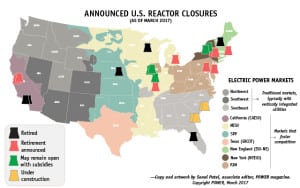
Exelon Corp., the nation’s largest nuclear generator, reinvented itself amid recent power pricing swings, market inequities, and policy worries that are challenging its “very existence,” a high-ranking executive told attendees at the ELECTRIC POWER Conference and Exhibition in Chicago this week. Bryan Hanson, president and chief nuclear officer for Exelon Generation, who gave the annual […]
-
 Legal & Regulatory
Fight to Keep EPA’s Clean Power Plan Alive Intensifies in Federal Court
A coalition of 24 states and localities have urged a federal court reviewing the merits of the Environmental Protection Agency’s (EPA’s) Clean Power Plan to stall the agency’s recent motion to suspend a case challenging the controversial rule. West Virginia v. Environmental Protection Agency (No. 15-1363) is arguably the most important set of environmental cases […]
-
 Renewables
Commodity Price Volatility Is Prime Concern Among Global Energy Leaders
An April 6–issued report released by the World Energy Council suggests that the single biggest worry among global energy leaders is commodity price volatility. Prices appear to be a big concern because of the “Grand Energy Transition” toward de-carbonization. Leaders in resource-holding countries, such as Saudi Arabia, are anxious about long-term economic models, if prices […]