
Latest
-
 Wind
WindThe Art of Power Generation
Much opposition to large-scale renewable projects concerns aesthetics. U.S. federal regulators, for example, ordered the developer of the $1 billion Cape Wind project—a 468-MW offshore wind farm proposed to be built in a 25-square-mile section of Nantucket Sound off the Massachusetts coast—to change the design and configuration of the project to reduce “visual impacts.” Among […]
-
News
Storing Energy Cryogenically
Researchers at the University of Leeds in the UK and the Chinese Academy of Sciences say they may have found a solution to dealing with short-lived power demand spikes—and it could be more environmentally friendly and halve the fuel needed when compared with gas-fired generation. Noting that gas-fired generators typically used to feed peaking demand […]
-
 Wind
WindOffshore Devices Get Bigger and Lighter
UK firms unveiled two innovative offshore turbines in July and August—one to reap the wind’s energy and the other, tidal power. Wind Power Ltd. made public the latest embodiment of its Aerogenerator project, a lighter 10-MW design, while Atlantis Resources Corp. unveiled and then deployed its mammoth AK1000 tidal turbine, which it says is the […]
-
Nuclear
India Kicks Off Construction of Indigenous Nuclear Fleet
India in August began building two 700-MW indigenous nuclear power reactors at Rawatbhatta, in the desert state of Rajasthan. The two pressurized heavy water reactors (PHWRs), which will use uranium as fuel and heavy water as both moderator and coolant, are the largest to be built by the central government–run Nuclear Power Corp. of India […]
-
-
Business
Lessons Learned in Reliability Standards Compliance
It has been three years and a few months since the North American Electric Reliability Council (NERC) Reliability Standards (Standards) became mandatory and noncompliance became subject to sanctions by the Federal Energy Regulatory Commission (FERC). You might assume that because we have had no further instances of widespread cascading outages that the Standards are working. You may also assume that—considering the database of documented noncompliance with the Standards—the industry as a whole is puzzled, unprepared, or negligent in carrying out its responsibility to keep the high-voltage electric grids reliable and secure. The truth likely lies somewhere in the middle.
-
Smart Grid
Smart Grid Cyber Security Guidelines Released
The National Institute of Standards and Technology (NIST) has finalized its initial set of smart grid cyber security guidelines. NIST’s Guidelines for Smart Grid Cyber Security (NISTIR 7628) includes high-level security requirements, a framework for assessing risks, an evaluation of privacy issues in personal residences, and other information for organizations to use as they craft strategies to protect the modernizing power grid from attacks, malicious code, cascading errors, and other threats, according to NIST’s press release.
-
O&M
Innovative Cleaning of Air Preheater Coils with Pressurized Liquid Nitrogen
Cleaning air heaters in power plants or recovery boilers has traditionally involved using high-pressure water, chemicals, or steam. These techniques, though effective on moderate airside fouling of heat exchange surfaces, are usually ineffective on the more tenacious deposits that can develop in coal-fired plants. If these deposits are not removed by periodic cleaning, heat transfer in the heaters is reduced, which in turn reduces boiler efficiency and increases a unit’s heat rate. Severe fouling on air preheaters (APHs) can even reduce a unit’s power output.
-
Legal & Regulatory
QF Contracts and 21st-Century Economics
Many power purchase agreements entered into between qualifying facilities (QF) and electric utilities during the 1980s and 1990s have several years remaining on their terms. These contracts typically require the generator to comply with the Federal Energy Regulatory Commission (FERC) regulations promulgated pursuant to the Public Utility Regulatory Policies Act (PURPA). The foremost FERC requirement […]
-
 Coal
CoalTop Plant: ADM Clinton Cogeneration Plant, Clinton, Iowa
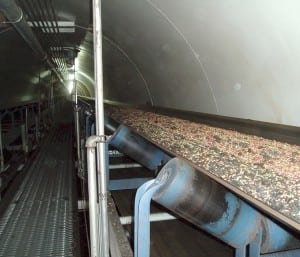
In the heart of corn country, Archer Daniels Midland is using seed corn that is no longer suitable for planting, along with coal, to power its 180-MW Clinton cogeneration plant. The cogeneration plant, which began operations in 2008, supports ADM’s Clinton corn processing plant, one of the largest corn wet mills in the world. It also supports ADM’s facility that produces renewable plastic from corn sugar. Firing up to 20% biomass along with coal, the new cogeneration plant is capable of providing 100% of the steam and electrical power needs of both facilities.