
Nuclear
-
 Nuclear
Crossing the Digital Divide
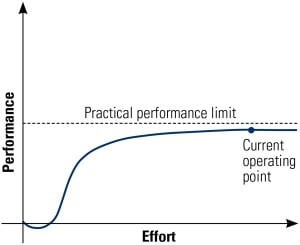
One of the great successes of the power generation industry over the past two decades has been the significant increase in nuclear plant reliability and other performance standards. However, there is reason to be concerned that the design, operation, and maintenance practices used by the current fleet of plants do not leverage all the possible advantages from a digital controls upgrade. Perhaps past success is the biggest barrier to future success.
-
 Nuclear
Browns Ferry Unit 1 Restart: World-Class ALARA Performance
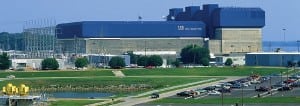
TVA completed the $1.9 billion restart of the 1,100-MW Browns Ferry Unit 1 in 2007. That restart project provided the opportunity to incorporate state-of-the-art materials and radiation-reduction techniques to ensure that Unit 1 would be an industry-leading low-ALARA-exposure plant when it returned to service. The reductions achieved were significant.
-
 Nuclear
Combustion Gas Analyzer
Building on the success of the Fluegas 2700 combustion gas analyzer, the new SERVOTOUGH FluegasExact integrates Servomex’s unique Flowcube flow sensor technology to give users even more confidence in their combustion gas measurements. The analyzer features a patented zirconium oxide cell for oxygen measurement and a thick film catalytic sensor for measuring carbon monoxide (CO) […]
-
 Nuclear
Ling Ao 4 Starts Up While Sanmen Gets First AP1000 Reactor Vessel
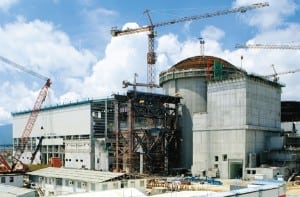
In China this August, as Ling Ao Unit 4—the second unit of the Ling Ao Phase II nuclear plant—started commercial operation, Westinghouse and its consortium partners marked the milestone of receiving the reactor vessel for the Sanmen nuclear power plant—the world’s first AP1000—in China’s Zhejiang province. The start-up of Ling Ao Unit 4 in Guangdong […]
-
 Coal
CoalCWA 316(b) Update: Fish Guidance and Protection
The U.S. Environmental Protection Agency (EPA) has proposed new Clean Water Act section 316(b) regulations for once-through cooling water intake structures. Comments on the proposed rules closed in August, and a final rule is expected mid-2012. The EPA estimates that at least half of the power plants using once-through cooling will be required to implement a best technology available solution in coming years. That typically means barriers and screens, but you may want to consider other options.
-
 Nuclear
Germany’s Nuclear Phase-Out Has Widespread Implications
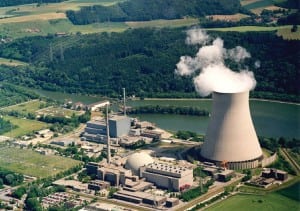
The German government in July finalized a package of bills that will phase out nuclear’s 23% contribution to the country’s power supply by 2022 and increase renewable generation from the current 17% to 35%. In August, the Federal Network Agency ( Bundesnetzagentur) said it wouldn’t rely on power from seven of the nation’s oldest reactors […]
-
 Coal
CoalTHE BIG PICTURE: Lights Out
Heat waves, droughts, and other weather and climate phenomena; economic woes; aging or inadequate infrastructure; fuel shortages. These are some of the most obvious causes that have led to record peaks in power demand or sudden drops in available capacity. The results have been sometimes debilitating load-shedding, brownouts, and blackouts around the globe this summer (and, in some cases, for much longer). Here’s an overview of which countries are affected by which difficulties. For a more detailed look at the extent of shortages and what’s causing them, visit Web Exclusives at https://www.powermag.com
-
 Nuclear
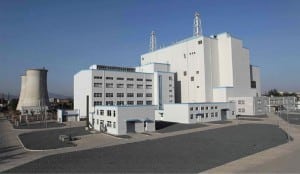
China Begins Operation of Experimental Fast Reactor
China in July flicked on its experimental fast reactor—the first built in the nation, and the first of many more to come. The China Experimental Fast Reactor (CEFR), whose development began in 1995, is a pool-type sodium-cooled reactor with a thermal output of 65 MW and an electrical output of 20 MW. The reactor is housed in a 44,000-square-meter (473,610-square-foot) building.
-
 Nuclear
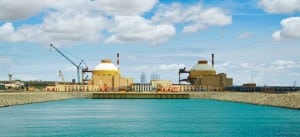
India’s Indigenous Nuclear Program Advances While U.S.-India Trade Stalls
Since a landmark 2008 deal that lifted global sanctions and allowed countries to conduct nuclear trade with India, the nation struggling to keep up with domestic power demand has signed deals with the U.S., France, Russia, Canada, Mongolia, Kazakhstan, Argentina, Namibia, and, in August, South Korea, for construction of large nuclear power plants (in technical collaboration with foreign vendors) or for nuclear fuel.
-
Coal
POWER Digest (September 2011)
Australia Pursues Carbon Tax. Australia’s Prime Minister Julia Gillard on July 10 laid out an ambitious plan to cut national greenhouse gas emissions by 5% of 2000 levels by 2020 by imposing a A$23 (US$23.4) per metric ton carbon tax, starting next year. If parliament approves the plan before year-end, the carbon tax will increase […]