
News
-
Nuclear
TVA Indefinitely Delays Bellefonte Nuclear Project
The Tennessee Valley Authority (TVA) last week indefinitely delayed new construction on its Bellefonte Nuclear Plant in Alabama, saying it had slashed the project’s budget by 64% and would reduce staff by 75%.
-
Nuclear
Japan Adopts Nuclear Safety Standards, Readies to Screen Reactors for Restart
In a marked energy policy shift away from a complete nuclear phase-out, Japan’s Nuclear Regulatory Authority (NRA) on Wednesday adopted new safety standards that Japan’s 48 shuttered nuclear reactors must meet before they can restart.
-
Nuclear
It’s Official: SCE to Retire San Onofre Nuclear Generating Station
Southern California Edison (SCE) announced on Friday that it has decided to permanently retire Units 2 and 3 of its San Onofre Nuclear Generating Station (SONGS), which have been shut down since January last year.
-
Coal
Edwardsport IGCC Project Start Marks Delayed, Costly Milestone for Coal Generation
Duke Energy’s long-awaited but controversial and cost-overrun-plagued integrated gasification combined cycle (IGCC) coal plant began commercial operation on June 7 in Knox County, Ind.
-
Solar
EU Imposes Antidumping Solar Duties on China as Trade Dispute Escalates
The European Commission (EC) last week imposed a provisional antidumping duty of 11.8% on imports of solar cells, wafers, and panels from China. Manufacturers have welcomed the controversial move, but installers and developers have decried it, saying it escalates a trade war that could drive up the cost of many solar technologies and undermine investment in the sector.
-
Solar
CORRECTED: Challenges to Order 1000 Filed in Federal Court as President Acts on Grid Modernization
Several power companies, state commissions, and trade groups have filed briefs with the U.S. Court of Appeals for the D.C. Circuit challenging parts of the Federal Energy Regulatory Commission’s (FERC’s) Order 1000, a rule they argue will lead to high costs for consumers and diminish the authority of state and regional regulators. Meanwhile last week, the White House issued a memo directing federal agencies to improve siting and permitting process to help modernize the nation’s grid.
-
Coal
SCANA Delays New Reactor Startup, Accelerates Coal Plant Retirements
South Carolina Electric & Gas (SCE&G) last week announced that startup of the $6.3 billion nuclear extension under construction at its V.C. Summer plant could be delayed by up to a year owing to delivery issues. The SCANA Corp. subsidiary, which last year identified six coal-fired units that would be retired or switched to natural gas to comply with looming Mercury and Air Toxics Standards (MATS), also said it plans to accelerate retirement of two units by the end of this year.
-
News
NRC Orders Venting Systems Improvements, Probes Foreign Ownership, Gives Watts Bar 2 Final EIS
A new order issued by the Nuclear Regulatory Commission (NRC) last week gives 31 U.S. reactors a year to further improve their venting systems as a safeguard during potential accidents. Over the past week, the NRC also called for comment on foreign public ownership issues and issued a Final Environmental Impact Statement (EIS) for the Watts Bar 2 operating license.
-
Coal
CRS Report: U.S. Energy Policy Debate Centers on Energy Security, Costs, and Environment
A report recently released by the Congressional Research Service (CRS) identifies policy goals—and their fundamental differences—identified in the 2012 presidential election and as highlighted in recent energy-related legislation. Among the nation’s energy priorities are to stabilize oil and gas markets, create natural gas pipeline infrastructure, dispose of nuclear radioactive waste, and replace conventional energy resources with renewables.
-
Coal
New Version of Coal Ash Legislation Introduced in the House
A new version of coal ash legislation introduced in the U.S. House of Representatives on Monday sets minimum federal standards for coal residuals from coal-fired power plants, but it gives states—not the Environmental Protection Agency (EPA)—responsibility for crafting their own permit programs.
-
Nuclear
MidAmerican Nixes Nuclear Power Plans for Iowa
Starting development work on a new nuclear plant in Iowa is "premature," given the uncertainty of carbon regulation and extensive regulatory review for new nuclear reactor designs, Des Moines–based MidAmerican Energy Co. said on Tuesday after it completed its nuclear feasibility study.
-
Wind
Another Offshore Wind Milestone: Interior Dept. Sets Auction of OCS Wind Leases
The Department of the Interior (DOI) Bureau of Ocean Energy Management (BOEM) will on July 31 put up for auction 164,750 acres offshore Rhode Island and Massachusetts for commercial wind energy leasing. The auction will be the first ever competitive lease sale for renewable energy on the U.S. Outer Continental Shelf (OCS) and it marks "the true beginning of an offshore wind market" in the U.S., experts said.
-
Smart Grid
Hudson River 660-MW Transmission Line Begins Service
A 660-MW underground and underwater transmission project linking Ridgefield, N.J., and Manhattan in New York City began operations on Monday.
-
Coal
FERC Staff: Coal Generation Could See Comeback on Pricier Natural Gas This Summer
A much greater coal power burn is expected this summer in reaction to an anticipated rebound in natural gas prices, suggests a recent reliability assessment from staff at the Federal Energy Regulatory Commission (FERC). Among other key aspects of the new report is that while electric reliability for the rest of the nation will be adequate, Texas could see a significant chance of an energy emergency.
-
Wind
Floating Offshore Wind Turbine Prototype Deployed Off Maine’s Coast
One of the first concrete-composite floating platform wind turbines in the U.S. was last week deployed off the coast of Castine, Maine. The project’s launch, led by the University of Maine (UMaine), is a milestone for a nation whose 4,000 GW of offshore wind energy potential lies in deep water—but has no grid-connected commercial offshore wind farms yet.
-
 News
NewsRam Position Sensors
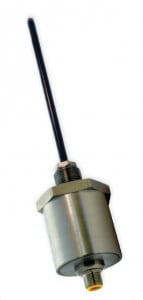
Alliance Sensors Group launched the MR Series of linear position sensors for use in measuring the ram position of hydraulic and pneumatic cylinders. The MR Series is designed to be a drop-in form, fit, and function replacement for magnetostrictive sensors but with much more robust construction and a lower cost of ownership, specifically targeting port-mounted […]
-
 News
NewsMulti-Gun Valve
NLB Corp. introduced the MGV24-1200, a new multi-gun valve that allows two or more high-pressure water jet lances (or other accessories) to be operated from the same 24,000 psi pump unit and can be rebuilt in the field in just five minutes. The MGV24-1200 can be used with any dump-style lance, and the lances can […]
-
News
Opinions à la Carte
Have you ever experienced a restaurant menu overflowing with so many tasty entrées that making your selection seemed an impossible decision? Your deliberation probably ended when the waiter began tapping a pen on his order pad and your dinner-mates gave you the evil eye. Picking a commentary topic each month is much like scanning the dinner menu. There are usually many topics that deserve a good slice and dice, but it’s the deadline that forces a decision.
-
 News
NewsVarnish Removal System
Oil Filtration Systems introduced a new series of oil purification equipment to remove varnish from hydraulic and lubrication oils. By utilizing the two leading varnish mitigation technologies, a single varnish removal system (VRS) can remove either soluble varnish or suspended varnish from oil. VRS equipment employs granular adsorbent media to remove soluble varnish found in […]
-
 News
NewsFlange-Spreading Wedges
Equalizer International introduced SWi range, what it claims is the “world’s most powerful flange spreading wedges.” Designed to decrease downtime and provide a safe, efficient, and cost-effective way to access and spread flange joints, the tools are capable of generating a spreading force of up to 25T and the SWi range includes a hydraulic (SWi20/25TE), […]
-
 News
NewsPre-Engineered Robotic Welding Cells
ESAB Welding & Cutting Products introduced three models of the new Swift Arc series of pre-engineered, robotic welding cells: Swift Arc AL (angle-load), Swift Arc FL (front-load), and Swift Arc SL (side-load) robot cells. Each system is an economic configuration for a complete work cell and is ideal for job shops introducing robotics to their […]
-
 News
NewsElectronic Voltage Detector
HD Electric Co.’s new single-range TAG-200, multi-range TAG-200MR, and single-range TAG-330 are electronic voltage detectors designed for detecting distribution and transmission voltages. These direct contact type detectors emit both audible and visual indications when placed in contact with an energized conductor. TAGs are designed for overhead and underground applications with optional underground bushing probes. (HDElectricCompany.com)
-
Business
MidAmerican Energy to Buy NV Energy for $5.6 Billion
MidAmerican Energy Holdings Co., a unit of Berkshire Hathaway Inc., is buying NV Energy Inc. for $23.75 a share in cash, or around $5.6 billion. The companies said the deal was unanimously approved by both boards of directors and could be completed in the first quarter of 2014, pending shareholder approval as well as approval by state and federal regulators.
-
Coal
D.C. Court Dismisses Sunflower Appeal of Suit Delaying Holcomb Plant
The D.C. Circuit Court on Tuesday dismissed an appeal by Sunflower Electric Power Corp. of a ruling requiring environmental review of Sunflower’s proposed 875-MW coal-fired power plant in Holcomb, Kansas.
-
Distributed Energy
Senators Introduce Bipartisan Energy Storage Bill
A new bill introduced in the Senate seeks to encourage the development of renewable power and lower consumer costs through the deployment of energy storage technologies.
-
News
FERC Chair Wellinghoff Announces Resignation
Jon Wellinghoff, chair of the Federal Energy Regulatory Commission (FERC), announced on Tuesday that he would resign after a seven-year-long tenure at the gas and power market regulator.
-
Nuclear
Sen. Boxer Alleges SCE Misled Regulators on Steam Generator Installation at San Onofre, Calls for Federal Probe
Sen. Barbara Boxer (D-Calif.) on Tuesday called for a federal investigation to determine whether Southern California Edison (SCE) intentionally misled regulators regarding the installation of faulty steam generators at the beleaguered San Onofre Nuclear Generating Station.
-
Smart Grid
LANL Developing Quantum Encryption to Secure Communications Networks
A promising new approach to securing communications networks from cyber crime uses quantum cryptography. Researchers at Los Alamos National Laboratory (LANL) have developed a system that could be used for critical infrastructure control systems, including those at power plants.
-
Gas
BLM Releases Updated Fracking Rule for Public Lands
An updated fracking rule proposed by the U.S. Department of the Interior’s Bureau of Land Management (BLM) last week maintains a number of requirements from a previous draft—including that well operators should disclose all chemicals used in fracturing activities on public lands—but it will improve integration with state and tribal standards and increase compliance flexibility, the agency said.
-
Environmental
Moniz Confirmed as Energy Secretary, EPA’s McCarthy Confirmation Nears Full Senate Vote
The full Senate last week confirmed Ernest Moniz as Energy Secretary while a divided Senate Committee on Environment and Public Works (EPW) voted 10–8 to send the nomination of Gina McCarthy as administrator of the Environmental Protection Agency (EPA) to the full Senate for a confirmation vote. Republicans agreed to lift their boycott on the McCarthy vote only after the EPA agreed to meet a number of transparency commitments.