
Legal & Regulatory
-
 Legal & Regulatory
What Comes Next for Carbon Capture in the Power Industry?
Policy upheavals have cast uncertainty over the future of carbon capture and storage in the power sector, though its momentum is widely expected to continue. In November 2024, the Global CCS Institute, an
-
 Legal & Regulatory
Private Equity Weighs Focus as Government Policies Shift
As the new administration begins implementing its energy policy agenda, the market is keenly anticipating the impact on private equity sponsors’ energy transition investments. President Trump has signaled
-
 Commentary
Transitioning to a Cleaner Energy Future Without Sacrificing Reliability
As 2025 kicks off with new leadership, the U.S. faces new challenges like a rapidly growing demand of electricity driven in large part by data center expansion, electric vehicle adoption, bitcoin mining operations, and continued industrial growth. Electricity supply and security remains a critical concern, particularly as aging infrastructure and supply chain disruptions complicate efforts […]
-
 Legal & Regulatory
NRC Proposes Deep Fee Cuts for Advanced Nuclear
The Nuclear Regulatory Commission (NRC) has proposed to sharply reduce its hourly service fees—by more than 50%—for advanced nuclear reactor applicants and pre-applicants in a move designed to incentivize innovation and accelerate the deployment of next-generation nuclear technologies. In a proposed rule published in the Federal Register on Feb. 19, the regulatory body moved to […]
-
 Legal & Regulatory
Zeldin Takes the Helm at Trump’s EPA Amid Industry Pressure for Regulatory Rollbacks
Lee Zeldin has been sworn in as the U.S. Environmental Protection Agency’s (EPA’s) 17th administrator, inheriting an agency that the power industry sees as increasingly central to the future of U.S. energy policy, grid reliability, and regulatory uncertainty. At his confirmation hearing on Jan. 16, Zeldin, a former congressman from New York’s First District with […]
-
 Legal & Regulatory
PJM, Facing Capacity Shortage as Early as 2026/2027 Delivery Year, Agrees to Lower Auction Price Cap
PJM Interconnection and Pennsylvania Governor Josh Shapiro have settled a lawsuit over PJM’s capacity market pricing, agreeing to lower the grid operator’s auction price cap from over $500/MW-day to $325/MW-day. The move comes as PJM acknowledges a capacity shortage could affect its system as early as the 2026/2027 delivery year. The agreement announced on Jan. […]
-
 Legal & Regulatory
Growth of Data Centers Likely Faces Economic, Legal Challenges
Is it possible that the digital infrastructure and energy/power industries are overestimating the need for data centers, and for development of new energy facilities to be used to power them? The growth of generative artificial intelligence (Gen AI) is expected to account for 3.5% of global electricity consumption by 2030, according to Gartner, a consultancy. […]
-
 Legal & Regulatory
As Last Measure, Biden Administration Unveils $23B in Utility Loan Commitments to Modernize Grid, Boost Clean Energy
As a significant final move before the incoming Trump administration takes office, the Biden administration has announced conditional loan commitments totaling $22.92 billion to support projects by eight utility companies across the U.S. The investments will seek to modernize infrastructure, expand clean energy generation, and improve grid reliability, impacting millions of customers, the Department of […]
-
 Commentary
Gauging the Impact of Trump 2.0 on U.S. Energy and Jobs
During the 2016 U.S. presidential campaign, then-candidate Donald J. Trump took an extremely tough stance on bringing back jobs lost to foreign countries by incentivizing domestic manufacturing. Trump took a hard line against the Clean Power Plan, many times referring to it as a “jobs killer” and an “inflation creator.” Energy independence became a resounding […]
-
Commentary
Factors Impacting the Transition to Carbon-Free Energy
The production and consumption of carbon-free energy (CFE) has accelerated worldwide in recent years, driven by large private energy consumers who have been leading this transition. For example, Google has been matching 100% of its global annual electricity consumption with purchases of renewable energy since 2017. The public sector is also an increasing driver, as […]
-
Legal & Regulatory
Importance of Rate Design in Moving Customers Toward Electrification
Home heating is approaching an impasse—there is great opportunity to decarbonize through heat pumps for both heating and cooling, but rising electricity rates might discourage consumers from getting on
-
 News
NewsPOWER Magazine January 2025 Issue Preview
POWER is the one brand that addresses all electric power generation and related technologies and fuels across North America and around the world, providing insight into this increasingly complex industry. Established in 1882, it is dedicated to providing its global audience with exclusive analysis of the latest trends, best practices, and power generation and related […]
-
 Interview
Industry Experts Say Storage, Renewables, Transmission Key Parts of 2025 Energy Outlook
The outlook for the power generation sector in 2025 promises a continuation of the energy transition, though there’s plenty of debate about the direction of the industry. Advocates for renewable energy, particularly in the U.S., are concerned about how the incoming Trump administration—with its support for fossil fuels—could impact the growth of clean technologies. Utilities […]
-
 Legal & Regulatory
Five Critical Insights from NERC’s 2024 Long-Term Reliability Assessment
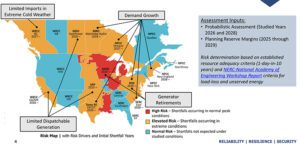
Well over half of North America faces a potential shortage of electricity supplies in the coming years, compounded by surging demand growth, accelerating generator retirements, and delays in resource development, the North American Electric Reliability Corporation (NERC) has warned in its latest 2024 Long-Term Reliability Assessment (LTRA). The designated electric reliability organization’s (ERO’s) annual 10-year […]
-
 Legal & Regulatory
DOE Advances Three Potential NIETCs—High-Priority National Electric Transmission Corridors
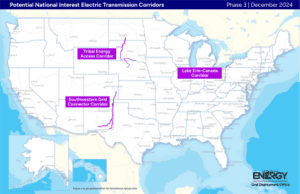
The U.S. Department of Energy (DOE) has advanced three potential National Interest Electric Transmission Corridors (NIETCs) into Phase 3 of its designation process, focusing on areas with critical transmission constraints to enhance grid reliability and reduce consumer costs. The measure is historic—given no NIETCs currently exist despite a decades-long effort to establish them—and it marks […]
-
 Legal & Regulatory
Watt’s Up with Cyber and AI? Navigating Legal Currents in Power Generation and Smart Grids
In the rapidly evolving landscape of power generation, companies are increasingly integrating smart grids and artificial intelligence (AI) into their operations. This transition, while promising enhanced efficiency and reliability, also brings forth a myriad of challenges, particularly in the realms of cybersecurity and legal compliance. This commentary delves into three legal issues around emerging cybersecurity […]
-
 Legal & Regulatory
Power in the Shadows: Energy and Environment in the Shadow Docket
In three front-page rulings this summer, the U.S. Supreme Court made sweeping changes to the ways that federal judges will review future agency actions—including a rejection of its longstanding Chevron
-
 Legal & Regulatory
EPA Proposes Tighter NOx Limits for Combustion Turbines
The U.S. Environmental Protection Agency has proposed tougher nitrogen oxide (NOx) emissions limits for new, modified, and reconstructed stationary combustion turbines. The proposed rule identifies a combination of combustion controls and selective catalytic reduction (SCR) as the Best System of Emission Reduction (BSER) for most turbines though it proposes combustion controls alone for certain smaller […]
-
 Commentary
Why Businesses and the Government Are Turning to Nuclear Reactors for Our Increasing Energy Demands
The energy landscape in the U.S. is undergoing a seismic shift, owing in part to the exponential growth of generative artificial intelligence (AI) applications and data centers, according to McKinsey & Company. This rise in energy demand is further exacerbated by the country’s increasing seasonal cooling and heating needs due to extreme weather. To offset […]
-
 Commentary
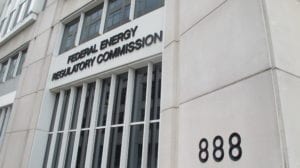
Hotly Contested Dispute Over Co-Located Loads Is Primed for FERC Action
Federal regulation of customer loads located next to existing power generating facilities, referred to as “co-located loads,” have become a significant area of interest for the electric industry. Large industrial loads have taken an interest in this configuration because it promises a faster, streamlined pathway to interconnecting to the grid and meeting their power supply […]
-
 Legal & Regulatory
Trump’s Focus on Energy Will Have Variety of Impacts
President-elect Donald Trump’s transition team has made the U.S. energy industry a focus of its plans for his first days in office, with analysts and energy experts expecting a rollback of environmental regulations for coal- and natural gas-fired power plants. That may have some utilities rethinking their strategies about the scheduled closure of some fossil […]
-
 Nuclear
NRC Approves Construction of First Electricity-Producing Gen IV Reactor in the U.S.
The Nuclear Regulatory Commission (NRC) has taken a historic step by voting to issue construction permits for Kairos Power’s 70-MWth Hermes 2, a “low power” advanced test facility comprising two 35-MWth molten salt reactors. “Following the Commission’s vote, Hermes 2 is now the first electricity-producing Gen IV plant to be approved for construction in the […]
-
 Commentary
November Elections Could Reshape Energy M&A Strategy and Regulation
With the 2024 U.S. presidential election rapidly approaching, energy mergers and acquisitions (M&A) professionals are considering how a new presidency could impact the transaction planning, structuring and execution of deals, including how the candidates are likely to approach regulation, especially around M&A. Both candidates are prioritizing different energy subsectors as part of their economic vision […]
-
 Nuclear
DOE Releases $900M to Spur Gen III+ Nuclear SMR Deployment, Targets Two ‘First Mover’ Projects
A $900 million funding opportunity released by the Department of Energy (DOE) on Oct. 16 seeks to spur “first mover” teams that could deploy the first two Gen III+ light water small modular reactors (SMRs) in the U.S. It will also provide funding for “fast follower” deployment support by addressing critical gaps that have long […]
-
 Commentary
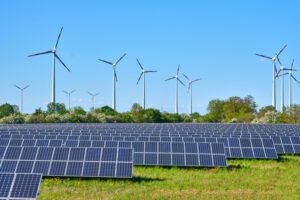
How the Presidential Election Could Impact Renewable Energy Tax Credits
President Biden signed the Inflation Reduction Act (IRA) into law in 2022. The IRA is the largest public investments in renewable energy in American history and created more than 20 different tax incentives for renewable energy and related manufacturing. Certain Republic politicians have directed vitriol at the IRA. However, even if Republicans win the White […]
-
 Legal & Regulatory
The Other Side of Safety—Litigation and the Expert Witness
What happens when you suffer a catastrophic injury at work and can’t continue in your career? Workers compensation begins. Those payments last until you reach the maximum medical improvement point. How long will you receive those benefits? It varies from state-to-state. In California, for example, benefits pay up to 104 weeks for most injuries and […]
-
 Legal & Regulatory
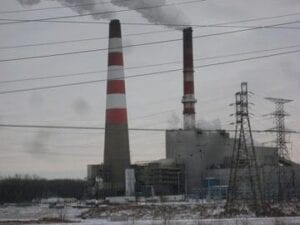
Supreme Court Clears Way for Limits on Power Plant Mercury, Methane Emissions
The U.S. Supreme Court has said that rules requiring power plants burning fossil fuels to reduce emissions of toxic substances can stand, dealing a blow to several Republican-led states and some power generators that had challenged the regulations. The Environmental Protection Agency (EPA) in May of this year finalized rules on emissions of mercury, after […]
-
 Legal & Regulatory
$1.5B Federal Boost for Four Major Transmission Projects as DOE Unveils National Grid Study
The Department of Energy (DOE) has awarded capacity contracts of up to $1.5 billion to four major transmission lines under its Transmission Facilitation Program (TFP) to aid the transfer of 7.1 GW of new capacity throughout Louisiana, Maine, Mississippi, New Mexico, Oklahoma, and Texas. The DOE’s Grid Deployment Office (GDO) on Oct. 3 also released its […]
-
Legal & Regulatory
How Local Opposition Can Thwart Renewable Energy Projects
Two-thirds of Americans say that they support the development of alternative energy sources such as wind, solar, and hydrogen power. At least that’s what the Pew Research Center found in a nationwide survey
-
 Legal & Regulatory
FTC Green Guides: The Growing Scrutiny on ‘Clean’ Natural Gas Claims
In an era of increasing environmental awareness, companies, particularly those in the energy sector, face heightened scrutiny over how they market their products. Natural gas, often promoted as a cleaner alternative to other fossil fuels, has become a focal point of this scrutiny. However, the Federal Trade Commission (FTC) Green Guides, a set of guidelines […]