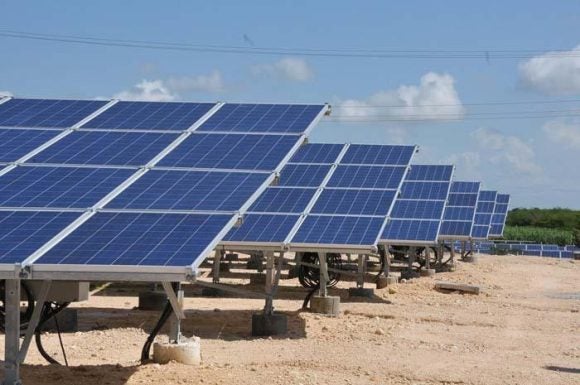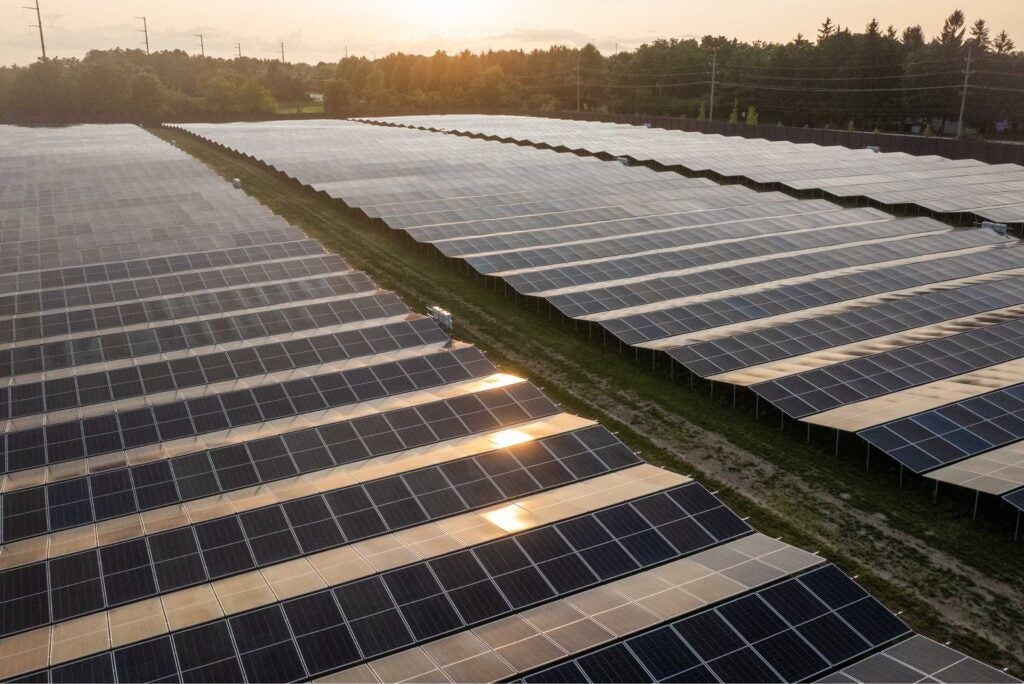
A Singapore-based subsidiary of a Germany-headquartered group said it has broken ground on a 99-MW solar power facility in the Philippines. The company, ib vogt APAC (Asia-Pacific), on September 15 said the Luca Solar Power Plant is being built in Ajuy, Iloilo.
The Luca installation once operational is expected to generate about 158 GWh of electricity. The project marks another milestone in ib vogt APAC’s goal of reaching about 500 MW of power generation capacity in construction and operation in the Philippines by the end of this year. The company’s parent, ib vogt, which is headquartered in Berlin, Germany, operates across more than 30 countries. The company manages a pipeline of about 29 GW of solar, 9.70 GW of battery energy storage systems (BESS), and 1.90 GW of wind projects. The group has more than 600 MW of solar (574 MW), BESS (29 MW), and wind (69 MW) currently under construction.
David Ludwig, CEO of ib vogt APAC, which has been active in Asia since 2012, said the Luca project is a turning point in the company’s momentum in the Philippines. “Earlier this year, our first solar-and-storage plant in the Philippines began delivering power. Breaking ground for our Luca plant today doubles the capacity we have built and under construction in the country,” said Ludwig. “Our third and largest project yet, entering construction before year-end, will more than double it again. Reaching this point was only possible with the support of our lenders, communities and local stakeholders, and we thank them for the work they put in alongside us. We will keep building into a Philippine power market that needs the supply. The same ramp-up is under way across our core Southeast Asian markets, a region entering a decade in which reliable, low-cost power decides how fast these economies grow.”
Predictable Energy Costs
Jose Luis Echávarri, managing director and COO of ib vogt APAC, touted the clean power and more predictable energy costs the project will deliver across its projected 20-year life, alongside the jobs it will create. “It means hundreds of local jobs during construction, and a smaller number of skilled jobs in this community for the life of the plant,” said Echávarri.
Marissa P. Cerezo, director IV of the Philippines Department of Energy’s Renewable Energy Management Bureau, said, “Our energy demand will continue to grow as our economy expands, so we need an energy system that is not just sufficient, but also reliable, resilient, diversified, and increasingly sustainable.”
“Beyond electricity, this project will generate employment, economic activity, investments, and other benefits that contribute to the development of Barangay Luca and the Municipality of Ajuy,” said Ajuy Mayor Loida Espinosa.
Investment from the UK was important for the project. British Ambassador Sarah Hulton OBE said, “The Government of the United Kingdom is proud to support the 99-MW Luca Solar Project in Ajuy, Iloilo, through British International Investment, the UK’s development finance institution. By helping to unlock additional private-sector investment, this project will deliver clean electricity for 79,000 households, strengthen energy security in the Visayas and support the Philippines’ transition to a lower-carbon future.”
—Darrell Proctor is a senior editor for POWER.