South Africa is at a critical turning point. An uncertain environment for private investment, escalating electricity prices, and a lack of available power threaten South Africa’s position as an attractive investment destination for many of the country’s most important industries. Power has been placed at the forefront of the government’s agenda, but South Africa needs a collaborative effort to meet the country’s energy demands and diversify its generation portfolio in order to drive economic growth.
Until the late 1980s, South Africa enjoyed a surplus of some of the cheapest electricity in the world. However, in 2008, after almost no investment in the country’s power infrastructure for 20 years, and facing escalating electricity demand, South Africa found itself in the middle of an electricity crisis. (See “Whistling in the Dark: Inside South Africa’s Power Crisis” in the November 2008 issue of POWER.)
The result was persistent power cuts through programmed load-shedding in periods where short supply threatened the integrity of the national grid system, thereby impacting the country’s mainstay industries. The “National Response to South Africa’s Electricity Shortage” policy document, released in January 2008, issued a plan to open the national power infrastructure to private investment, aimed at achieving supply-demand stability by 2012. Thus far, progress on the national plan has lagged behind initial expectations, and access to electricity remains a major inhibiting factor for economic growth.
The electricity market is dominated by Eskom, South Africa’s vertically integrated public utility. Established in 1923, Eskom is responsible for 95% of the country’s generation. Today, Eskom is the largest power producer in Africa, providing more than 40% of the electricity used across the continent, and the 10th-largest utility in the world by generation capacity. Eskom’s fleet includes 27 operational power stations (including one nuclear plant) with a net maximum capacity of 41,194 MW (as of Mar. 31, 2011). The utility owns and operates the country’s national transmission system and provides electricity to about 45% of all end users in South Africa. The other 55% is resold by redistributors (including municipalities). South Africa’s electricity network consists of 395,419 kilometers (km, 245,702 miles) of power lines and cables (all voltages).
Since 2008, Eskom has been under significant pressure to boost generation capacity and provide a stable supply of power. “In 2008–2009, as a result of the recession, we saw a dip in demand, which allowed us to push forward maintenance on existing plants,” explained Thava Govender, divisional executive of generation for Eskom. “But in 2010–2011, the demand is reaching the levels that we saw before the recession, and now the system is running very tightly. Our total capacity is 42,000 MW, and we have a 15% reserve margin and an operating reserve margin between 5% and 10%, which is not sufficient. If you take out gas generation, there are days when we have no operating margin, depending what is on maintenance, what is on forced [outage], and the demand—that is how tight the system runs.
 |
| Thava Govender, Divisional Executive, Generation, Eskom |
“Since 2008 we have added 1,000 MW of diesel-fired gas turbines to the overall capacity, and they are exceptionally expensive to run. For instance, the burning costs for the most expensive coal fleet are 180 rand (R) to R220 [$22.50 to $27.50] per MWh, compared to R2,000 per MWh for gas turbines.
“Our biggest challenge at the moment is to meet our demand and continue our maintenance schedule. Our fleet is middle-aged, which means they need extensive maintenance (shutting down for 60 to 120 days), and ideally, we would like 10% planned maintenance of our fleet per year, but we are not in a position to do this, and last year we succeeded in only 8%. We have a plan to shut down some of our units over the next five years to make them compliant with environmental requirements. We also need to reduce forced outages, but with a middle-aged fleet, this is a challenge. On average we have 3,600 MW of unplanned maintenance.”
The completion of the Kusile coal-fired power station is expected late 2017/early 2018 and will constitute the last stage of Eskom’s committed capacity expansion program. There has been no approval of or commitment to any new generation after that.
Eskom must raise capital to pursue its committed capacity expansion program and improve and refurbish its current operations. Capital expenditure is expected to grow to more than a trillion rand by 2026 and to be funded from operating cash flows, shareholder loans, and debt financing (raised locally and internationally), as well as the proposed R20 billion government equity recapitalization over the next three years. Eskom also successfully secured a $3.75 billion loan from the World Bank, the biggest loan that the bank has ever given to a South African company. Clauses attached to the loan for Eskom’s new-build program insist on new generation from cleaner energy sources.
A 20-Year Plan
Long-term underinvestment in the South African electricity industry for new generation capacity, further compounded by an aging fleet and the need for upgrades in the transmission and distribution sector, have resulted in significant project bottlenecks. However, the government’s Integrated Resource Plan 2010 (IRP 2010) and subsequent Policy-Adjusted IRP set out a 20-year electricity plan (2010–2030) for South Africa to increase capacity and change the nation’s energy mix and competitive landscape within the context of global warming and globalization. As reflected in the IRP 2010, the power supply crisis accelerated the need to diversify Eskom’s energy mix and move toward more diverse energy sources such as nuclear power, natural gas, and various forms of renewable energy.
The IRP 2010 also outlines the efficient use of existing resources, such as coal, while ensuring continued investment in clean coal technology, intensifying energy efficiency measures, and aligning the country’s power strategy with objectives set in the long-term mitigation scenarios and climate change commitments made at Copenhagen.
These goals, of course, add to the complexity of South Africa’s power supply mix. With 85% of its generation capacity from coal, South Africa is one of the top global polluters and the14th highest emitter of greenhouse gases. At the moment, coal is supplemented by a few small hydro plants (1.5%), pumped storage (3.5%), gas turbines (5.8%), one nuclear plant (4.4%) in the Western Cape, and a few very small wind turbines. In light of South Africa’s commitment to reduce emissions, Eskom has said it will reduce coal’s current share of the country’s primary energy mix to 70% by 2025 by obtaining 42% of new generating capacity from renewable energy, including concentrating solar power (CSP) and photovoltaic (PV) power and wind, plus an additional 23% from nuclear.
Although this document is the first of its kind, as pointed out by Thiru Pillay, director at Deloitte, there are some elements that require clarification: “The first gap is a country-level holistic strategy, similar to the 1998 white paper, that talks to the full value chain, including liquid fuel, primary energy, electricity, energy source mix, as well as the way that we deal with the market structure all the way down to how we deal with distribution. Secondly, we need stronger leadership about how we manage the role of private capital in the sector. We have made a lot of progress over the past two years, but we have been slower than we should be in the sense that we need the power on the ground. This is not a private versus state intervention, but what is the best solution for the country to ensure the continuous investment of capital and infrastructure that the country needs.”
Not So Cheap
South Africa led the world in low electricity prices for many years, providing investors with a very low energy tariff that was only in 2011 surpassed by Canada as the cheapest electricity in the world. At $0.0855/kWh, South African electricity is now 7% more expensive than Canadian electricity on average, having risen by 26% in 2011, largely driven by the need for financing extra capacity.
Thembani Bukula, full-time regulator for the National Energy Regulator of South Africa (NERSA), says that the impact on the country’s industries was taken into account and that this increase won’t make South Africa uncompetitive: “From the perspective of the Energy Intensive User Group, the good years have passed and the years that we are going to have are years where the price of the electricity is going to be very much related to the cost of producing that electricity…. It is a known view that in the past it was not really related. When you look at the whole infrastructure, we had a generation fleet that was depleted and depreciated over a very short space of time. It was producing at levels that are not related to the cost, and when you look at the increases that are projected, these are increases that will bring the price of electricity to the mid-point of the price of electricity in the different countries worldwide. We will still be competitive, but the gap is not going to be the 40% that it was. It will probably be 20%, but we have other advantages, such as the reliability and security of our resources.”
To align with the country’s goals to reduce carbon emissions, the South African government has introduced a 2¢/kWh environmental levy, which rose to 2.5¢/kWh, to be applied to electricity generated from nonrenewable energy sources. In addition, the South African National Treasury issued a discussion paper in December 2010 to look at the issue of a carbon tax. “The proposed Carbon Tax is still be finalised…. but could potentially make South Africa uncompetitive and be detrimental to the economy,” believes Michael Meeser, Investec Capital Markets head of project and infrastructure finance. “The carbon tax is nice to have, but there are more pressing things to be done at this time.”
South Africa’s aspiration is to achieve a peak in national greenhouse gas emissions between 2020 and 2025, followed by a plateau in emissions and, ultimately, a decline in absolute emissions, conditional upon international financial support, technology transfer, and a global agreement on a climate change regime.
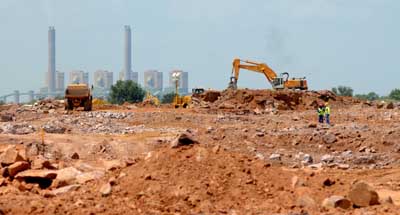
To upgrade and expand the country’s electricity infrastructure, in 2005, Eskom decided to embark on an aggressive new-build program. An estimated R343 billion will be spent to fund a new generation of power stations, including two of the largest coal-fired power plants ever built, Medupi (Figure 1) and Kusile, as well as Ingula pumped storage. Eskom expects to build 17.1 GW of new generation capacity by March 2018, followed by a new nuclear plant to come online in 2023. But major funding decisions, technology issues, and localization concerns need to be resolved very soon to ensure achieving this goal. Ultimately, Eskom plans to double its total generating capacity to 80,000 MW over the next two decades. In addition to all existing and planned power plants (including 10 GW committed coal), the plan includes new generation from the following sources: 9.6 GW of nuclear, 6.3 GW of coal, 17.8 GW of renewables, and 8.9 GW of other generation sources.
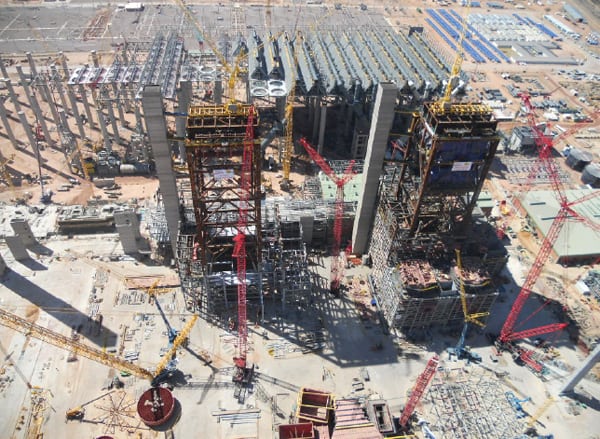 |
| 1. Much-needed baseload power. Medupi Power Station is shown here under construction. The six-unit supercritical plant (Eskom’s first) will have a total installed capacity of 4,788 MW. The units are expected to be commissioned between 2012 and 2015. Medupi means “rain that soaks parched lands, giving economic relief.” Courtesy: Eskom |
To fund the capital costs and rising operating costs, Eskom applied to NERSA for a 35% increase in electricity tariffs. The regulator awarded Eskom a second multi-year price determination plan (MYPD2) of electricity price increases of approximately 25% year on year from 2010 to 2013, which were designed to cover expansion and operation costs and provide a reasonable rate of return.
A Slow Road from Monopoly to Competitive Market
Partly due to the lack of a cost-reflective electricity tariff, as well as a well-established regulatory and legislative framework, South Africa’s attempts at creating an enabling environment for private participation were largely unsuccessful. Instead, South Africa has seen the failure of various privatization attempts.
However, despite these setbacks, the IRP 2010 clearly formulates the need for private investment and calls for 30% of new generation to be procured from independent power producers (IPPs). The Department of Energy (DOE), NERSA, and the treasury have issued a clearer framework for the upcoming first round of renewable energy procurement in an attempt to change the record for successful private participation. Together with a higher electricity tariff, private investors may finally see the change they have been waiting for.
As Omar Vajeth, head of power and energy at Absa Capital, notes: “In South Africa, we are trying to move from a very large monopoly utility with an abundance of cheap power to a mindset of a competitive market. For 15 years we have been battling to get the concept of competition in the country, and largely we have not been successful at implementing the processes to bring us to those stages. Now, there is a need for private power to assist in meeting South Africa’s capacity demand…. and this need will drive investment.”
Despite an extremely tightly balanced energy system, demand-side management focused on encouraging consumers to conserve power during peak periods, a voluntary energy conservation scheme targeting industry to reduce electricity consumption by 10%, improved plant performance, and the return to service of mothballed power stations have helped the country avoid emergency load-shedding since 2008, even in the wake of the 2010 FIFA World Cup. Nevertheless, South Africa is at a critical point for power development and economic growth.
Despite efforts to increase participation by private players, Eskom has and will most likely continue to hold its monopoly for decades to come. Govender explains Eskom’s position on the role of private players in the market this way: “There is the perception that Eskom is trying to block IPPs, but this is certainly not the case. We battle every day for extra megawatts. Every megawatt available in South Africa has been signed up. For every megawatt you add on or bring back into the system, you negate the use of a gas turbine that runs at R2,000 per MWh, so we will sign on whatever we can.”
Sheila Galloway, is group CEO of Utho Capital (PTY) Ltd., which was previously focused on the telecommunication sector across Africa and has now seen high activity in the power industry. The company has evolved into a leading public private partnership firm within Africa. Galloway notes that, “Across the continent and in South Africa, utilities and government departments are cash-strapped, so inevitably there is the need to introduce private players to facilitate development in the power industry in the fastest timeframe possible.”
However, the environment has been less than attractive for private players. “The historical price point for electricity has not been viable for private investment, and that is the number one constraint,” explains Deloitte’s Pillay. “The return on assets for Eskom needs to be at least 8%, but is currently 4%. With a further three rounds of 25% increases, it will reach 8%. This means that the state is willing to invest in the electricity sector with a return on assets of an expectation of 8%. The public and business have difficulty in accepting a truly cost-reflective tariff for electricity. If you continue hiking the tariff, there is a macroeconomic inflation issue. We have an inflation-targeting strategy, and if you significantly increase the price of electricity, we will have challenges to maintain the 3% to 6% inflation range, and that is the tradeoff. Are we able to manage the more than doubling of pricing of services?”
Currently, the buying and selling of power lies within one single entity: Eskom. Establishing an Independent Systems and Market Operator (ISMO) is a step toward promoting private investment in the industry through a more open and transparent process. The Cabinet has agreed to bring up an ISMO bill for discussion in parliament. As Ernst Venter from Exxaro’s clean energy division says, “If we want to draw investors into the energy landscape in South Africa, then we need to put an enabling environment in place. For instance, we need to establish an ISMO; you cannot have the same person as the jury and the judicator. There are many working models internationally, for example, in Korea and the UK there are IPPs operating successfully with a state-owned generation company.”
There is currently a debate about separation of the system operator from Eskom. Though there is merit in separating the single buyer and the market operator, an ISMO means that you no longer operate a vertically integrated utility in Eskom and, thus, the system operator carries the risk of the power system.
As Pillay notes, “If you take out the system operator, you have increased the level of risk in the system; then you need another board, and a different management team, and more handshakes between the different parts of the value chain…. Over a period of time, you are dealing with 30% of IPP generation with 70% still from one player. Invariably, 80% of that 30%, by virtue of the funding agreements, will be long-term bilateral contracts, and the other 20% may be traded in the market. It would therefore appear that we are reengineering an industry to secure the dispatch of 20% of 30%.”
Alastair Campbell, director of CIB mining, energy, and infrastructure finance for Standard Bank, points out that market conditions are perhaps more favorable now than they have ever been: “There is considerable anticipation around renewable energy, and because of the current energy shortage and the 180 billion rand funding gap, Eskom is not in a position to continue building power plants to supply the country’s power. Even with the completion of Medupi, Kusile, and the Ingula pumped storage scheme, we will still have an energy crisis, which creates the economic prerogative and justification for IPPs.”
An initial glance would show little to no movement toward private participation, but in light of recent decisions around the renewable energy procurement progress, it appears that although progress was slow, South Africa is finally moving forward.
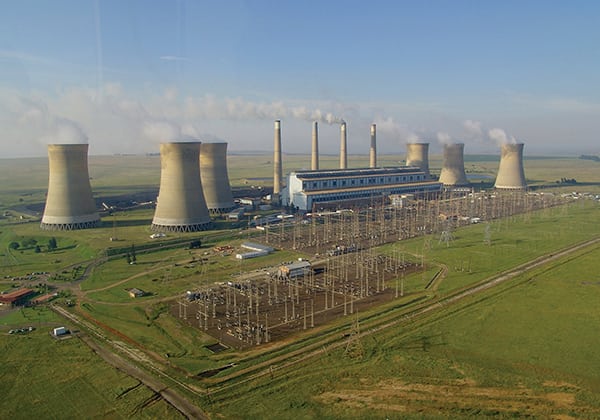
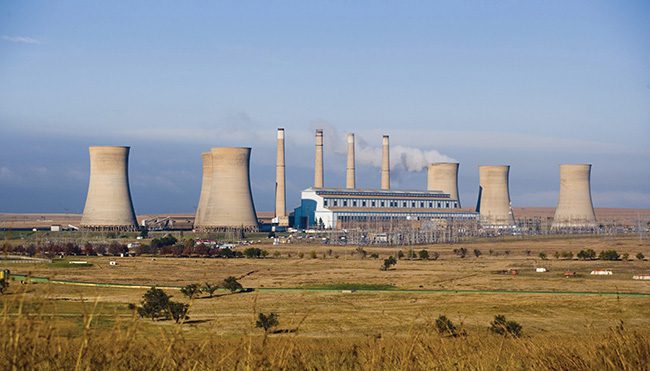
“South Africa has had an abortive start into the IPP market,” says Brigette Baillie, head of project development and finance at Webber Wentzel, one of the leading law firms involved in amendment of the legislative frameworks in early 2011 for private participation in new generation. “We were involved in advising AES in the cancelled IPP peaker bid, and we have also been involved in advising Kelvin Power Station [Figure 2], which is one of the few IPPs in the country…. But we will have a whole host of generators in South Africa on a long-term basis apart from Eskom. Whilst some [power purchase agreements] were signed pursuant to the [Medium Term Power Purchase Programme], there were very few, and they are short-term, and the cogeneration projects were very small. We are now talking about a substantial amount of megawatts coming from the private sector. We are also seeing captive bilateral power deals being developed. Anglo, for instance, has a tender at the moment looking for discard coal to be used to generate power to be supplied back to Anglo, and we expect Exxaro and Xstrata to begin something similar soon.”
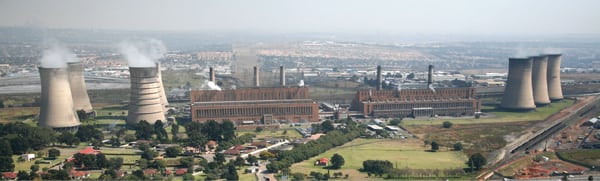 |
| 2. Kelvin Power Station. This 600-MW coal-fired plant near Johannesburg was commissioned in 1957 and is owned by a consortium of private owners, one of the few independent power producers in South Africa. Courtesy: African Infrastructure Investment Managers |
She adds, “DOE is a very new creation, it is only 18 months old… it really is the embryonic stage of the South African power sector.”
Andrew Johnstone is managing director for African Infrastructure Investment Managers, a joint venture between Macquarie Bank and Old Mutual to provide institutional capital and equity. He commented on the influence of risk appetite in attracting foreign and private players into South Africa as compared with the booming demand for them elsewhere on the African continent: “It depends on the location of the investor, and their perspective of return opportunity and the associated risk. The South African jurisdiction provides a far lower risk profile than other African jurisdictions, so there is likely to be a greater inclination to favor South Africa for those who are new to Africa. South Africa offers greater certainty than other jurisdictions, a lower risk profile, but also lower returns than other African options. The period over which the investor is comfortable to invest will also influence his choice of jurisdiction.
 |
| Andrew Johnstone, Managing Director for African Infrastructure Investment Managers |
“Over the last three years or so, the interest in Africa has grown enormously on the back of the ‘emerging markets’ theme, greater availability of high-quality information such as publications highlighting the attractions of Africa as an investment destination, which is improving both data and also credibility. The large investor markets such as the U.S. and Europe are starting to look at Africa, and that is creating momentum.”
Most other African countries are operating in a dollar market, which Absa Capital’s Vajeth says is more attractive for some foreign investors than South Africa’s rand market: “If investors can be comfortable with taking more risks in those countries, then there are opportunities…. South Africa can continue to play a large role in providing the stability and governance framework for African countries to grow. In the future, we may need to go to foreign markets, but in South Africa for now we are operating in a rand offtake market, and we have the capacity to fund our own projects.”
This is a time of much activity for South African financial institutions, and Nedbank Capital cautions developers to be selective in their choice of financial institutions. “If the institution is overexposed, the development of the entire project can be at risk. This is why we are selective in the mandates that we sign, and we carefully gauge our capacity to structure, close, and participate in those projects,” says Sakkie Leimecke, lead principle for energy at Nedbank Capital. “There is room in the market for a combination of international and local banks. In time, as the renewable energy sector becomes more developed, new financial instruments will become available, and financial institutions such as pension funds will start to create appetite for involvement.”
Coal
In 2006, Eskom received a license to build the first new coal-fired power station in more than 20 years. It is called Medupi, meaning “rain that soaks parched lands, giving economic relief.” The station comprises six units, to be commissioned at nine-month intervals, totaling 4,788 MW of installed capacity. The first unit is scheduled to be commissioned late 2012 and the last by 2015. The plant has a planned operational life of 50 years.
This project boasts a number of firsts. Medupi will be Eskom’s first supercritical plant, enabling operation at higher temperatures and pressures than previous generation boilers, with greater efficiency. It will also be the biggest dry-cooled power station in the world. Additionally, the boiler and turbine contracts were the largest Eskom had ever signed. Hitachi Power Africa will supply the boiler plant and auxiliary equipment to both 6 x 800-MW coal-fired plants, and Alstom S&E has the turbine contract.
Kusile is the second most advanced coal-fired power plant project after Medupi, consisting of six units, each rated at approximately 800 MW for a total of roughly 4,800 MW. The first unit is planned for commercial operation in 2014. Other units will be commissioned at approximately eight-month intervals, with the last unit expected to be in commercial operation by 2018. It will be the first power station in South Africa to be installed with flue gas desulfurization, state-of-the art technology in line with current international practice.
Contracts for the new-build program stipulate levels of localization and job creation. With a 25% unemployment rate, South Africa’s industries remain focused on skill development and employment opportunities.
“Hitachi has spent more than R1 billion on the resuscitation of the boiler industry on localization investment; this includes upgrading of facilities that were in existence and building new ones for boiler pressure part manufacturing,” explains Johannes Musel, CEO for Hitachi Power Africa (Pty) Ltd. “Eventually, after the completion of Medupi and Kusile, the factories can be used to export to global markets. Together with our partners and subcontractors, we employ 4,500 people.”
 |
| Johannes Musel, CEO for Hitachi Power Africa |
Localization varies by technology. “For coal-fired plants, the advantage is that over 60% is local content, as Hitachi has reestablished an entire boiler manufacturing industry which had completely disappeared. This has created a lot of jobs in the process. For nuclear there will be a much larger portion of import content,” Musel notes.
The Murray & Roberts Group is currently engaged as one of the most significant players in the construction of Medupi and Kusile stations, and through a joint venture they are responsible for Medupi’s civil work and have a contract with Hitachi to do the mechanical work for the boilers. “Availability of skills and maturity (or lack thereof) in our industrial market space are key challenges in South Africa,” comments Mile Sofijanic, senior executive director, Murray & Roberts Group.
Eskom’s Financial Position
Paul O’Flaherty, Eskom’s finance director responsible for the new-build program, discusses Eskom’s financial status and the effects of new pricing and possible tax legislation on the economy.

You have taken Eskom from a place of tremendous funding uncertainty to securing one of the largest loans from the World Bank. Can you outline some of the key objectives achieved since your appointment in January 2010?
We looked at a number of funding solutions for Eskom, because at that stage the board of Eskom decided not to place any further contracts for Kusile because we did not have a funding plan. We looked at 45 funding options for Eskom, including selling off assets and selling off interests in Kusile. Ultimately, we agreed with the National Treasury and the DPE [Department of Public Enterprises] in September 2010 that—as our cash flows were pushed out because of Kusile and the crunch of our funding, which around the next three years was not as severe as we thought—to extend the government guarantees from R174 billion to R350 billion and to allow Eskom to tap various forms of funding with the aim not to do this solely on the guarantees, but to only use them when absolutely required.
We figured out that, to the end of Kusile (2017/18), taking into account operational cash flows, we needed R300 billion, and today we have secured, signed, and sealed around 72% of that. At of the end of June 2011 we have drawn down R80 billion of it.
Our sources are diverse, and we see export credits as a big opportunity, having already secured R32 billion from export credits, R28 billion from the World Bank, R21 billion from the African Development Bank, R15 billion from the Development Bank of South Africa, and we also intend tapping the local and international bond markets for approximately R90 billion from which last year we got R28 billion. There are still unidentified sources of around R25 billion that we are looking at across a variety of funds locally and internationally. There is potential for more export credits and for future international bonds. Where we sit today we are very comfortable that we can fund the entire R300 billion, so we are very confident we can complete Kusile.
With a clear funding path to see you through to the completion of Kusile, what do you envision post-Kusile to fulfill the remaining 70% of new generation to be commissioned by Eskom?
Post-Kusile is another ballgame. We are busy working with the DPE to figure out, where in the 40,000 MW required by 2030 does Eskom fit in? Government’s intent is that Eskom does 60% to 70% of that, and the question remains how we fund it.
For instance, if Eskom had to build the entire 9,600 MW of nuclear, funding would be an issue, but not the major issue. There are plenty of funds out there and plenty of opportunities for funding, so while it was our number one constraint in the past, we do not see it as our number one constraint anymore. We see execution and project management skills as the number one constraint, and we are encouraged to hear the minister talk about private partnerships; we cannot do this on our own.
NERSA [the energy industry regulator] agreed to a tariff increase of 25% for the next three consecutive years, although this was below the amount requested by Eskom. What would be the optimal increase to enable a profitable/cost-reflective return for Eskom without compromising the competitiveness of some of South Africa’s mainstay industries such as mining?
That is very difficult. From an Eskom company point of view, currently, on a stand-alone basis, we are not investment grade; we are B at best. We get an investment grade rating because of the government uplift, being a sovereign-owned company; therefore, we depend highly on government support.
Ultimately, our view is that over time Eskom needs to be a stand-alone investment grade and wean itself off government support. We think we can be there in four years’ time, and the fact that we were able to raise international bonds off our own balance sheets means that people can see our plans are coming together. In order to get to that investment grade, we cannot get away with anything less than 15% to 18% increases over the three years post-MYPD 2 [the second multi-year price determination plan], but that is excluding nuclear, and more expensive solar and wind; therefore, it is going to be a very tough conversation determining the right number. The regulator says 25% for the next two years, and we are saying we can tone that down but extend the price increase for a longer time. What is that number? is what we are trying to figure out.
What will be the impact of a carbon tax on Eskom and the economy, and how do you see this coming to fruition?
We are busy having these debates with the National Treasury. There are effectively two options. The first is a pass-through for Eskom, which means we will not bear any cost, the same as the environmental levy. The second is that Eskom bears the tax, which means we make less profit, and if we do not get an increase in tariff we would be even more dependent on government because we would struggle to get to the right credit ratings, and we would struggle to raise debt off our own balance sheet. It is a two-edged sword. I think we need to look at a grandfathering approach, that all new emitters with carbon content pay more. It is an historical inheritance for Eskom, and you should not penalize Eskom because of its legacy. We are in discussions with the National Treasury on the issue. It seems certain it will be introduced, and we need to give our input as to how it should be introduced.
“South Africa needs some form of ‘South African industrial revolution’ to be ready to face the high level of technical skills, knowledge, processes, and structure required for the implementation of the nuclear program,” Sofijanic continues. “In our opinion, new power plants need to be completed in a cost-effective manner in line with world norms for productivity, quality, and safety…. and unlike many other countries, we have objectives that run in parallel to executing projects, including alleviation of poverty, localization, and empowerment of previously disadvantaged peoples.”
In addition to the lack of development within the industry, there has been a mass exodus of qualified engineers over the years, which makes attracting and retaining personnel a huge obstacle. “Unique to South Africa is the lack of skilled artisans,” explains Ute Menikheim, head of energy Southern African operations for Siemens. “Now with the new-build program, the challenges were massive; you could not find welders, fitters, and drillers—the market was completely depleted. At Siemens, we decided to train our own artisans to be able to serve our needs and develop the industry.” Siemens has developed 600 skilled artisans, and about 80% have been placed in local industry.
While President Jacob Zuma has set job creation as one of the government’s fundamental priorities, Yokogawa South Africa’s managing director, Herman van den Berg, remarks that this has not affected the readiness within the South African marketplace to adopt leading-edge technologies and move further toward automation. “Obviously, there are technologies that cannot be applied immediately. Some process enhancement systems, asset automization systems, asset maintenance systems, or process optimization software are not necessarily applicable to South Africa because we are still struggling to get everybody employed. It’s better to give people jobs than to make a factory so efficient that there is no need for manual labor anymore. However, there are many areas were we can apply direct benefits to South Africa, such as transmitters.”
Pumped Storage and Peaker Solutions
On any electricity system operating as close to the margin as the South African system, fast-dispatching generation resources are a must, so the country is building pumped storage and peaking plants.
Ingula Pumped Storage Scheme consists of an upper and a lower dam, both of approximately 22 million cubic meters water capacity (777 million cubic feet). The plant is scheduled to come into full operation in 2013 with a planned capacity of 1,352 MW. The dams are 4.6 km apart and are connected by underground waterways that house 4 x 333-MW pump turbines. Water is released during peak energy consumption from the upper dam through the pump turbines to the lower dam to generate electricity.
In addition to the Ingula project, GDF Suez was awarded the contract for two diesel-fueled peaker projects (750 MW in Kwazulu-Natal and 330 MW in Eastern Cape), estimated at R5 billion.
Clive Ferreira, director of Fieldstone Africa (Pty) Ltd. was involved in the first failed attempt at private participation in the peaker projects. He says, “The first peaker project was a failure. When they should have done it, they didn’t do it, and now they are doing it and they probably should not. If capital is a scarce commodity, we should rather build cheaper baseload stations that can be run. The fact that they are considering those expensive peakers is an indication that we have failed in proper planning. If you are in trouble today, it is because you didn’t plan five years ago, and the only way to do it is to build expensive peakers that run at 10 times higher cost.”
Gas
South Africa’s deposits of natural gas are small. The second round of adjustments, which led to The Policy-Adjusted IRP, included securing a minimum 711 MW from combined cycle gas turbines (CCGT) between 2019 and 2021 to improve security of supply by providing back-up for planned renewable generation as well as additional CCGTs later in the IRP period.
But Sasol, the biggest local company listed on the Johannesburg Stock Exchange (JSE), responsible for producing synthetic fuels from low-grade coal and a small amount from natural gas, awarded a contract to Wärtsilä in early 2011 to provide the complete turnkey solution for its gas-fueled combustion engine plant. This is part of a new initiative developed under Sasol New Energy Holding, the company responsible for low-carbon electricity in Sasol. This will be a first for South Africa and the largest of its kind on the continent.
Arnaud Gouet, head of South African operations for Wärtsilä, comments: “Our intention is to grow in South Africa. We recently signed the 180-MW Sasol gas project [Figure 3], which is an extremely important project for us. Gas is becoming more and more important…. it is flexible, affordable, and clean energy. There are many projects for developing gas in South Africa as well as in the region. There are gas opportunities in Mozambique, and there might be other opportunities for [liquefied natural gas] and other gas fields offshore on the west coast. This project will be a landmark project.”
 |
| 3. Industrial gas generation. Wärtsilä is supplying Sasol with a 180-MW gas engine power plant for baseload power under a turnkey contract for its Sasolburg operations. Courtesy: Wärtsilä |
The project south of Johannesburg, at an altitude of 1,700 meters (5,577 feet), is not without its challenges. Wärtsilä, a leading global supplier of flexible power plants and services to the global power generation market, will use 18 20V34SG generating sets running on natural gas to generate 180 MW of baseload capacity for the company’s own use; excess production will be wheeled through the national grid. In addition to enabling a reduction in Sasol’s operating costs, the new power plant will notably reduce the company’s carbon footprint in the area. Another key environmental factor is that the Wärtsilä solution operates with a closed-loop cooling system, thus consuming absolutely no water, which is critical to a country with water scarcity.
Sasol is only one of many energy-intensive users that are looking into generation for their own use. Many of the mining houses are following suit, including Anglo American and Xstrata’s Lesedi project, both in an attempt to secure energy supply and reduce their carbon footprint.
Exxaro has also seen the opportunity: “As the second-largest coal producer in South Africa and the largest coal supplier to Eskom… we have identified a massive opportunity for value creation by entering into the energy industry, and we are currently establishing an energy company,” says Ernst Venter, executive general manager, business growth, for Exxaro. He cited three reasons for the move: the need for reliable baseload power supply to support growth, price hedging, and a desire to move toward being the first carbon-neutral company in South Africa.
Nuclear
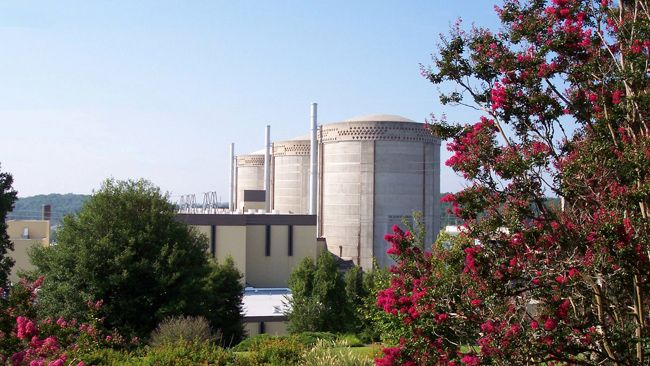
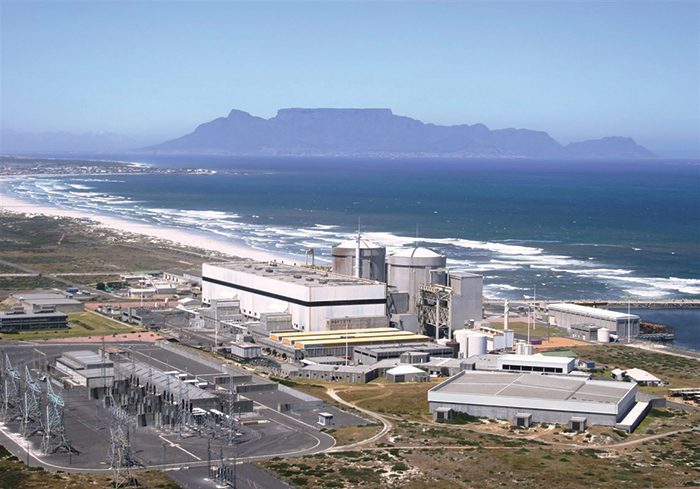
Currently South Africa’s only nuclear plant, Koeberg in the Western Cape comprises two 900-MW units (Figure 4). It was constructed and commissioned in the 1980s, and the country has not added any additional nuclear capacity since then, despite many ongoing plans. The Koeberg plant was built by Framatome (now Areva) using pressurized water reactors and is owned and operated by Eskom.
 |
| 4. Solo station. The 1,800-MW Koeberg Nuclear Power Station near Cape Town is the only nuclear plant in South Africa. Courtesy: Eskom |
Several years ago, the Board of Directors of Eskom approved a plan to expand the company’s nuclear fleet to more than 25% of the country’s generation by adding 20 GW of new nuclear capacity. The first unit was to be commissioned in 2016. The environmental assessment process for this “Nuclear-1” project considered several sites in the Western Cape. Technology options considered were Areva’s EPR and Westinghouse’s AP1000. Eskom later confirmed that, due to lack of finance, it would not continue with the nuclear program at that time.
Now South Africa’s energy policy plans to increase nuclear from 5% to 15% of overall capacity, which means 23% of new generation will come from nuclear. “Based on the natural resources available in South Africa, wind and solar renewable energy should be exploited meaningfully, but this needs to be balanced by the need for energy security,” said managing director of Westinghouse, Bultie Nel. “Without substantial hydro being available, nuclear is the only bulk option for non-carbon-emitting power.”
The IRP2 allows for the first 1,600 MW of new nuclear capacity to be introduced in 2023, followed by five more 1,600-MW units between 2024 and 2029. Energy Minister Elizabeth Dipuo Peters has indicated that the government will need to make decisions on nuclear power by the end of 2011 if the 2023 deadline for the first nuclear unit is to be met. Localization and skill development are key considerations for South Africa, but they will require time to put in place.
 |
| Elizabeth Dipuo Peters, Energy Minister |
Dr. Yves Guenon, head of Areva South Africa, says, “South Africa needs to develop its localization strategy well ahead of its nuclear build program. It is important that the country is ready to procure and develop the right skills at the tight time, particularly engineering and technical skills to support the nuclear industry. The French industry is ready to support the South African industry by teaming with them to obtain a quick and sustainable know-how and technology transfer, like we did in China 20 years ago.”
Technology partners in the running include Generation III designs by Areva (ERP), Westinghouse (AP1000), and Generation II designs from Korea and China. However, in light of the Fukushima disaster in Japan, approval of a Generation III design by South Africa’s National Nuclear Regulator is most likely.
Renewables
It was no surprise that in 2009, national and international renewable energy companies rushed to the South African market with high hopes of becoming profitable thanks to what appeared to be one of the most attractive tariffs for renewable energy in the world. However, much to the dismay of private investors, the renewable energy feed-in tariff (REFIT) has since been revisited, and a tender process with a competitive bid on price has prevailed. The objective is to build a sustainable renewable industry that contributes 42%, or 17,800 MW, of South Africa’s new generation capacity by 2030. The projects for onshore wind (1,850 MW), solar photovoltaic (1,450 MW), concentrating solar power (200 MW), biomass (12.5 MW), biogas (12.5 MW), landfill gas (25 MW), small hydro (75 MW), and other small projects of less than 5 MW (100 MW) are expected to involve foreign and domestic investment of between $10 billion and $12 billion.
The renewable energy target is based on achieving a large portion of the 10,000 GWh from solar water heating, as it is the most cost-effective and easiest renewable option to implement. The current tender for the first 3,725 MW of renewable IPP projects will be released later in 2011 (after this report was completed) at the 17th Conference of the Parties to the United Nations Framework Convention on Climate Change, hosted in Durban.
“This is the fourth attempt at involving the private sector, and we hope it will be successful,” said Fieldstone’s Ferreira. “There still remains a lot of optimism from South African companies, but from international investors there is a difference of opinion. A lot of them have spent significant time and money to prepare their bids, and there is an air of skepticism as a result of the uncertainties surrounding [the renewables framework].”
Regulator Bukula addressed the issue by saying, “While we can be criticized for the time delay, we wanted to make sure that what we decided to implement was correct and sustainable. We are going to have a regulatory environment that is second to none or comparable to a first-world country.”
Johnstone of African Infrastructure Investment Managers is in agreement: “Another challenge is the pursuit for short-term gains. Infrastructure is a long-term asset; it lasts a long time and takes a long time to put in place. One needs to be purposeful, but also patient.”
With a clearer framework, investors can finally move forward. “Now that the documents have been issued and it has been confirmed that the bidders would have to bid a tariff subject to a cap, the market can digest this and plan appropriately,” says Meeser of Investec Capital Markets. “I’m not averse to a competitive procedure, if the adjudication process is clearly defined and transparent. I think it would be interesting if the actual tariffs were published. The obvious benefit is that the consumer will benefit through lower electricity prices. One of the pitfalls of a competitive process when looking at international precedent in the renewable energy sector is the potential of projects not to meet financial close, as the tariffs bid could be unrealistically low as a result of aggressive assumptions.”
As with the coal and nuclear industry, the renewable energy industry is set to create employment opportunities. Although the selection is 70% weighted toward price, a bidder’s price would only be considered once the bidder had met the other economic development criteria, which carry a 30% weighting in the final selection and include job creation, the involvement of historically disadvantaged individuals in the project, community development, and economic spinoffs, such as the localization of components used in development of the facilities. Foreign investors need to embrace South Africa’s Black Economic Empowerment (BEE) legislation to involve historically disadvantaged individuals in all phases of their project.
In 2011, the International Development Corp. (IDC) launched its green industry unit with a focus on renewable energy (non-fuel-based green energy—mainly wind, PV and CSP, and small hydro), energy efficiency and demand-side management, emission and pollution management (waste management and recycling, water management, and air pollution control), fuel-based green energy (waste to energy and cogeneration), and biofuels (mostly bioethanol). IDC will invest R22 billion over the next five years and contributes to the development of broad-based BEE in the industry.
“We play a significant role in funding and developing projects where BEE players are involved,” commented Rentia van Tonder, head of Green Industries SBU, IDC. “We are not there to source BEE players for companies. We prefer them to come to us with BEE partners, and we can fund them to be a part of that project. We prefer to look at Broad Based Black Economic Empowerment (BBBEE), like community and workers trust, especially in the renewable energy field, as it lends well to facilitate the involvement of the communities.”
For Siemens, BEE means ramping up resources and skills locally. “Our wind division will be the hub for the whole of Africa and all of the Middle East. This means we will have the center of competence located here,” says Menikheim. “In renewables we will look for partnerships in the industry, for instance in local manufacturing of wind towers, and we are looking into a local setup with a civil company on all the structuring for solar CSP and PV….This means job creation and training of people out of the local communities.”
Though in its infancy, the renewable energy industry is set to take shape. As Davin Chown, managing director, Mainstream Renewable Power South Africa cautions, “Our big challenge is to show government that renewable energy will work. We cannot afford to have cowboys in the market; we need players to prove that this is a sector that is sustainable.”
Transmission and Distribution
A 20-year backlog in investment means that urgent and dramatic solutions are required for South Africa’s transmission and distribution system. The transmission industry is in desperate need of investment, projected to exceed R80 billion over the next five or six years and extending to over R116 billion by the end of 2020, including needed investment to strengthen connection to the Western Cape (Figure 5).
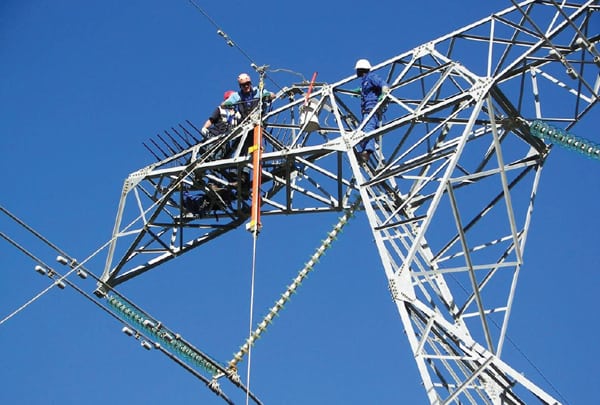 |
| 5. Continental connection. South Africa’s transmission system has interconnections with all of its neighboring countries. These lineworkers are performing maintenance on part of Eskom’s nearly 400,000 kilometers (nearly 248,548 miles) of power lines in South Africa. Of that total, the transmission network consists of 28,790 km of lines with voltages ranging between 132 and 765 kV and a network of 160 substations. Courtesy: Eskom |
Mongezi Ntsokolo, divisional executive for transmission at Eskom, explained that major focus areas have been identified to strengthen the network and allow for flexibility if there is a failure, and plans for expansion have been outlined: “South Africa has more lightening activity than many other countries, and with our high towers at these high altitudes, our lines are prone to lightening strikes. The second problem is birds, and their excretion…. they account for more than 50% of our faults. The third is fires; during winter, we have runaway fires because of sugar canes, and part of their harvesting involves burning the sugar, which dries the atmosphere above them and ionizes and reduces the air insulation between the lines, and the lines actually flash over.”
 |
| Mongezi Ntsokolo, Divisional Executive Transmission, Eskom |
But to achieve the overall expansion needed to meet demand as new generation and diversification of generation sources come online is not a quick process, as Ntsokolo points out: “One of our key challenges is acquisition of land. We do not have a quick process of resolving our negotiations. We need to negotiate on a wheeling buyer, wheeling seller, and this takes a long time. Knowing that Eskom is strengthening our networks, the prices are higher than the normal commercial prices. Even when those negotiations fail, there is a legal process that, if it is the best line, you can build, and that if it is in the best interest of the country, you can invoke a legal price for the owner to sell to you. But it takes two years for this process to happen.”
South Africa’s electricity infrastructure connects to all of its neighboring countries, largely because of excess demand in the past that allowed it to supply much of the needed demand to other countries in the region. However, as a consequence of South Africa’s energy supply crisis, and because the energy supply contracts are coming to an end, other countries in the region are building their own power capacity to become self-sufficient. But the Southern African region offers significant clean generation capacity and growth opportunities both for Eskom and for South Africa in hydro and wind, as well as coal and gas reserves.
As Standard Bank’s Campbell commented: “Ultimately, [the Inga Dam] in the DRC [Democratic Republic of Congo] will eventually go ahead, but most likely on the back of large industrial customers as the anchor customer to make it bankable. Once the Tete corridor, the various IPPs, and REFIT take off, we will have the beginnings of a properly deregulated free market power sector.”
Now, however, the basis of connections are a government-to-government and national utility–to–national utility understanding, and this determines the connectivity. But despite South Africa having talked about strengthening its networks to neighboring countries for many years, the practically, as Ntsokolo notes, is that, “In South Africa, we do not have excess power, thus we can only look at imports, and the likely supplier would be Mozambique, Botswana, Zambia, and DRC. The implication is cost. And at what price do we need to buy this electricity? And the price must not be higher than local generation. The interconnectors have been a challenge; we cannot commit to building until there are commitments to taking, and you can not commit to taking until you know the cost of tariffs, and you cannot commit to this until you know the cost of infrastructure. It has to be a government-to-government driven agenda.”
There is heightened awareness of the need to spearhead development across the region. “Right now the integration process that is required in Africa and the various regions is not occurring fast enough, and as such, the continent remains dark until such time as countries work closely and collaborate,” emphasized Galloway of Utho Capital.
The Southern African Power Pool has created plans for integration, but countries cannot be forced to comply with them. Hence, the need for strong regional leadership.
South Africa’s distribution industry is also in dire need of a shake-up. The country currently has two systems of distribution: Eskom supplies bulk 132 kV electricity to the municipalities, and the municipalities are the redistributors and supply to the end user; or Eskom supplies directly to end users. The distribution industry has a checkered history for successful implementation of innovative systems to improve its infrastructure. It was not long ago that the establishment of EDI holdings was made to reconfigure the distribution network into six regional electricity distributors (REDS), each of whom would be responsible for raising its own funding and developing its own infrastructure.
However, a few months ago, this system was abolished, so the 287 municipalities continue to handle their own distribution. “The government has abandoned the idea of REDS, and now we need to create different solutions and incentive-based frameworks to move to improvements in distribution and energy efficiency,” remarked Tore Horvei, managing director for the African operations of Norconsult, a European consulting and engineering group with experience across Africa. The company recently decided to invest further in South Africa to capitalize on the nation’s dire need for investment in generation, transmission, and distribution.
Horvei continued, “At the moment there has been a lot of focus on generation, but we have a huge backlog of investment in distribution and transmission, and there is a lot of work needed in terms of expanding, upgrading, and rehabilitating existing networks. Right now nine out of 10 times power failures are a result of overloading on the distribution system, and not because of generation shortfalls.”
Louis Maleka, acting divisional executive for distribution at Eskom explained, “We are facing some key challenges, which unfortunately were not solved by EDI. Firstly, municipalities depend on the income from selling electricity. Thus, if electricity is taken out of their control, it means the municipalities lose the revenue base. We also face constitutional challenges. For instance, the constitution states that the distribution networks are the competency of municipalities; however, Eskom has been given the responsibility of the network should municipalities be deemed incapable. In addition, the Municipal Finance Management Act does not allow a municipal or government entity to transfer assets into a PTY limited company. These are challenges we need to continue to work through.”
 |
| Louis Maleka, Acting Divisional Executive, Distribution, Eskom |
South Africa’s distribution industry investment backlog is now estimated at R30 billion. Maleka commented on the long-term objectives in the restructuring process: “EDI was supposed to give us mileage in terms of being able to raise money and improve infrastructure; however, now we need to develop a new formula to tackle these issues. We believe we need to work in partnership with the municipalities, and at this point we need to formulate what this partnership will look like. The challenge for municipalities is to raise the required funding needed to improve their infrastructure. The backlog has been estimated at R30 million. However, the likelihood is that it is probably much greater than this prediction. The system will collapse in the next five years if nothing happens.”
Eskom predicts that by 2017 it will be one of the top five distribution networks globally, and by then, the bulk of Eskom’s distribution networks will be under control. While Eskom is investing heavily in its distribution networks, at the same time it is adding more customers, in line with its commitment to universal access to electricity by 2014. Maleka reported: “Since 1994, we have electrified four million households. In 2001 the government took over the funding for these programs, and now we have a penetration of 83% in Eskom supply area and, on average per annum, we electrify 120,000 homes from Eskom.”
Brian Dames, Chief Executive, Eskom
The timely completion of your new-build program will ensure medium-term security; however, South Africa’s mainstay industries, including mining, have been severely affected by the lack of stable power supply in the past. What is Eskom doing in the short term?
Prior to 2008, we had electricity prices that increased at levels lower than inflation, and the mining industry has grown very well. A lot of this growth has been based on Eskom’s ability to provide stable power and the fact that Eskom was the largest buyer of coal in South Africa, which meant a robust export industry was built as Eskom provided stable cash flow for coal supply.
Since 2008, we have had no interruptions, and no customer has been asked not to expand. To date, we have received no applications for a mining project that we cannot supply power to. The issue that we are working on is the connection to the grid and determining the appropriate timelines for these projects to come online. Over the next two years, until the new stations are running, the power supply-demand will be tight.
Currently, we are working closely with companies to create more efficient production processes. Eskom uses the money that we receive through our tariff to invest in our large customers, and in the last year we have invested R1 billion. We have seen great benefits amongst our mining customers in terms of reduction in energy usage and increases in production. We have very close relationships with our mining customers, and we provide quarterly power system status updates.
We have called upon all consumers to look at a 10% voluntary saving. We believe this is more than possible. Our GDP input over energy consumption shows that we are woefully inefficient. Some mining companies have already achieved more than 10%. We have 134 of our large customers that have participated, and on average they have seen about 5% energy savings.
One of the critical issues is how to balance financial resources and sustain growth in the economy. The country will be faced with incremental electricity price increases over the next three consecutive years. Please comment on how Eskom feels this will not inhibit industrial growth.
It is very important that price reflects the cost of producing. South Africa’s electricity prices have historically been very low and not reflective of the economic cost of supply. Therefore, the country needed to face the reality of making sure that electricity prices are cost-reflective. We had an extensive period of 20 years of increases that have been below inflation, which have led us to make inefficient investments, or, on the other hand, create massive profits for industry.
For us to raise financing, investors need to have certainty about our ability to repay; therefore, cost-reflective tariffs are important. This also encourages energy efficiency in the country. This year our electricity prices are still amongst the lowest in the world, and we will migrate to a point that is cost-effective.
What differentiates Eskom from other state-owned utilities around the world?
Eskom is one of the largest utilities in the world. As an integrated utility, for a long period of time we have provided a reliable and very competitive electricity supply. Eskom has brought universal access from less than 25% to over 70% of the population, and we continue to have some of the best skills to continue to run a vertically integrated utility.
Eskom runs the only nuclear plant on the continent, some of the largest power plants in the world, and we have the largest dry-cooled stations in the world.
Given our size and ability to leverage our balance sheet, we were able to run a US$1.75 billion bond, the largest of any company in South Africa.
In 2001 we were voted the best power company in the world, and we have full confidence to restore Eskom to that level.
The Short-Term Plan
The base case forecasts a supply shortfall of 9 TWh of energy in 2012, and these supply constraints are further complicated and increased by the urgent need to undertake critical maintenance on generation assets. Space needs to be created on the system to support a comprehensive maintenance program to sustain the operational integrity of the generation assets. Some of this maintenance has already been significantly postponed.
Eskom’s Govender observed, “In essence, we have survived over the last three years because we have been running an integrated generation control center. This is a simple concept to ensure that everything happening at a power station is channeled through the center so that we can see the risk, manage this at a senior level, and plan accordingly. It does not detract from the National Control Centre, which is the central hub of the energy system and controls generation, transmission, and distribution. We have been in survival mode for the past three years, and we will continue to be for the next two years, until Medupi comes online. We are in a unique position, but in five to 10 years, countries such as Germany and the UK will find themselves in a similar situation.”
Unlike the IRP 2010, which takes a long-term look at the energy sector, the Medium Term Risk Mitigation Project sets out to implement an immediate action plan. It includes Eskom’s demand-side management program and the government’s target for the rollout of one million solar water heaters, promotion of non-Eskom cogeneration, self-generation by industrials, and renewable generation targets for the next three to five years that need be achieved. Eskom is leading a campaign to encourage 49 million South Africans to reduce their energy consumption and think of energy in a sustainable manner. The campaign stresses the importance of pulling together as a nation to harness energy savings. These measures will help provide a safety net to deal with the immediate supply shortage.
There is also discussion around establishing a mandatory Energy Conservation Scheme focusing on the largest electricity users. To date, Eskom has asked for a voluntary 10% reduction from large industrial energy customers. Eskom’s Govender says, “We are probably one of the only suppliers in the world to spend billions to encourage our customers to use less. Energy efficiency and conservation schemes worked very well in Brazil, but the key issue in their success was that government drove the initiative.
“If we want to keep the lights on and continue our maintenance, we need a 3,000- to 4,000-MW reduction by 2014…. We are the ‘guinea pigs,’ and many utilities are waiting to see how we survive. Although it will be difficult for the next couple of years, we need the support of the country, and the international community will learn from us. We got through the World Cup, which was the coldest winter in 20 years, and we survived. Already we have been judged by the fact that we have survived for three years against all odds.”
The return to service of three mothballed coal-fired power stations (Camden, Komati, and Grootvlei) was one of the initiatives taken by Eskom to increase supply in the short term. Camden, with a capacity of 1,520 MW, was brought back in 2008; two units of 125 MW have been recommissioned at Komati; and two 200-MW units have been brought back online at Grootvlei.
The Policy-Adjusted IRP assumes that the older Eskom coal-fired power stations are decommissioned at the end of their 50-year lifespan. It is possible that these power stations could have their economic life extended with some capital investment and continue to operate for another 10 years in case the proposed new-build options are delayed or demand projections prove insufficient. However, this would have to be traded off against the plants’ higher emissions and low efficiencies (in the neighborhood of 30% to 33% maximum continuous rating for the mothballed plants that have returned to service).
To date, Alstom has successfully completed a groundbreaking integrated boiler and turbine retrofit of Arnot power plant, which was finalized earlier this year. The project added 50 MW per unit, from 350 MW to 400 MW each. Retrofits as well as life extensions provide great opportunities for major multinationals that have experience oversees.
Conclusion
The South African electricity supply-demand balance will remain tight until such time as both Medupi and Kusile are brought online. Eskom, once one of the top utilities in the world, has, because of the energy crisis, seen itself slide in the rankings. However, since the crisis, Eskom has posted significant net profits to be reinvested in the business. It has successfully managed to keep the lights on at a time of tight supply and successfully made it through the FIFA World Cup.
With the government’s guarantees, Eskom has put together a funding plan for the next seven years. In January 2011, Standard & Poor’s improved both South Africa’s sovereign rating and Eskom’s rating from negative to stable, and the company was able to raise a bond of $1.75 billion. There is no doubt that Eskom is in the wake of some of its toughest times, but with stronger governmental support, a strengthening of legislative frameworks, and the successful implementation of private participation, the company can remain competitive, reduce its carbon footprint, and ensure economic growth.
—Written and researched by Sharon Saylor, Begum Agilonu, and Sidonie Pichard of Global Business Reports (info@gbreports.com).