
In the U.S. today, there are continual discussions about energy independence, energy security, and ways to slow climate change. But meeting the nation’s projected 40% increase in electricity demand by 2030, while reducing overall power plant CO2 emissions, will require much more than talk.
During the 1990s, American utilities increased their gas-fired generating capacity because they believed that gas would always be cheap and plentiful. Neither assumption proved true. At this year’s G-8 Summit of the world’s economic and military powers, President Bush committed the U.S. to develop a voluntary carbon abatement program, so developing new coal- and gas-fueled plants will be challenging. On one hand, the U.S. is the Saudi Arabia of coal, with more than 250 years of reserves; on the other hand, burning coal releases twice as much CO2 as burning natural gas. Meanwhile, natural gas continues to become more expensive and scarce in America.
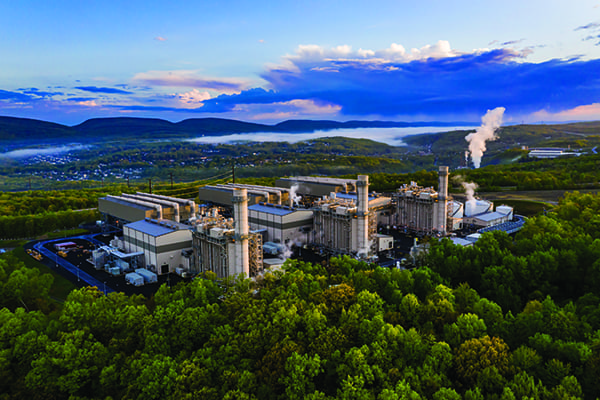
Oil and gas imports by industrialized countries have weakened their economies due to the increasing prices of those imports. CO2 abatement will create a greater drain on the West and Japan, since they are the ones preparing to pay for it. Capturing and sequestering CO2 will increase the capital cost of a clean fossil-fueled plant by 25% to 50%. China—about to become the world’s largest carbon emitter—has determined that carbon abatement is an issue for wealthy countries, and therefore not its priority. In the U.S., conventional coal plants, which fueled 49% of electricity generation in 2006, produced 2,121 million metric tons of CO2 that year. Natural gas, which fueled 20% of energy generation, produced 1,169 million metric tons. In stark contrast, nuclear generation has no carbon footprint.
Land and cost advantages, too
The average nuclear plant of 1,000 MW requires 2.3 square miles of space. According to the Nuclear Energy Institute, a wind farm of comparable capacity, which also produces zero CO2, would occupy an area of 235 square miles.
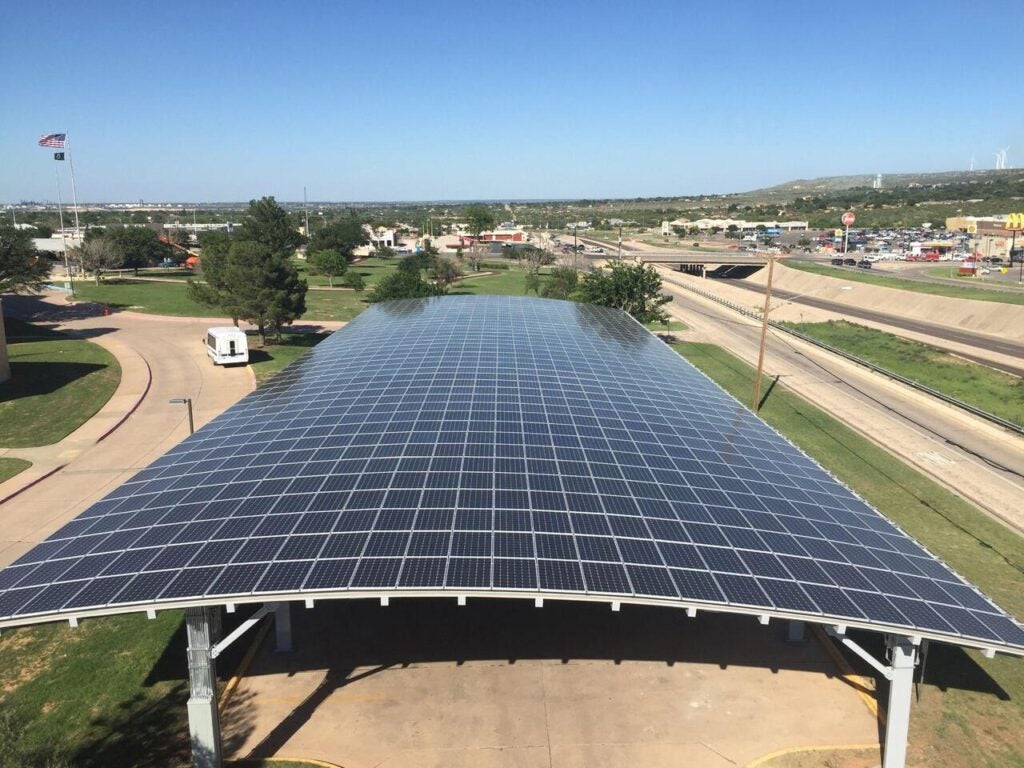
This article is not meant to denigrate renewables, coal, or natural gas—all have a place in the generation mix. But renewables’ role will be limited by land requirements and a shortage of dependable resources and suitable sites. Development of fossil-fueled plants will be limited by carbon caps.
Nuclear generation’s operating costs also give it an advantage. If the cost of uranium were to double, the production costs of nuclear plants would increase by only 7%. The doubling of the cost of natural gas has increased the per-kWh cost of gas plants by about 70%. Additionally, uranium is available from stable U.S. allies—most notably Canada and Australia.
U.S. positioned to lose
While the U.S. ponders the economics of building as many as 30 new nuclear plants, China, India, Russia, Brazil, Bulgaria, Romania, and others are planning and executing aggressive nuclear plant construction programs. Unfortunately, the U.S., Western Europe, and Japan are acting as if they have a choice about increasing nuclear power production. The only country with a different attitude is France, the poster child for success in nuclear power on every front—development, O&M, fuel reprocessing, and safety. France gets 80% of its electricity from nuclear reactors.
While the G-8 nations endlessly debate the risks of meltdowns, spent-fuel storage, plutonium proliferation, and terrorist attacks on nuclear plants, developing economies are rushing to add more reactors or join the nuclear generation club. If its procrastination continues, the West will paint itself into a corner and suffer the costs of energy dependence and carbon sequestration.
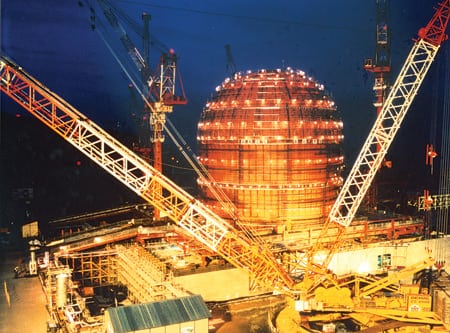
Nuclear power is not an immature technology like integrated gasification combined-cycle generation. Over its 40-year history, nuclear generation has improved its efficiency from 50% to more than 90%. Its two major perceived negatives are safety and the need to manage spent fuels. Safety concerns naturally arose after a partial core meltdown at the Chernobyl plant in 1986. But the Chernobyl unit had virtually no containment. Modern reactors are housed in containment vessels, and many new units are designed to withstand a direct hit from a fully fueled aircraft.
With respect to spent fuels, most Americans believe that somewhere there’s an area the size of Texas filled with barrels of oozing radioactive waste. However, all the spent fuel from 40 years of reactor operations in the U.S. would fit in a football field 15 feet deep. If the U.S. were to recycle its nuclear waste, the volume would shrink to that of one end zone 10 feet deep. Compare those numbers to the volume of a single ton of CO2 at sea level (60 feet by 20 feet by 16.3 feet). The average 250-MW coal plant emits 1.7 million metric tons of CO2 every year.
Economics and common sense dictate less debate and more action. Worldwide, there are four reactor manufacturers and only one supplier of specialty steel, and they sell their products on a first-come, first-served basis. Arriving “too late for lunch” will have its consequences for the U.S.
—Bob Percopo is executive vice president of AIG Global Marine and Energy (www.aigglobalmarineandenergy.com).