A safe work environment is not an unreasonable expectation for every type and class of worker. From the laborer digging a trench to the office engineer to the site manager—all anticipate arriving home each evening without having been injured on the job. Accidents do happen, but major construction projects and operating power plants now routinely surpass the million man-hour milestone without a lost-time accident. That’s only because those projects or facilities have instilled a culture of safety throughout their organizations and accept nothing less.
Sadly, not every organization understands that safety is good business—not just an expense line item. The U.S. Bureau of Labor Statistics recently summarized the type and number of fatal occupational injuries for its 2005 annual report:
- A total of 5,702 fatal work injuries were recorded in the U.S. That was a decrease of about 1% from the year before.
- Fatal highway incidents increased by 2% and remained the most frequent type of fatal workplace event, accounting for one in every four fatalities nationally.
- Fatalities due to exposure to harmful substances or environments rose 7%. Buried in this statistic is the sharp increase in the number of workers who died after exposure to environmental heat: from 18 fatalities in 2004 to 47 fatalities in 2005. Higher numbers of fatal work injuries resulting from the inhalation of caustic, noxious, or allergenic substances also contributed to the overall increase.
- The private construction industry accounted for 1,186 fatal work injuries (the most of any industry sector) and about one out of every five fatal work injuries recorded.
By comparison, work areas regulated by government entities—such as the Department of Energy, Nuclear Regulatory Commission, and Environmental Protection Agency—fatal occupational injuries are rare. Safety in these organizations is promoted to such a degree that even minor injuries requiring simple first aid (such as cuts and scrapes) are viewed as unacceptable. A fatality will stop a project in its tracks and prompt an extensive investigation that could delay a project for months. It will also, inevitably, generate negative publicity. For major projects, the resulting costs can run into seven digits or more very quickly.
Don’t misinterpret my comments as overlooking the incalculable cost of the loss of a human life; they simply are meant to illustrate that safety is just all-around good business.
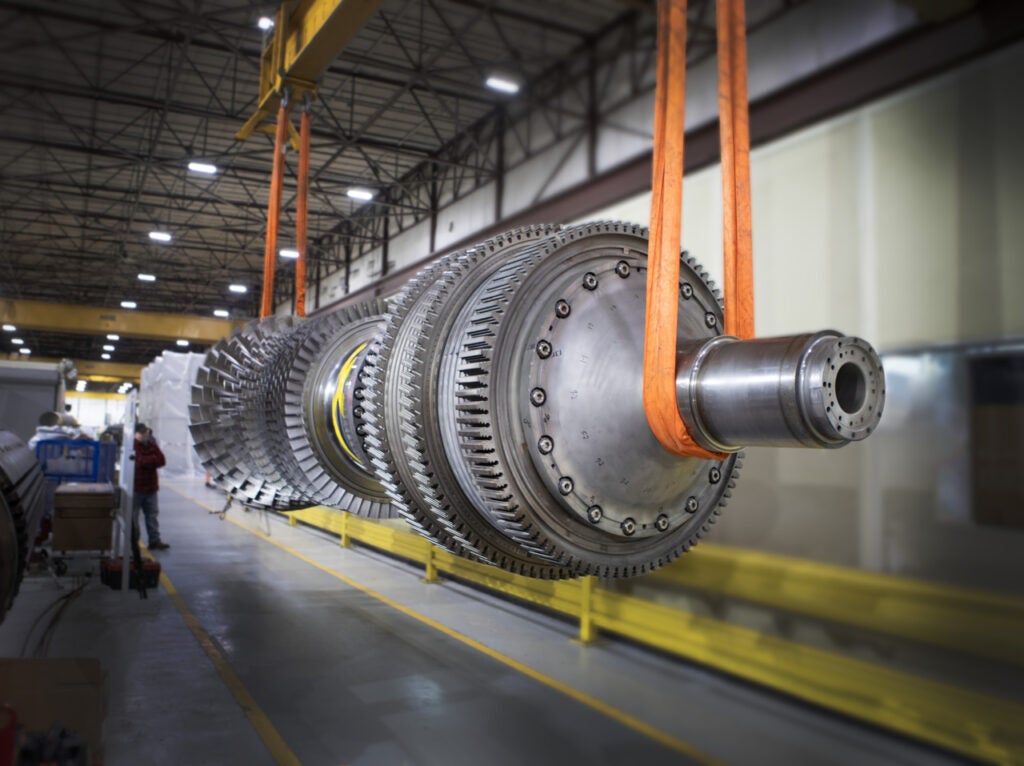
1. Zero is the only number. Safety goals and project milestones can be achieved simultaneously even in high-hazard industries when safety is a company’s top priority. Courtesy: WESKEM LLC
Overtime, injuries, and accidents
Although acute injuries and fatalities receive most of the attention within a typical safety program, a growing body of evidence suggests that long work hours also adversely affect workers’ health and well-being. A study by the National Institute for Occupational Safety and Health (see the first resource listed in the box) provides a comprehensive review of 52 research reports that examined the relationships between long work hours and illnesses, injuries, health behaviors, and performance. A variety of the reports noted that overtime was associated with poorer perceived general health, increased injury rates, more illnesses, or increased mortality. To be fair, some of the reports did not support these findings, but a relationship between long work hours, decreasing worker performance, and higher accident rates seems intuitive to me.
Work schedules differ among power plants in many ways, and each plant has its own approach to accommodating the needs of employer and employees. The research reports could not come to a consensus on the best work schedule, based on the available data. For example, the major arguments against 12-hour shifts tend to revolve around increased fatigue and compromised alertness, which thereby reduces safety. The potential for impairment arises because shift work, especially the night shift, can disrupt our circadian rhythms. On the other hand, 12-hour shifts can be popular with workers because they compress the work week and increase worker time to pursue other interests.
Several of the reports did fail to account for potential contributing factors. For instance, jobs performed during long shifts might be inherently more dangerous, or people working extended-hour schedules may have different personal characteristics (including those related to age, gender, parental responsibilities, or underlying health status) that affect their risk of injury and stress.
Most of these studies used only self-reported job evaluations, and the vast majority of the published studies were conducted in Europe, Asia, and Scandinavia. Only a handful of studies have been conducted in the U.S., none of those was with a large sample size, and the U.S. studies were typically industry-specific, thereby limiting their general usefulness.
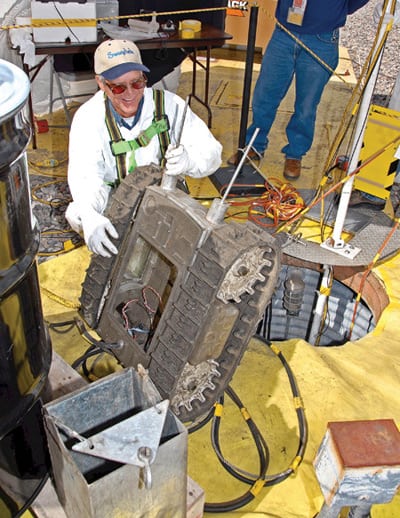
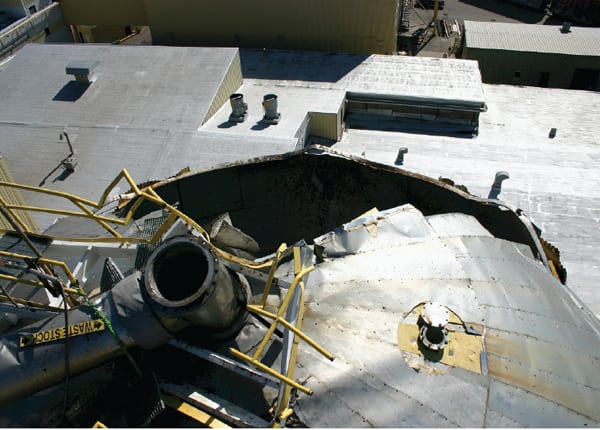
2. Metal, not men. Swarmy the robot recently completed its cleanup assignment—removing the last drum-full of thick sludge from the bottom of a deeply buried storage tank at Sandia National Laboratories. The 47-year-old tank’s shape, depth, and position made cleanup efforts difficult. Its low-oxygen, confined-space environment precluded manned entry and inspection. Courtesy: Sandia National Laboratories
The Dembe Study
The most useful study that analyzed the relationship between overtime and extended working hours and the risk of occupational injuries and illnesses was published by Dembe, et al. (see box, #2). This study used a nationally representative sample of working U.S. adults. Dembe’s hypothesis was that those working overtime or an extended work schedule would have an increased likelihood of reporting an occupational injury or illness compared with those working less-demanding schedules.
The study was based on responses from the National Longitudinal Survey of Youth (NLSY). This database contains 110,236 job records representing 89,729 person-years of accumulated working time over a 13-year period (1987–2000). NLSY was used to evaluate workers’ job histories, work schedules, and incidence of occupational injury and illness. Multivariate analytical techniques were used to estimate the relative risk of long working hours per day, extended hours per week, commute times, and overtime schedules on reporting work-related injuries or illnesses, after adjusting for important factors such as age, gender, occupation, industry sector, and geographical region.
The study found that jobs with overtime schedules were associated with a 61% higher injury hazard rate compared with jobs without overtime. Also, working at least 12 hours per day was associated with a 37% higher hazard rate, and working at least 60 hours per week was associated with a 23% higher hazard rate. In addition, jobs with long work hours were not necessarily more risky merely because they were concentrated in inherently hazardous industries, hazardous occupations, or due to the demographic characteristics of employees working those schedules. The findings confirmed the hypothesis that long work hours indirectly precipitated workplace accidents through a process that introduced fatigue or stress in affected workers.
Program opportunities
Whatever the industry, instituting safety-related programs at the company level and wisely using mandated government programs can minimize accident incidence rates.
For example, fitness-for-duty (see box, #3) and workplace substance abuse programs (see box, #4), such as those involving random drug screenings, may provide reasonable assurance that employees are not under the influence of any controlled substance or impaired in any way that may adversely affect their ability to perform their duties. In most instances, employee assistance programs (for example, counseling, referral, and educational services) are in place to assist with employee rehabilitation.
In the case of Workman’s Compensation (WC), employers pay a premium to an insurance company in return for insurance coverage. An individual company’s premiums are based on its Experience Modification Rate (EMR) set by the insurance industry for a particular industry classification or sector. The EMR is designed to reflect variation of an employer’s actual experience from the expected or average experience for the industry classification. This comparison can result in either a reduction or increase in premiums. Companies with lower-than-average losses are assigned an EMR <1.0, while companies with higher-than-average losses are assigned an EMR >1.0.
The following example dramatizes the impact of EMR on the company’s bottom line. Assuming an average workers’ compensation rate of $25 for every $100 dollars of payroll, a small 30-employee firm with an EMR of 1.3 (based on worse-than-average losses) and an annual payroll of $600,000 pays $195,000 in annual WC premiums. A similar-sized firm with an EMR of 0.7 (due to fewer-than-average losses) would pay only $105,000 per year, a difference of $90,000. Because understanding the impact of the EMR is key to reducing WC premiums, greater savings in direct WC costs can be realized when a company’s EMR is <1.0
.
Even so, employers may not recognize the magnitude of the indirect costs. For example, if an employee falls from a defective ladder, WC pays for the direct medical expenses, say $10,000. But the indirect costs to the employer can be more than double that amount—as high as 20 to 1. Indirect costs can consist of production losses, replacing the injured worker, WC premium increases, and possible fines. These increases can have a negative impact on a company’s ability to compete for future contracts, because controlling direct and indirect costs of work-related injuries can be the difference between a profitable company and one that is forced to close.
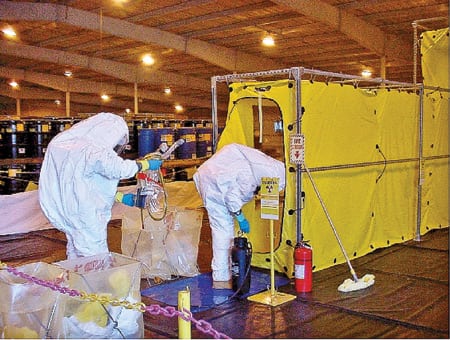
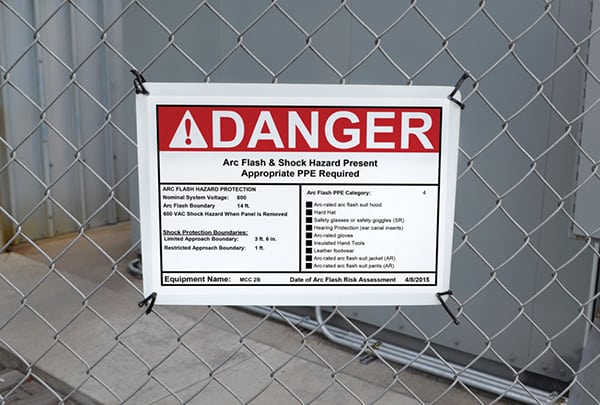
3. Protect your investment. Containment structures are used to prevent the dispersion of airborne chemical and radioactive contamination to employees, the building, and the environment. Courtesy: WESKEM LLC
Statistically significant
The Tennessee Chapter of the Associated General Contractors of America (AGC) performed a cross-sectional study of 305 Tennessee-based AGC-member companies designed to identify and assess the impact of safety program elements on safety performance (see box, #5). The study instrument consisted of a 48-item self-report questionnaire designed by the University of Tennessee Department of Health and Safety Sciences and the Department of Industrial Engineering. The 48 items were derived from a literature review of program elements considered to be indicative of a sound safety program (such as policies, procedures, and processes).
Of the 305 companies surveyed, 89 (29%) responded. Results identified a significant statistical economic advantage in the marketplace for those companies reporting the following.
WC costs. WC costs were evaluated by comparing contractor EMRs. Companies with an EMR <1.0 reported a significantly higher number of key safety program elements, such as employing a full-time safety manager (68%), the use of pre-job safety briefings (51%), and a greater number of written drug/alcohol prevention programs (91%).
Company size. Safety performance and program content were a function of company size. A significantly higher number of small companies, defined as having fewer than 50 employees, reported having an EMR >1.0 than did midsize companies employing 51 to 100 employees and large companies employing more than 100 workers. A greater number of midsize-to-large companies reported that they performed drug testing and participated in safety conferences than did smaller companies. In addition, management commitment and safety expenditures (such as safety incentives) were consistently identified as essential components of an effective safety program.
Full-time safety manager. Employing a full-time safety manager was predictive of safety processes and practices. A significantly higher number of companies reported that they presented pre-job safety briefings when employing a full-time safety manager (53%); such companies also reported having a written drug/alcohol prevention program (92%) and drug testing (100%). In addition, companies with full-time safety managers were significantly more likely to report that they:
- Tracked injury and illness costs (74%),
- Performed weekly walk-around safety inspections (70%), and
- Attended safety training programs (77%).
Safety roles, responsibilities and training. Companies that reported defined roles for employees responsible for safety reported a higher number of key safety program elements. A significantly higher number of companies having written and clearly defined safety roles and responsibilities reported having drug and alcohol prevention (91%) and emergency preparedness programs (62%) and conducting safety training (86%) reported tracking of:
- Injury/illness costs (74%),
- First-aid cases (69%),
- Near-misses (33%),
- Walk-around safety inspections (67%).
Companies having these key safety program elements noted that the safety representative reported to executive management and attended senior management meetings. Furthermore, employee involvement (in, for example, safety committees and employee concerns program) and viewing employees as the "ultimate shareholders" increasingly came to be recognized as one of the primary keys to an effective safety program. Training, such as attending local and regional AGC safety events, was an essential component that contributed to a higher presence of clearly defined roles and responsibilities.
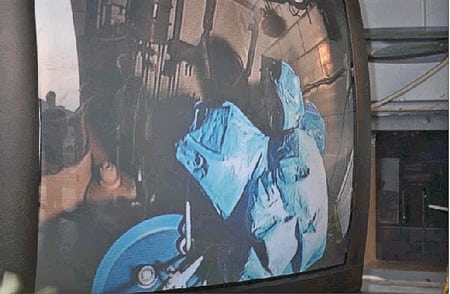
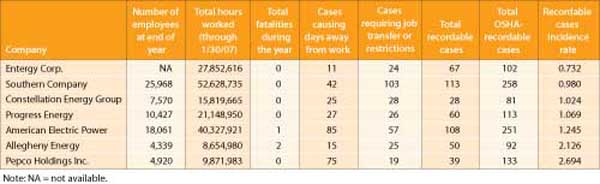
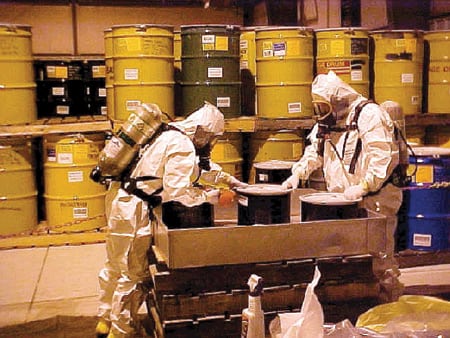
4. No reruns. Television cameras can be used to monitor high-hazard waste operations remotely. In this photo, two workers wearing Level A personal protective equipment are transferring hydrofluoric acid into a container for disposal. Courtesy: WESKEM LLC
Theory into practice
The programmatic elements discussed in the AGC study had already been implemented as part of Weskem LLC’s corporate safety program (Oak Ridge, Tenn.). The company employs salaried, bargaining-unit, and sub-tier subcontractor employees who are responsible for the characterization, sorting, treatment, packaging, interim storage, and transportation associated with asbestos, polychlorinated biphenyls, and hazardous, radioactive, and mixed wastes. Over a six-year period (2000–2006), Weskem’s combined injury/illness recordability and lost workday case rates were <1.1, thus contributing to an EMR of 0.94 in 2006.
According to Weskem’s safety director, Todd Potts, "These significant achievements can be traced back to the president, senior management, and employees actively participating in the company’s safety and health program, and challenging everyone to continuously improve in the areas of safety, compliance, and then production. This success was achieved while performing high-hazard, invasive field activities involving hazardous, radioactive, and explosive waste materials. Even with overtime, accident and injury rates over the past six years remained steady and below industry averages, thus reducing Weskem’s EMR below 1.0, while meeting all production goals."
Final thoughts
Employees’ risk perceptions, behaviors, and attitudes are adversely affected when they perceive that safety is no longer a company priority, or when resources that are normally devoted to safety are diverted elsewhere. Therefore, resources such as hazard identification, prevention, and mitigation are often credited as the most important elements directly reducing workplace accidents and injuries.
However, making the most of these resources requires a multifaceted approach that combines worker training and involvement, ergonomic job design, medical surveillance, competent supervision, and a corporate organization that promotes safety. Companies experiencing unacceptable safety performance metrics can reduce losses and improve their overall "safety, compliance, and then production" goals by adopting key programs that have been shown to enhance a positive safety culture without sacrificing production or the bottom line.
—James. M. Hylko is an integrated safety management specialist for Paducah Remediation Services LLC and a POWER contributing editor. He can be reached at james.hylko@prs-llc.net.