Mexico has already developed substantial large hydro and geothermal resources. However, without policy changes and government-sponsored financial incentives, unconventional renewable sources are taking the equivalent of baby steps.
"Renewables" is on the tongue of every Mexican politician and business leader; however, talk hasn’t yet transformed into action. The energy mix remains dominated by natural gas and petrol (gasoline), and there has been no dramatic increase in the use of renewables. Alberto Escofet, formerly director general at the Comisión Federal de Electricidad (CFE), argues that renewables are very important but that it is difficult to expect countries such as Mexico to spend excess resources on what many still consider to be a luxury. While the U.S. and Europe may have the wealth to do this, Mexico cannot afford the penalty that more expensive energy would have on its industry.
Having said this, many in the sector do see renewables as the future. Giovanni Aloi, director general of GE Energy Mexico, argues that renewables are an area that his company can profit from and a key strategic aim for GE Energy: "GE Energy Mexico intends to invest considerably in building a Class 1 turbine factory in Mexico, aimed at serving both Mexico and exporting the wind turbines overseas. We are also working on wind turbine technology and trying to increase the efficiency."
However, apart from this investment by GE Energy, Mexico has many projects in development but few actually operational. There is certainly potential in Mexico, especially for wind energy, but various factors — most noticeably the lack of specific subsidies for renewables and the important obligation of the CFE to supply energy at the cheapest price, which prices out the majority of renewable energy options — hinder development.
Luis D’Acosta is director general of SEL Mexico (Schweitzer Engineering Laboratories), a multinational company that has developed complete product lines for the protection, control, automation, measurement, and monitoring of electrical power systems. He says: "Renewables aren’t necessarily quite there yet. At the moment we are focusing our energy on our expansion to the U.S. and the services we offer to the CFE, but we expect [renewables] to be a growth area."
Alejandro Ramirez, director general of Geo-Productos Mexicanos, a construction and engineering company, argues that there are three main drivers for the growth of renewables: the public, the government, and the opinion makers. The increasing interest of the public in the renewables sector will drive the two other factors and lead to a growth in renewables, he believes.
Government Aid for Renewables and Energy Efficiency
So far, there is no price subsidy, feed-in tariff, or other such interventionist help from the Mexican government to encourage renewable energy generation. Some elements of the government are, however, active in promoting renewable projects.
Francisco Xavier Salazar Diez de Sollano, president of the Comisión Reguladora de Energía (CRE), a regulator of the private electricity and gas industry, mentions that the CRE has changed certain price signals for renewable projects so that they can compete better with conventional fuels: "So what this new legislation did is to take into account the externalities of different technologies. By taking into account that fossil fuels have an impact on the environment (they produce greenhouse gases), they should cost more than the mere accounting cost which is currently attached to them. Renewable energies on the other hand, offer price stability, which is a positive externality. The idea is then to take into account the real economic cost of generating electricity from these sources, not only the accounting cost, but the social cost. If you take into account these factors, of course renewable energy is very competitive. These kinds of assessments are to be performed by the ministry. Based on the planning of the sector this will enable more renewable projects."
In addition to the CRE, Fideicomiso para el Ahorro de Energía Electrica (FIDE), an innovative trusteeship for energy saving and efficiency, is very active in bringing together the private and the public sector. Its purview extends to helping small and midsize enterprises increase energy efficiency by developing an energy efficiency culture in an oil-rich country.
Yolanda Valladares Valle, general director of FIDE and formerly social development manager for Petróleos Mexicanos (PEMEX), explains: "With current financial conditions our message of energy efficiency is even more relevant. Energy efficiency can save companies money, save resources, as well as [have] beneficial effects on the environment." She also highlights that reducing carbon emissions means more than just working on renewable energy. It also includes using other resources more efficiently.
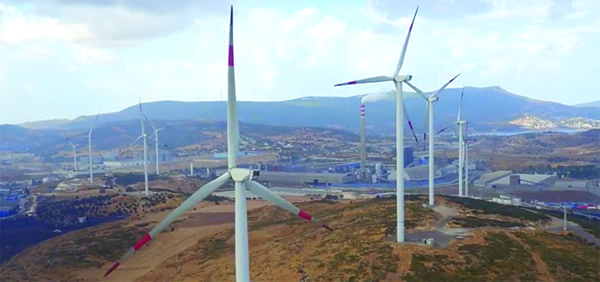
Arturo Echeverria, president of Rolan Aislantes Minerales, a mineral fiber producer working both with the CFE and with PEMEX, concurs. He argues that sustainability and reduction in consumption could work hand in hand with investment in alternative generation sources, but he fears that the government is more focused on media-friendly wind farms (Figure 1) than insulation and other efforts that could reduce demand.
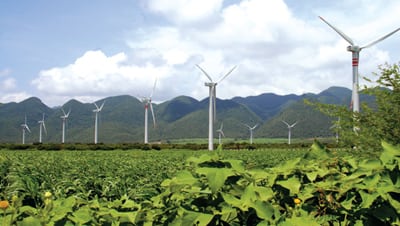
1. Independent wind. The CFE is initiating wind projects Oaxaca II, III, and IV in La Venta park, which will have a combined generating capacity of 304.2 MW, generating average annual net electricity of 1,129.29 GWh. They are operated under the independent power producer model. The Spanish company Acciona was awarded the three new projects, for presenting the lowest cost per kilowatt-hour compared with its competitors. Courtesy: CFE
He also points out that the tariffs (rates) are working directly against government policy by encouraging higher usage: "The CFE is promoting energy consumption, whereas other countries, and even our own current administration, is talking about savings in consumption." He argues that this spending on subsidies for electricity is bankrupting the government and working directly against government sustainability policies.
Rodolfo Flores, marketing and product manager for Lumisistemas (owned by Philips) also compliments the work of FIDE as important for the country but points out that the minimum wage in Mexico is 56 pesos ($4) per day, and Mexico has considerable problems with poverty. It is very difficult to persuade such workers to invest even a day’s wages on an efficient light bulb when they need to sleep, eat, and live off that money.
Wonderful Wind Resources
Wind is seen as having the greatest potential of all the nonconventional renewables in Mexico. Eduardo Zenteno, president of Asociación Mexicana de Energía Eólica (AMDEE), the Mexican wind association, argues that the potential in Mexico is more than substantial. He predicts that if plans go ahead, by 2013 the State of Oaxaca, located in the south of Mexico, will have the largest cluster of wind generation in the world. He mentions that wind energy potential in Oaxaca is around 30% higher than average elsewhere; thus, unlike other areas, it can compete on price without a government subsidy.
Jorge Fernandez Wilburn, director general of Sectrol DPH, an engineering company aiming to specialize in renewable energy, which is working with Iberdrola Ingeniería y Construcción at La Venta II wind farm, states: "I cannot imagine another place in the world where there is such a concentration of generated power in such a small single space."
Dana Younger of the International Finance Corp. (IFC), when speaking at the Platts 13th annual Mexican Energy conference last November, predicted that 3,800 MW could be developed between 2009 and 2014. He went on to argue that the growth in wind in the Oaxaca region has largely been driven by the self-generation projects of the private sector.
The largest of those is the EURUS project consisting of a 250-MW wind farm using 167 1.5-MW wind-turbines operated by Acciona Energia, the Spanish energy giant, which is designed to meet the needs of CEMEX, a Mexican multinational focused on cement production. The energy is sold to CEMEX through a 20-year self-supply agreement, and the total project is estimated to cost $560 million. Long-term financing for this was partially arranged by the International Monetary Fund, which has taken a strong interest in renewables in Mexico.
Miguel Angel Alonso, the general director of Acciona Energia Mexico, believes that the advantage for the client is that, "Once it is financed, wind energy is a powerful hedge against fossil fuel costs."
However, despite the wind strength in Oaxaca, wind energy in Mexico will never be a baseload energy source, and despite all of this potential, until 2008 only 88 MW of wind energy had been developed in Mexico.
Perhaps the biggest challenge for anyone wanting to develop wind energy projects in Mexico is the need to maintain relations with local communities. Jaime Martínez, general director for ERM Mexico, a provider of environmental and social consultancy, states that the Mexican market still has some way to go in terms of dealing with the environmental and social impacts of wind power. Certain international companies have had to learn this the hard way.
Jorge Fernandez Wilburn worries about the difficulties of developing projects in Oaxaca: "Projects have been developed in the state of Oaxaca, which is not industrialized at all, thus making it hard for companies which come from very developed countries or even cities within Mexico such as Mexico City."
Oaxaca is one of the poorest regions of Mexico and in the past energy companies have had problems in trying to bring on board the "ejidatarios," the communal land owners in the Mexican system of the "ejidos" (communal farmlands assigned in small portions to the villagers to be farmed under a federally supported system of communal land tenure). The creation of wind farms can certainly bring increased development during the construction phase and through ongoing maintenance of the wind farm. The IFC estimated that a 100-MW wind farm would bring in an income of $300,000 per year for an "ejido" of 300 families. However, this $1,000 per family is a tiny percentage of wind farm’s potential profits, and thus locals worry that they are simply being taken advantage of.
In addition, the skills needed to construct and maintain a wind farm are not the skills in which Oaxaca is traditionally strong. Another worry is that the energy produced will largely, although not totally, be transmitted to the center and the north of the country, where private demand is higher, rather than providing for local needs.
Mexico is lucky enough to have renewable resources all over the country, as well as the exceptional resources located in Oaxaca. However, in these alternative areas wind power faces the worldwide question of competitiveness. Mexican firms face a low internal rate of return on wind projects due to the obligation to sell to the CFE. A lack of appropriate financing resources and an unsuitable transmission grid add to their troubles. To begin with, as mentioned previously, demand for wind projects is largely private sector – driven and located in the center and north of the county. Oaxaca’s existing transmission grid is inadequate for the load, and the CFE, having a monopoly on the transmission network, has had little incentive to invest in private projects.
Energy Reform: Fostering Renewable Energy
By Rogelio Lopez-Velarde and Amanda Valdez


Attorneys Rogelio Lopez-Velarde and Amanda Valdez, Lopez Velarde Heftye y Soria
Following a long and thorough debate in October 2008, the Mexican Congress approved a series of reforms to the legal framework of its oil and gas industry and renewable energy sources. Although most comments and reports have focused on the changes to the statutes regulating PEMEX and the oil and gas industry, we should also pay attention to the new challenges and opportunities that this reform has brought to the renewable energy field.
Renewable energy projects are still incipient in Mexico. Mexico is a Non-Annex 1 country in the Kyoto Protocol and, as such, it has benefited from investments in Carbon Development Mechanism (CDM) projects. Investments are regulated by a series of administrative rules adopted over the last few years and implemented by the Inter-ministerial Commission for Climate Change (Mexico’s national designated authority), responsible for the approval procedures concerning CDM projects, including those involving renewable energy sources. However, it wasn’t until October 2008 that a statute specifically regulating renewable energy was enacted: the Law for the Use of Renewable Energies and the Financing of the Energy Transition (the "Renewable Energies Law").
The Renewable Energies Law is intended to foster renewable energy projects, provide financing tools, and promote the progressive substitution of fossil fuel generation. It will be initially applicable to the following sources of renewable energy: wind power, solar power, hydropower, seawater power in its different forms, geothermal heat, and biofuels. Other sources may be added to the list as determined by the Ministry of Energy.
Throughout 2009, the executive branch issued and implemented a number of regulations, administrative fiats, and energy policy instruments, primarily aimed at promoting the efficient use of energy and increasing the participation of renewable energy projects in the country’s installed generation capacity. These include the publication of the National Strategy for the Energy Transition and the Sustainable Use of Energy and the Program for the Use of Renewable Energies, whereby the following goals have been set for 2012: increasing the participation of renewable energy sources in the country’s total generation capacity to 7.6% and increasing the participation of renewable energy sources in the country’s total power generation to a range of 4.5% to 6.6%.
Moreover, the Mexican Energy Regulatory Commission is now working on a new model Interconnection Agreement for the interconnection of renewable energy projects to the national grid and a new "postage stamp" methodology to determine the charges payable to the Comisión Federal de Electricidad (Mexico’s electric power utility) for the wheeling of power generated by renewable energy facilities.
It is yet to be seen if the tools that this new legal framework provides will be sufficient to substantially increase the participation of renewable energy sources in the overall Mexican electricity sector, but there is no doubt that these are important steps toward that goal.
Transmission Trials
Due to the nature of the Mexican constitution, it was extremely difficult and expensive for private companies to invest in their own transmission grid. So Mexico has the problem of exceptional renewable energy resources but no ability to exploit them. Eventually, helped by the hard work of AMDEE, the wind association headed by Eduardo Zenteno, a deal was reached between the public and private sectors. The cost was shared between the two, largely picked up by the private sector, with ownership remaining in public sector hands. This agreement on transmission has opened the doors for investment in Oaxaca, and it is rapidly gaining momentum. Dana Younger of the International Monetary Fund predicts an explosion of international interest in Oaxaca once a core capacity of 500 MW is reached.
Arturo Benavides, general manager of Zetrak, a transformer producer, sees the growth spurt as partially attributable to the expansion in the transmission sector. He also believes that there could be even more growth opportunities in the future if certain changes are made: "We see considerable demand for our transformers in the transmission sector; however, the lack of regulations is slowing the country down." Benavides’ company began in his backyard but has opened a consolidated new facility and is expanding its three existing factories.
Financing Equipment Means Currency Challenges
Like most emerging markets, Mexico also has to face the problem of currency risk when purchasing equipment. The major wind turbine manufacturers are based in Europe or the U.S., thus liabilities would be in dollars or euros, while local income would be in Mexican pesos. Although the peso has been relatively stable, especially in comparison to the early 1990s tequila crisis period, any potential currency fluctuation adds risk to a wind energy investment.
The nature of the technologies involved means that a large down payment is needed to purchase the equipment, later to be followed by small interest payments for the energy. This situation may be resolved with GE Energy’s plans to build a Class 1 turbine factory, which would produce the necessary products for the Oaxaca region.
Zenteno argues that two things are needed to make wind energy outside of Oaxaca consistently profitable: higher oil prices that remain high and the government introduction of strong measures to subsidize renewables.
Solar Struggles to Gain Traction
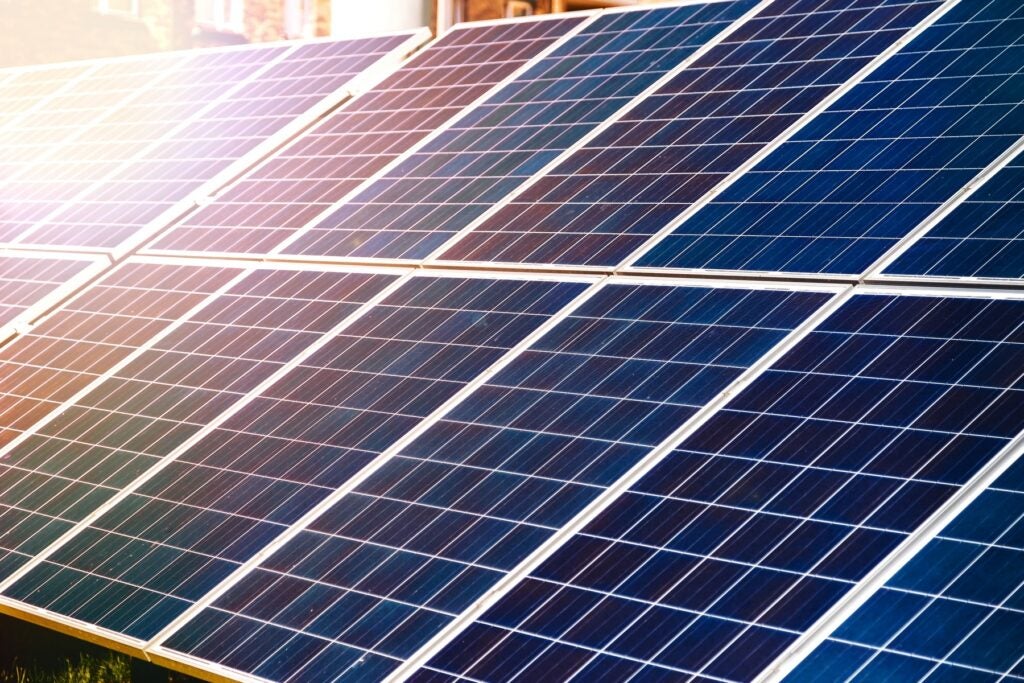
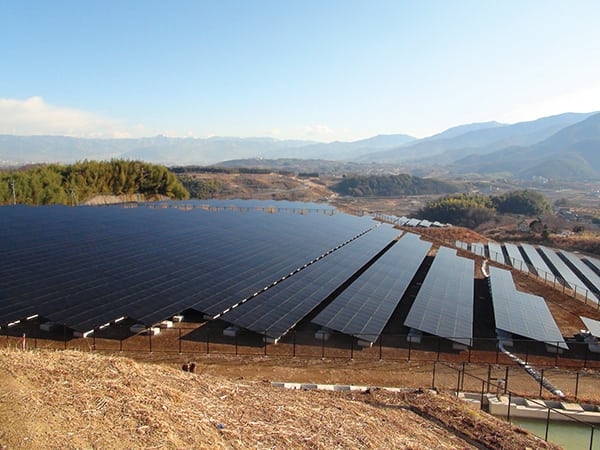
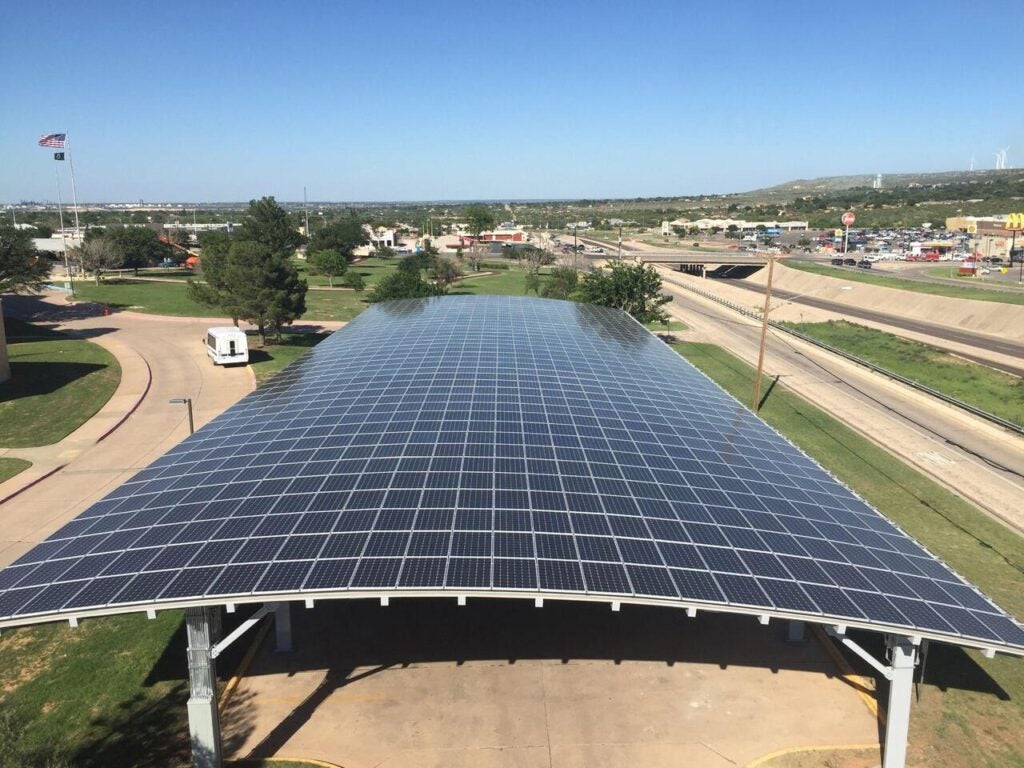
Solar energy is very much an emerging technology in Mexico. Solar companies haven’t developed at the same rate as their wind equivalents, but the industry remains bullish. Mexico does have potential, especially in the south of the country, but to date only 18.5 MW of photovoltaic energy has been installed, with a growth rate of around 1 MW per year.
Dr. Ernestina Torres, president of Asociación Nacional de Energía Solar (ANES), the national solar association, is optimistic. She believes that Mexico still has more than 6 million people without reliable access to energy, many of them in remote rural locations off the grid. Solar energy can’t compete economically with a combined-cycle plant, but it can compete in terms of its ability to be sited close to loads. Additionally, due to the relatively small size of the sector today, Dr. Torres sees potential high growth rates for entrants in the future.
Peter Eschenbach, business development manager of ERDM Solar, says that since the Spanish government reduced its subsidies in the solar sector, global demand for solar panels has dropped dramatically, and his company is able to purchase products for considerably cheaper than previously, helping the profitability of solar in Mexico.
Dr. Torres’ optimistic view of the sector is warranted at least by the success of solar water heater companies such as Frantor, located in Arandas, just outside of Guadalajara. Frantor is headed up by Hector Franco, who explains that solar water heaters have been widespread in Mexico for more than 30 years. They directly convert solar energy into heat, rather than into electricity, thus maximizing efficiency. Victor Hernández, project manager at Frantor, claims that the payback on solar water heaters for domestic users is 17 months. "People think that solar is just for the rich, the privileged, those who have the resources and want to give something back. What we are doing in Frantor is showing that people can save money using solar. We want to prove that solar is for everyone," says Franco, who intends to target the U.S. market next.
Well-Established Geothermal and Conventional Hydro
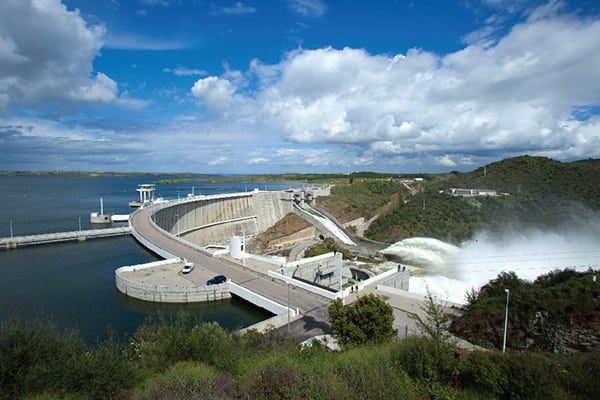
In terms of installed capacity, conventional hydro is Mexico’s largest source of renewable energy, contributing around 22% of Mexico’s installed capacity, the vast majority of which is operated by the CFE. The largest plant is a 2,400-MW facility located in the State of Chiapas on the Grijalva River. This facility ranks among the top five largest plants in the world.
Mexico’s hydro capacity was largely developed during the 1970s, and the CFE has already developed those sites with the highest potential, leaving private players little area to operate anything except mini-hydro projects, with around 83 MW under development.
One company intending to change this is Grupo Carrión, headed by entrepreneur Fransisco Carrión. Grupo Carrión imports top-of-the-line offshore hydro generators. Then it signs 10-year long-term contracts with its clients, principally hotels and heavy manufacturing companies, promising them the advantages of being associated with both clean energy and lower electricity bills. Grupo Carrión currently has 10 MW of signed contracts, but it has an ambitious target of installing 3,000 MW within Mexico and Central America.
In regard to geothermal sources, Mexico currently has an installed capacity of 964.5 MW, which ranks it among the top five worldwide. This large installed capacity has been made possible by the fact that Mexico’s boundries encompass the edges of tectonic plates. The majority of this is sourced from the 720-MW Cerro Prieto plant located in Baja California (Figure 2). The CFE also plans to tender out another plant in Baja California in 2010.
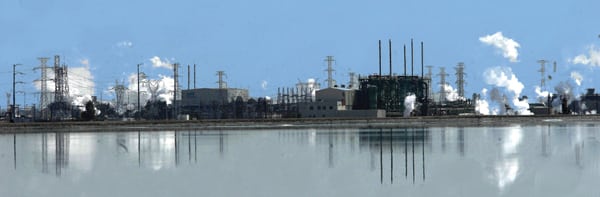
2. Geothermal field. According to Industrial News, the 720-MW Cerro Prieto Geothermal Power Station in Baja California, Mexico, will be expanded to 820 MW by 2012. The plant currently operates 13 generating units equipped with turbines ranging from 25 to 110 MW that were manufactured by Toshiba and Mitsubishi. Courtesy: CFE
In terms of geothermal and large hydro, the CFE has been able to exploit the natural resources Mexico has relatively early, so that in geothermal and hydro the CFE has already exploited the best regions, meaning the two technologies are strong and mature in Mexico with less potential for development than other areas.
Biogas Potential
Mexico is relatively new to using biogas sources, but there have been discussions about projects in Mexico City, and there is one relatively advanced project in Monterrey. Jaime Luis Saldaña, director general of Seisa, one of Mexico’s most successful energy service companies specializing in providing self-generation solutions to clients both in Mexico and abroad, says: "We are working on a 17-MW biogas plant which will provide electricity to important public services such as the metro and street lighting. This project is very exciting as it is a joint venture with the public sector, which could be used as a model for the rest of Mexico."
Last Call of Kyoto
As mentioned above, Mexico is a non-Annex 1 country in the Kyoto Protocol and thus can benefit from CDM programs and the sale of carbon credits. The CDM market in Mexico and worldwide has suffered from the credit crisis. As financial conditions have tightened, it has been extremely difficult to finance CDM projects in Mexico. The Copenhagen round also cast a shadow over the future, but market participants remain bullish.
Mexico’s Ministry of the Environment (SEMARNAT) launched the Program GEI Mexico (Gases Efecto Invernadero), a national program on greenhouse gases emissions with roots in the private sector. This program aims to help participant companies position themselves to take advantage of environmental technologies designed to reduce greenhouse gases (GHG) as well as provide training courses on emissions, and aims to raise awareness of GHG’s ecological impacts. With this heightened awareness and the change in administration in the U.S., certain market players see the advantages of developing renewable products in Mexico, with potential to sell carbon credits into an eager U.S. market.
Eduardo Piquero, country manager for MGM International, a project development, investment, and commercialization firm, argues that a major market movement has been the development of a cap-and-trade precompliance market in California, which is open to projects developed in Mexico.
Francisco Carrión of Grupo Carrión, told us that a potentially profitable section of his business will come from using the CDM mechanism: "We believe that the added advantage of selling carbon credits will add to our profitability. It is a difficult mechanism to get involved in; we will have to invest time and money, but it can provides us with another revenue source."
Francisco Salazar, president of the CRE, mentions that many developers of renewable projects in Mexico will take advantage of the CDM mechanism: "The users are those that also apply for carbon credits, which will enable them further to benefit from the use of renewables."
However, having taken this into account, Mexico is behind where it should be in the CDM mechanism. Mexican energy companies have been slow to benefit from the opportunities it offers.
—Written and researched by Clotilde Bonetto (clotilde@gbreports.com) and Mark Storry (mark@gbreports.com) of Global Business Reports.