The January 2007 issue of POWER included an article (“Tow nuclear power I&C out of the ‘digital ditch’ ”) describing instrumentation and control (I&C) upgrade projects at nuclear power plants as “stalled” and “checkered, at best.” To be sure, some projects have experienced technical problems and may have missed their budget and/or schedule. But they are anomalies and are not indicative of a widespread problem in the nuclear industry, as the author suggests.
Fully recognizing that the article was addressing unit-specific design and management issues, we would like to offer a few case studies of successful projects and invite others to do the same. In this way, we can together learn to capitalize on the real successes in the industry.
In general, a successful project begins at the highest management level at a plant with a definitive statement of the business objectives and a well-defined plan for procurement, design, testing, installation, training, and operation. It’s our position that properly organized and staffed I&C projects can be implemented successfully. This article presents case studies of three successful upgrade projects at nuclear plants. Each case covers the scope, approach, and details of the project and explains why it should be considered a success (see box).
Case study #1: Turbine controls upgrade at Energy Northwest’s Columbia station
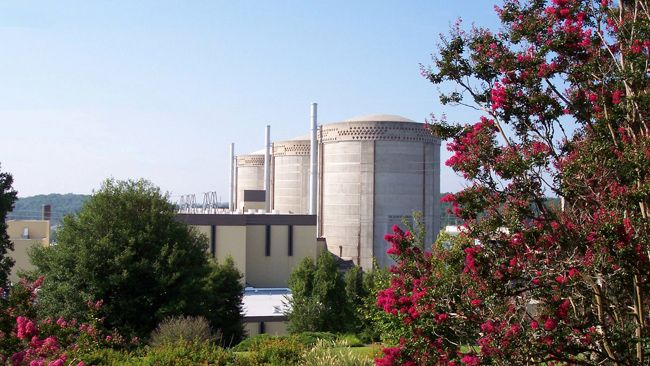
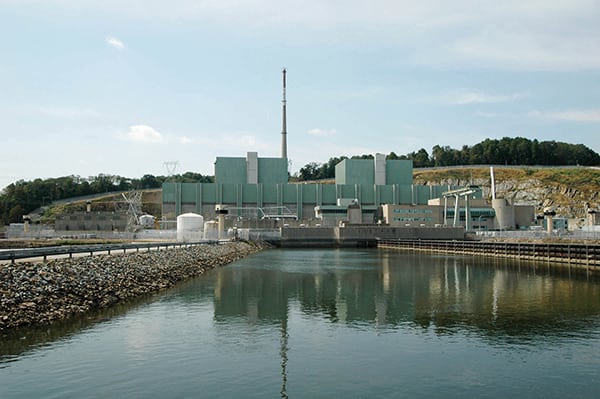
The old digital electro-hydraulic (DEH) turbine control system at Columbia Generating Station (Figure 1), a 1,250-MW boiling water reactor (BWR), was obsolete and not single-failure-tolerant. Component and subsystem failures had resulted in unit trips, power reductions, load swings, and operation in manual control for extended periods of time.
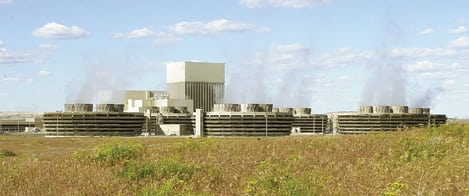
1. Death of DEH. Engineers at Energy Northwest’s Columbia Generating Station replaced the plant’s digital electro-hydraulic control system with a new, fully digital one that is single-fault-tolerant. Courtesy: Energy Northwest
To resolve these problems, Energy Northwest replaced the old DEH control system with a new, state-of-the-art system that is single-fault-tolerant and can be repaired on-line. The new system employs redundant input signal devices, redundant digital signal processors, and redundant output devices. It also features improved control algorithms and start-up and shutdown control procedures, and provides additional information on turbine-generator performance to operators and engineers.
On a fast track. A key objective of the replacement project was to complete it during a refueling outage scheduled to occur 13 months after the contract award to the control system vendor. Meeting such a tight schedule without compromising the quality of work was a major challenge.
Replacing the control system and related input/output (I/O) devices required making the following changes:
- Replacing the five DEH cabinets in the main control room with four new cabinets containing the redundant control equipment and I/O, a new turbine overspeed protection circuit, and new digital synchronizing and load control equipment.
- Replacing the switches, indicators, and recorders on the main control board with touchscreen displays.
- Installing new turbine control system hardware and software on the existing operator training simulator.
- Installing seven new speed sensors: three for speed control, three for overspeed protection, and one spare.
- Connecting the new turbine controls to the plant’s distributed control system (DCS) through a firewall.
Energy Northwest’s management team realized that executing such a large and complex project on such an aggressive timeline would require close coordination of all participants’ work. Accordingly, among the project management tools put to use were a single integrated schedule, an integrated project action tracking list, and a common weekly meeting for all organizations. The formation of a dedicated project team was followed by establishment of a formal division of work and a formal work sequence.
The controls vendor chosen was Invensys (www.invensys.com), which supplied its TMR (triple-modular redundant) Tricon turbomachinery control system for integrated turbine protection and reactor pressure control. The Tricon TMR system also executes an all-new turbine trip control scheme whose inputs include digitally delivered measurements of lube oil parameters, thrust, vacuum, and overspeed. The Tricon system brings together more than 600 critical monitoring and control system I/O points from the plant’s turbine and generator.
On this project, Sargent & Lundy (www.sargentlundy.com) provided a range of engineering services that included a conceptual study, specification development, bid evaluation, a plant modification package, procedural updates, installation and test support, and project management assistance.
Strategy. The project’s overall strategy was to perform as much pre-outage installation work as possible within the confines of an operating plant. That work included the installation of conduits and cable pulls in areas accessible with the plant on-line. Work during the refueling outage included the removal of existing DEH cabinets from the control room and installation of speed probes, thrust probes, pressure transmitters, and linear variable differential transformers (LVDTs). It also included installation of new cabinets in the control room and installation of operator workstations with touchscreens in the main control board and on the lead operator’s desk.
Formal test or validation procedures were developed for each phase of the project and successfully completed before moving on to the next phase. They included:
- Factory acceptance tests of original equipment
- Testing of software and touchscreens (performed on the plant simulator)
- Modification and power ascension tests
- Site acceptance tests following installation of the complete system
Regarding the project’s speed of execution, W. Scott Oxenford—vice president of technical services at Energy Northwest—noted that, “its most remarkable aspect was the timeline of design and implementation. In March 2006 we issued the Limited Notice to Proceed to Invensys and had our initial on-site kick-off meeting with all present. Only 10 months later, the system was installed in the simulator, ready to support two cycles of operator training. Six months after that, the system was operating with precision.”
Through the use of sound project management methods and tools, selection of the right project team, and remaining focused on the objectives, this complex digital upgrade project was successfully completed on an extremely tight schedule, during a planned outage.
Case study #2: Turbine and reactor pressure control upgrades at Exelon’s LaSalle County plant
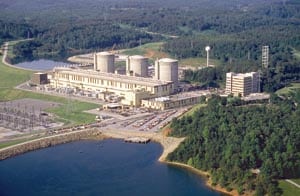
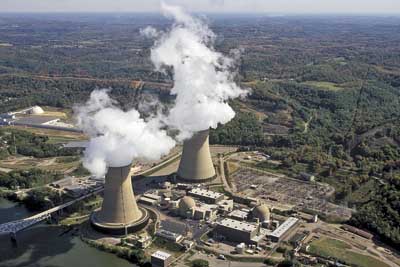
Since 1986, Exelon Nuclear’s 1,120-MW LaSalle County Generating Station (Figure 2) has experienced nine reactor scrams caused by single-point failures of its GE Mark I EHC turbine control system. The most recent scrams occurred in 1999 and 2001.
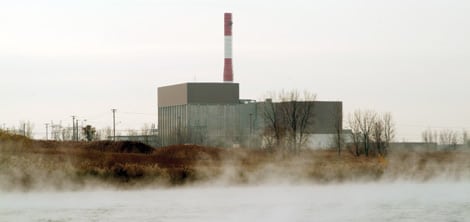
2. Triple play. Exelon upgraded the reactor pressure controls at LaSalle County Generating Station to a triple-modular redundant design to prevent future reactor scrams. Courtesy: Exelon Nuclear
Coincidentally, in 2001, GE announced that it would stop making spare circuit boards for the Mark I and Mark II systems. The phase-out dovetailed with Exelon’s announcement that its internal and external support services personnel for Mark I Turbine Control System would retire within five years.
Upgrading to full-digital, triple-redundant controls at the La Salle County plant would help prevent future reactor scrams and solve other peripheral problems at the station as well. Exelon Nuclear’s strategy was to partner with GE Energy (www.gepower.com) to engineer a control solution once and apply it across Exelon’s 12-reactor fleet of GE BWRs (see related story on p. 60).
Retrofit considerations. Triple redundancy, on-line maintainability, nuclear experience, the availability of support services, the possibility of simulator integration, and low installation cost were the primary reasons behind Exelon’s selection of GE’s TMR Mark VI digital control system. Among the system’s redundancies are triplicated field sensors and field wiring and duplicated processors, power supplies, and communication interfaces with plant systems. The Mark VI system facilitates on-line maintenance and diagnostic troubleshooting. The maintainability extends to the front standard, where a mechanical trip finger was replaced with a redundant, two-out-of-three trip module assembly.
During replacement of the control system at LaSalle, existing field instrumentation cables also were replaced because they had been degraded by heat in the low-pressure heater bays. These cables connect to the main turbine’s control, stop, and bypass valves.
Additional operational flexibility and functionality were developed to address reactor cool-down, automated turbine prewarming, improved valve testing with fewer plant transients at higher loads, and reduced system gain from vessel pressure control.
Clear responsibilities. One key to successful implementation of the project was a clearly defined commercial and technical scope agreement between Exelon and GE, which then partnered with Sargent & Lundy to acquire project design services. The commercial requirements document stated milestones, payment schedules, and specific remedies over both near and long terms. The technical scope agreement established the division of responsibilities and accountability of the parties.
Pre-outage prep. Pre-outage work included modification of the plant’s simulator, factory acceptance testing, task planning and scheduling, training of plant personnel, creating an equipment inventory, and installing supports, conduits, and cables.
Simulator. The simulator was updated to make it able to replicate the Mark VI control system and its human-machine interface (HMI), the control room environment, and system responses. Mark VI simulation software also was provided for training computers, enabling each to serve as a complete simulator with Mark VI and HMI functionality.
Factory acceptance testing (FAT). This was a 10-week program that included seven weeks of preparation and system checkout by the GE Energy team prior to the three-week formal witness test period by Exelon. During this exhaustive testing, the controls were verified and lined out to final site specifications. The tests used a dynamic model that simulates most of the field I/O connections to allow testing of their functionality and maintainability.
Site acceptance testing. The Mark VI panels arrived on-site about nine months before the outage to allow for a two-month site acceptance test. Upon arrival, they were wired to the actual field devices (pressure transmitters, servos, and LVDTs) and repowered to perform loop calibrations and additional testing. Tests of the panel and the simulator included validation of the site’s operator procedures, initial lineup procedures, and future maintenance procedures.
GE performed module testing, independent verification and validation, system integration testing (pre-FAT), and factory customer witness testing. Exelon managed site acceptance, construction, modification, and power ascension testing. All testing included a comparison of functionality testing results to predefined acceptance criteria. Every control loop was tested.
Training. Courses on the new system were provided to the plant’s training staff two months prior to the system’s installation. Twenty maintenance I&C personnel were trained on-site in two classes of 10 students each. These individuals participated in the system’s start-up.
Outage work. This phase of the project comprised installation and testing of mechanical devices and control room modifications, demolition and removal of the Mark I panels, and installation and testing of the Mark VI panels, their interface to the plant’s DCS, and cable pulls and wire terminations.
The mechanical installation work targeted the following areas: front standard, mid-standard, stop, control, combined intercept, and bypass valve actuator modifications. The turbine’s permanent-magnet generator, overspeed governor, and trip solenoids also were replaced. A new, duplex, two-out-of-three trip manifold assembly was installed, as were seven new speed pickups and one spare probe. Triplicated LVDTs and triple-coil servos were installed on the control valves.
Control room modifications comprised the aforementioned demolition of the existing Mark I panels and installation of the new HMI computers, trip push buttons, and other hardwired controls or recorder outputs. Replacing the control panels entailed removing all of the existing wiring, identifying the wires to be reused, installing the new Mark VI panels, and re-terminating the wires. The other ends of the wires were terminated concurrently at the new field devices, a step deemed necessary to meet the aggressive outage schedule.
Leveraging the experience. Lessons learned during this digital upgrade project were formally captured and discussed later among the stakeholders to further improve future project execution. For example:
- Integration between the GE simulator and the plant models required collaboration among GE, Exelon Nuclear, and Exelon’s plant model vendor. The vendor had to update the model to make it compatible with the new TMR simulation. On later projects at Exelon’s other BWRs, GE will provide simulation software and update the simulator prior to factory acceptance testing of the control system to optimize project implementation.
- Early inspection of supplied parts eliminated delays during installation.
- Integrating wiring checks by plant personnel was critical to management of the overall project schedule. Some of these checks proved challenging due to confined work areas.
Thanks to the detailed upfront design engineering, the outage preplanning, and the training of I&C personnel, the GE-Exelon team made the conversion from Mark I to Mark VI controls in a record 15 days, from “breaker open” to “turning-gear ready.” During the 15 days that following receipt of clearance to start work, the Mark VI TMR panels, HMIs, networks, TMR field instruments, and cable conduits were installed; the front standard and mid-standard modifications were made; and all checkout and lineup procedures were performed.
Case study #3: Feedwater control systems upgrade
Another nuclear utility located in the southeast installed a DCS in phases, two of which coincided with upgrades of each unit’s feedwater control system. The steam generators of both units had been suffering water level instabilities often enough to warrant upgrading the controls.
An assessment of the controls to identify upgrade possibilities and alternatives recommended replacing the actuators and positioners of the main feedwater control valves on Unit 1, both units’ feedwater control valves, and the 15% feedwater bypass control valves. The upgrade project installed an Invensys DCS upgrade that replaced two computer systems: one for digital data processing and the other for reporting significant operating experience.
The project also added a Westinghouse advanced feedwater control algorithm, and the additional I/O required automating operation of the feedwater valves at low loads. This modification included replacements of the steam dump to atmosphere (SDTA) controls, the actuators and positioners on the SDTA valves of Unit 1, the steam bypass control system controls (SBCS), and the positioners on the SBCS valves of Unit 2. The functions of the reactor cooling pump monitoring and display system in the control room also were replaced by the addition of DCS functionality.
Assembling the upgrade team. As was the case with the turbine and reactor pressure control upgrades at Exelon’s La Salle County plant, a key to successful implementation of this project was a clearly defined commercial and technical scope agreement. In this case it involved the utility, Foxboro (www.foxboro.com), Westinghouse (www.westinghousenuclear.com), Emerson (www.emersonprocess.com), and Sargent & Lundy.
The responsibilities spelled out in the upgrade project’s Plant Life Cycle Management document called for preparation of procurement specs for the new equipment. The plant’s Major Projects Engineering group was tasked to perform equipment acceptance reviews and provide project administration and supervisory support. Foxboro supplied the DCS, Emerson supplied the positioners, Westinghouse developed the algorithms, and Sargent & Lundy did the system integration and created the field termination wiring diagrams.
On this project, new systems and upgrades were tested as part of a multiphase program with detailed procedures. The program specified the need for factory acceptance, site acceptance tests, and post-installation tests. System mockups were built and used for operator input and training.
The new systems and upgrades were installed by an integrated team of craft personnel, plant engineers, S&L engineers, and vendor representatives. The team handled both pre-outage and outage work. The use of an integrated team facilitated early identification and resolution of issues, minimizing their negative effects on project schedules and the outage during which the project was implemented.
Happy ending. Again, detailed upfront design engineering, pre-outage and outage planning, a comprehensive testing regimen, and the integrated nature of the installation team proved essential to the project’s success.
The addition of DCS controls to the 15% feedwater bypass control valves on both units has allowed seamless operation of the entire feedwater system (from its bypass valves to its feedwater regulating valves) with minimal or no need for operator intervention. The addition and upgrading of systems have allowed both units to “ride through” feedwater transients without tripping. Operators of both units report that the new system is such a great improvement over the old one that they couldn’t ask for better performance.
The authors would like to thank Darren Herschberger (darren.herschberger@ge.com), product line leader in GE Energy’s Control Solutions group, for much of the information in case study #2. We also thank Dean Crumpacker (william.crumpacker@sargentlundy.com), a manager in Sargent & Lundy’s Nuclear Power Technology group, for providing the details at the heart of case study #3.
—Roy Raychaudhuri (roy.raychaudhuri@sargentlundy.com) is a senior manager in Sargent & Lundy’s Nuclear Power Technologies group. Doug Beach (dhbeach@energy-northwest.com) is a project manager at Energy Northwest.