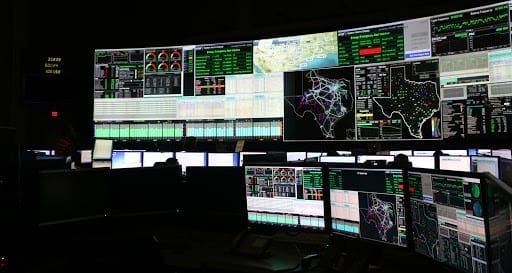

North America’s electricity grid has been described as the world’s most complex machine. The grid is unique among utility infrastructure systems for its need to have supply and demand—generation and load—balanced at all times. There still are no technologies for storing large quantities of electricity akin to liquefied natural gas tanks, voice mail, or e-mail servers. Because power consumption is instantaneous, dispatching generating capacity and switching feeders on and off are the only controls available to grid operators.
The spoils of power
Short power outages are a mere inconvenience for the average American household, which has been spoiled by highly reliable electric service. But reliability is essential for large factories’ profitability. To them, any outage—even one of just a few milliseconds—may cause a key manufacturing process to crash and shut down an entire assembly line.
Longer outages take bigger tolls. Here are some examples of the big business impact of a major power failure. Hewlett-Packard recently estimated that a 20-minute outage at one of its wafer fabrication plants would cause the loss of an entire day’s production, valued at $30 million. In California, a blackout in June 2000 cost Silicon Valley businesses $100 million, according to the Silicon Valley Manufacturers Group. According to the DOE, the great Northeast blackout of August 2003 cost the U.S. economy about $6 billion, including $4 billion in lost wages and profits. The joint U.S.-Canada task force assembled to determine why the blackout occurred put its cost at between $4 billion and $10 billion.
As the complexity of the grid grows, so do the costs of a grid disturbance and the ease with which one can propagate.
New grid sensitivities
Recent events confirm that even the best-oiled machine won’t operate at peak efficiency if an operator goofs or if Mother Nature decides to remind us who’s really in charge.
The Los Angeles Times’s main headline on February 26 was “Massive power outage in Florida affects millions.” The ensuing story described a mid-day “transmission glitch” at a West Miami substation that knocked out electricity to three million people and tripped two reactors at the Turkey Point nuclear station. Florida Power & Light later explained that an engineer had deactivated two levels of relay protection at the West Miami substation to help diagnose a switch malfunction. While he was making measurements, a short-circuit knocked 3,400 MW off-line.
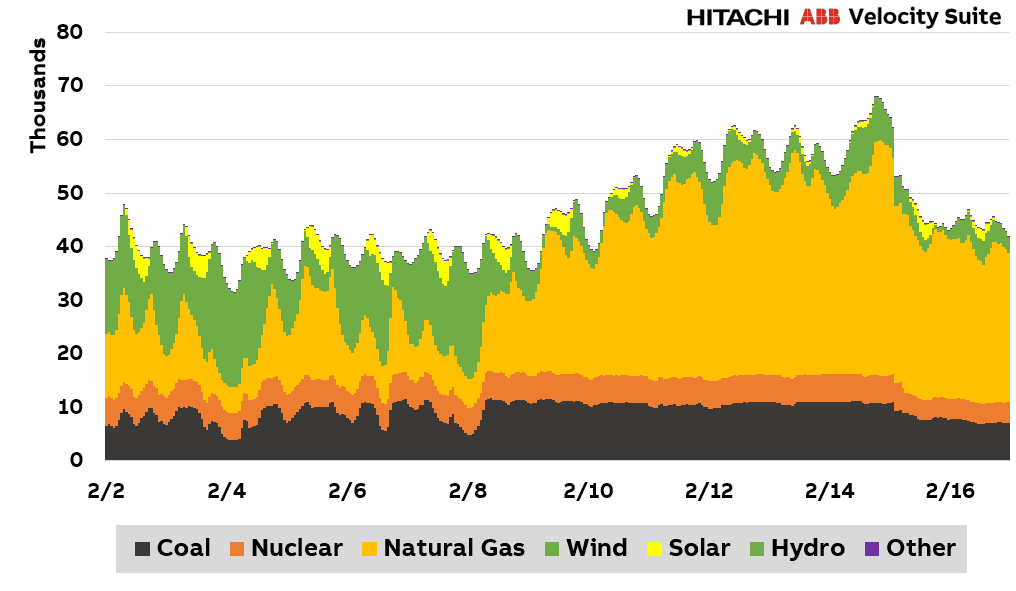
That same day, Reuters’ lead story was “Loss of wind causes Texas power grid emergency.” ERCOT reported that the normally stable frequency of its grid dropped suddenly when the state’s wind production fell by more than 1,400 MW over 30 minutes. This loss of load forced ERCOT to go to Stage Two of its emergency electric curtailment plan and shave 1,100 MW of demand from industrial customers. The emergency passed in about three hours.
A 2007 study of the ERCOT grid noted that wind energy is “anti-correlated” with load, meaning that wind speeds—and wind power generation—usually drop sharply as the day’s load rises in the morning and then pick up again as day turns to night and demand falls. The study also concluded that putting more wind capacity on-line requires dispatching more conventional capacity to maintain grid voltage and frequency.
The Texas legislature recently learned from ERCOT that the state’s reserve margin will be about 13% this summer but will fall below 12.5% next year. Overall, peak demand is expected to rise more than 25% over the next 20 years. ERCOT’s CEO said at a March KEMA conference that the state must nearly double its generating capacity by 2026 to meet growth in demand and to replace retired plants. In other words, the 5,000 MW of wind projects in the ERCOT queue will do nothing to improve the reliability of Texas power.
Smart vs. simple
Modernizing America’s existing grid would enhance service reliability, increase transmission capacity, and even make U.S. industry more productive. It is estimated that productivity losses caused by transmission constraints and other grid issues cost the U.S. economy over $100 billion a year. However, securing the funding for such a system remains a problem because spoiled retail ratepayers don’t see how it would benefit them.
Xcel Energy’s March announcement of its vision to make Boulder, Colorado, the nation’s first fully integrated “Smart Grid City” (www.xcelenergy.com/smartgrid) is a tangible start. Infrastructure upgrades expected to cost more than $100 million would include a real-time communications network for local metering of power, an optimizing substation with “smart” technologies, a system for integrating and dispatching distributed generation technologies such as plug-in hybrid vehicles and solar panels, and devices to fully automate in-home energy use and cut its cost by, for example, running appliances during off-peak hours.
I commend Xcel Energy for conceiving of Smart Grid City, which will no doubt become a reality within a few years. But I also wonder about the impact on system reliability—and retail rates—of this additional layer of complexity, which would extend the reach of the grid into homes and require user interaction. Never underestimate the power of human error, or Mother Nature’s ability to have the last word on human endeavors.