
The recent restart of Tennessee Valley Authority’s (TVA’s) Brown’s Ferry Unit 1 following a five-year renovation brings to 104 the number of nuclear plants operating in the U.S. Their 100 gigawatts of capacity represent about 20% of the nation’s electricity supply. If American electricity demand doubles by 2030 (as the U.S. Energy Information Administration predicts), nuclear power’s "market share" will fall to 15%. The EIA projection takes into account retirements and assumes the addition of 5 GW through plant uprates and 9 GW in the form of new, next-generation reactors.
Delighted by an irrelevant statistic like a slight drop in market share, naysayers conclude that U.S. nuclear power is already in a slow death spiral. They believe that the "nuclear renaissance" will be stillborn due to the rising cost of plant construction. Analysts peg that cost between $2,500/kW and $3,000/kW, depending on the site and the technology selected.
More of the same
I believe the past and present progress by the U.S. nuclear power industry doesn’t justify a gloomy assessment of its future. American nukes now rank among the world’s most available, with generation totals setting new records nearly every year. Also consider the number of applications for new plants now or soon to be in the queue of the Nuclear Regulatory Commission (NRC). "Our staff is expecting up to 17 applications for new plants in the next couple of years, and they could lead to 31 or more new reactors," said Eliot Brenner, the NRC’s director of public affairs.
Although not all of these project proposals will become bricks and mortar, it delights me that their sponsors are experienced nuclear utilities. What’s more, all of the initial Early Site Permit (ESP) applications are for expansions of existing sites that will enjoy economies of scale. Earlier this year, the NRC approved ESPs for Exelon’s Clinton Power Station and Entergy’s Grand Gulf Nuclear Station. Two more are already in the queue: for Dominion’s North Anna Nuclear Power Station and Southern Nuclear’s Vogtle Electric Generating Plant.
The ESP process, which takes about three years, allows a utility to obtain an NRC site approval, valid for 20 years, before making a final decision to submit an application for a combined construction and operating license (COL). This two-step licensing process has been on the regulator’s books since 1989 but is only now being used. To date, only the UniStar Nuclear consortium has submitted a partial COL application, for a third unit—to be powered by a 1,600-MW evolutionary power reactor (EPR) from Areva—at Constellation Energy’s Calvert Cliffs plant in southern Maryland (see Global Monitor).
Also, don’t forget the two new 1,358-MW units announced by South Texas Project. They will use advanced boiling water reactor (ABWR) technology that the NRC has already certified, in part based on its excellent track record in Japan. The complete project is estimated to cost $5.2 billion, or $1,900/kW.
Unfinished business
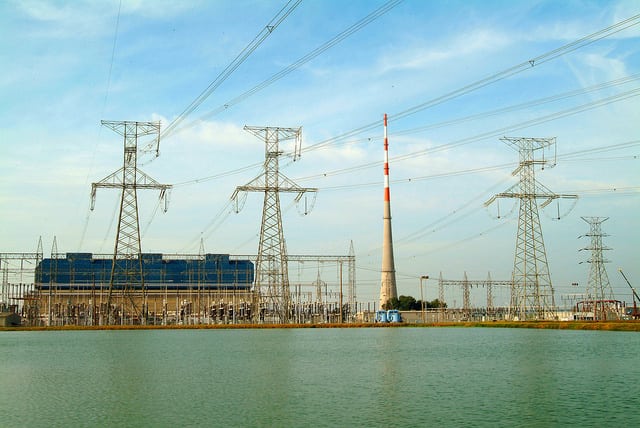
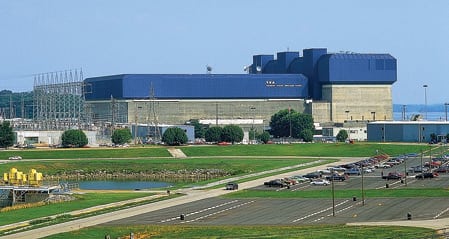
Congratulations to TVA and its contractors for "recommissioning" the 1,064-MW Browns Ferry Unit 1 in Athens, Alabama. The unit was restarted in late May and reached full power on June 8. "All three units at Browns Ferry are essentially alike now," said TVA’s acting chief nuclear officer, Preston Swafford. "We have new or refurbished equipment that is operated in the same manner on all three units." Unit 1 was shut down in 1985 for safety reasons.
The cost of refurbishing Unit 1 and modernizing the overall plant stretched TVA’s resources. But the investment will pay dividends: The $1.8 billion (about $1,700/kW) spent is expected to be recouped in just five years.
Moving quickly following the reopening of Browns Ferry 1, TVA’s board approved the completion of a second unit at its Watts Bar Nuclear Plant on August 1. The five-year project will give TVA another 1,180 MW for an estimated $2.49 billion ($2,100/kW).
Watts Bar Unit 1 was the last nuclear plant to be commissioned in the U.S., in 1996. TVA suspended construction on Unit 2 in 1988. Unit 1 ultimately took $6.9 billion and nearly 25 years to complete. TVA has definitely has learned from its early mistakes, and it shows with the success of Browns Ferry Unit 1.
“The excellent operating record of Watts Bar 1 convinces us that the design of the proposed second unit is sound,” said TVA president and CEO Tom Kilgore. “In building it, we expect to apply all of the lessons we learned restarting Browns Ferry 1.”
Bored with statistics
The nine nuclear plants mentioned above have a total capacity of 11 GW, a bit more than the 9 GW of new capacity assumed by the EIA estimate for 2030. All have an estimated in-service date of 2015. I think it’s reasonable to conclude that more plants will be built in the years after 2015, if and when the latest nuclear designs have matured.
It takes time for any industry as moribund as U.S. nuclear power to rebuild lost capability and infrastructure. Just as a couch potato can’t hop out of his recliner and run a marathon without long and hard preparation, America’s nuclear utilities, contractors, and suppliers are slowly building the muscle and dedication needed to go the distance.
—Dr. Robert Peltier, PE Editor-in-Chief