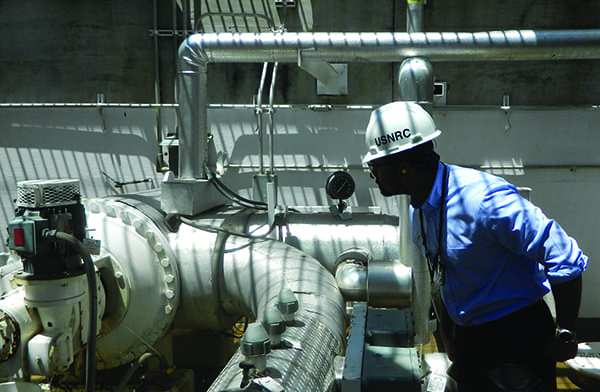
Nearly 10% of boilers and pressure vessels inspected in the second quarter of 2008 were slapped with violations, which means that the violations put workers and equipment in danger, according to a quarterly report released by the National Board of Boiler and Pressure Vessel Inspectors.
The "Report of Violation Findings" indicated problem areas and trends related to boiler and pressure vessel operation, installation, maintenance, and repair. The highest percentage of violations was detected in boiler controls, followed by boiler piping and pressure-relieving devices. A portion of the violations can be attributed to lack of knowledge and training on Section 1 of the American Society of Mechanical Engineers’ (ASME’s) International Boiler and Pressure Vessel Code.
Properly functioning control or safety devices are absolutely essential for any boiler. The only way you can be confident they will work when called upon to do so is to regularly perform required maintenance and testing while adhering to ASME code requirements. Here’s a quick reminder of some of the key requirement updates.
Code Updates for Water Level Indicators
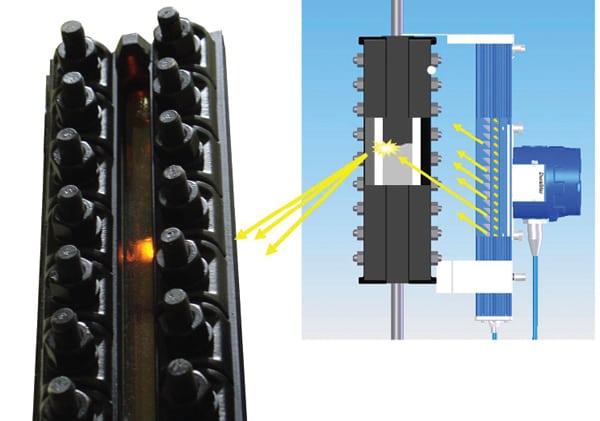
ASME has specific minimum requirements for direct (visual) and indirect (instrument) water-level indicators, which must be installed on every power boiler manufactured in accordance with the code (Figure 2).
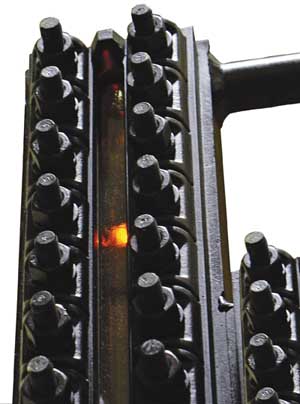
2. Easy boiler water level monitoring. The DuraStar Flat glass gauge illuminator—approved for use in Class 1, Div 1, Group B, C, and D environments—uses LEDs for high-intensity imaging of the water line. Courtesy: Clark-Reliance
A gauge glass is the only form of direct water level indicator found on steam boilers. The various types are:
-
Tubular glass (for pressures up to 250 psig), which displays the water level meniscus.
-
Prismatic (reflex) glass (for pressures up to 350 psig), which displays black color up to the water level and white above the level.
-
Flat glass or transparent (for pressures up to 2,000 psig), which displays a clear color for both the water below and steam above the meniscus line.
-
Ported glass gauges (for pressures up to 3,000 psig), which display green color for water and red color for steam by using the principle of light refraction.
There are multiple code requirements for gauge glasses to ensure the safety of boiler operation and plant workers. For example, the code states that all boilers operated up to 400 psig must have at least one direct-reading water gauge glass in service at all times. This allows the operator to view the actual water level with no interface mechanisms or sensors, which could distort the display of actual water level.
The code also requires that tubular and transparent gauge glasses with multiple sections will overlap by a minimum of 1 inch to prevent the loss of visibility of the actual water level. This is especially relevant for flat glass gauges so the steam and water level interface meniscus can always be seen.
New Code Change
A recent change to the code relates to glass gauge design and construction. Transverse or cross-web structural webs that strengthen the body of a flat glass (transparent) type gauge are now prohibited from use in boiler applications. Masking shadows from the transverse members makes it difficult to read the liquid level along the length of the gauge glass, thus necessitating the change in the code.
In addition to glass gauges, water levels can also be checked using remote (indirect) indicators. These include:
-
Conductivity probe type
-
Differential pressure transmitters
-
Magnetic level indicators
-
Guided wave radar
Section 1 of the ASME code has specific requirements that must be followed when using these types of indicators.
Boilers operated at pressures greater than 400 psig may have either two direct-reading water gauge glasses in service or two remote level indicators on continuous display for the operator in combination with one direct-reading gauge (which may be valved off but kept in serviceable condition).
The code does allow the use of a computer remote terminal to provide an independent indication of water level. Using the continuous display helps when the water level in at least one gauge glass is not visible to the operator in the area where control actions are initiated (Figure 3).
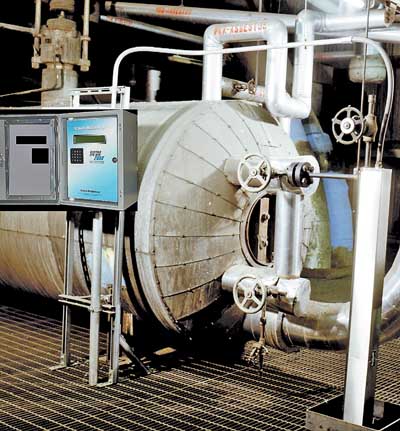
3. Indirect readings. Remote boiler drum water level instrumentation, such as this Electro Eye-Hey system, is designed to give operators an all-inclusive view of multiple water level probes. Courtesy: Clark-Reliance
An additional type of indirect reading instrument is a magnetic level indicator, which is based on float technology with magnetic coupling of the indicator. Subsection PG-12 in the 2008 edition of the code restricts the use of a magnetic gauge to 900 psig and does not allow the use of a magnetic gauge for control purposes. Therefore, the use of alarm or trip switches on a magnetic gauge is prohibited.
Users of magnetic level gauges should be aware of some issues that affect water level reading compared to gauge glasses. If the boiler in use has poor water quality, the potential exists for an excessive amount of iron particles to attach to the float, thereby causing an inaccurate level reading.
A faulty level reading can also occur when the magnetic gauge is not in sync with the boiler’s actual operating conditions. If the boiler is operating at a pressure significantly lower than the intended operating pressure, the magnetic gauge reading will be higher than the actual drum level. A failed float will result in a false level indication.
Some users have unwittingly violated the code by replacing water gauge glasses with magnetic level gauges. They should know that a direct-reading glass is still required on every boiler, no matter how many indirect water level indicators are installed. The decision to eliminate all direct-reading water gauge glasses is an immediate code violation.
The code does permit the use of stainless steel and nickel-based alloy materials for the construction of remote level indicators and for use in magnetic level gauge chambers and gauge glass bodies.
Ball check valves, when used with water gauge glasses, have their own code requirements. For instance, ball check valves in upper and lower fittings must open by gravity, and the ball in the lower check valve must rise vertically to its seat. The ball seat in the upper fitting must be a flat seat with either a square or hexagonal opening, or arranged so the steam passage can never be completely closed by this valve.
Code Updates for Water Columns
There are certain code requirements for water columns that are not required on power boilers by ASME regulations but that, when specified, must be designed and manufactured to comply with the code.
A water column is used on a steam boiler to reduce the turbulence and fluctuation of the water level so the gauge glass can provide a steady, accurate water level reading. Water columns are made from either cast iron (maximum 250 psig) or fabricated steel (maximum 3,000 psig). Stainless steel is prohibited for the construction of water columns.
Water level indication devices in water columns include float alarm type, electrode (conductivity probe) alarm type, or no alarm. The latter is to be used for the sole purpose of supporting one or two water gauge glasses.
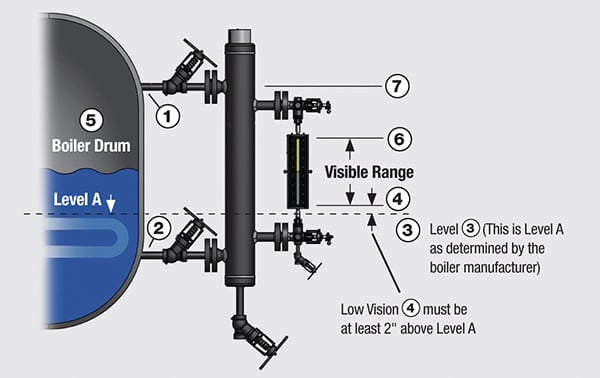
According to the National Board, a water column, if used, must be connected to the boiler using a cross or equivalent pipe fitting at each right-angle connection to allow visual inspection and cleaning of the connecting pipes. Sludge or sediment of any kind in the water column or connecting pipes can cause false water level indications (Figure 4).
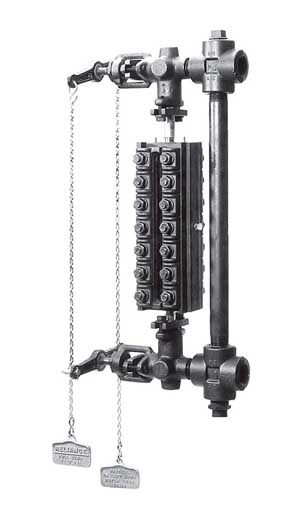
4. Old reliable. The flat glass water gauge remains the mainstay of boiler drum water level measurement. Courtesy: Clark-Reliance
The ASME code requires a 1-inch minimum connection size from the boiler to the water column and a ¾ -inch minimum connection size from the boiler to a remote level indicator. Gauge glasses that are required by code may be connected directly to the shell or drum of the boiler or to an intervening water column. When two gauge glasses are required, both may be connected to a single water column.
Section 1 of the code has standards for the highest and lowest permissible water level in water column connections. The lower edge of the steam connection between a water column and level indicator device shall not be below the highest visible water level in the gauge glass.
Conversely, the upper edge of the water connection between a water column and level indicator device shall not be above the lowest visible water level in the gauge glass. These parameters are established to prevent any accidental overheating of the boiler, leading to unwanted downtime and possible worker injury.
Water columns are considered to be a standard pressure part, as defined in the ASME boiler code; therefore, a code stamp for manufacturing is not required. Code-recognized materials and applicable welding procedures are a must. Since 1991, the use of gauge cocks (also called try cocks) have not been required.
There are certain codes that apply to condensate removal from heat-recovery steam generators. Drain pots, which detect and remove unvaporized spray water, will include automatic detection of water and automatic operation of the drain pot valves using a sensor device that triggers operation of the drain valve.
Other Common Code Violations
Some steam boiler operators have unintentionally violated the code as a result of lack of oversight and failing to follow proper maintenance procedures, as outlined by the original equipment manufacturer. Other violations include:
-
Isolated and inoperable water gauges.
-
Missing water gauges.
-
Missing illumination from ported gauges.
-
Inadequate display of remote level indicators in control room, combined with isolated gauges.
-
Contaminated water gauges preventing proper level reading.
-
Multiple-section flat glass gauges without overlap.
-
Poor maintenance practices that lessen the service life of the instruments.
To achieve optimum safety for boiler operation and plant personnel, any individual responsible for the selection, specification, and replacement of level instrumentation must understand the applicable code requirements. It is always wise for managers to consult with the plant’s insurance carrier to verify if they require additional instrumentation beyond the code minimum requirements.
— Contributed by James W. Kolbus, a product manager for Clark-Reliance Corp.