Yes, you’ve read it right. Upbraiding, not upgrading.
Twenty-six years ago, in early 1986, Georg Bednorz and Alex Mueller discovered high-temperature superconductivity in the family of copper oxide perovskites. The field exploded later that year and in early 1987 when Paul Chu and his collaborators at the Universities of Houston and Alabama sighted telltale signs of superconductivity onsets above the boiling point of liquid nitrogen, 77K. These developments unleashed a flurry of studies, especially in the U.S. and Japan, predicting markets eventually exceeding several hundreds of billions of dollars, mostly centered around electric power applications.
25 Years of Investment
The summit of this euphoria occurred in July 1987, when President Ronald Reagan convened the White House Conference on Superconductivity in the ballroom of the Hilton Hotel in central Washington, D.C. The president announced a series of initiatives that were embodied in the Superconductivity Competitiveness Act of 1988. This legislation created the Department of Energy Initiative for Power Applications of Superconductivity, a $30 million (average) annual program designed to “upgrade” American electric utilities and power equipment manufacturers to face the looming energy demand challenges of the coming 21st century. After retiring from IBM in 1993 to join the Electric Power Research Institute (EPRI), I became actively involved in the DOE efforts as a co-funder, peer reviewer, and, yes, an occasional congressional lobbyist.
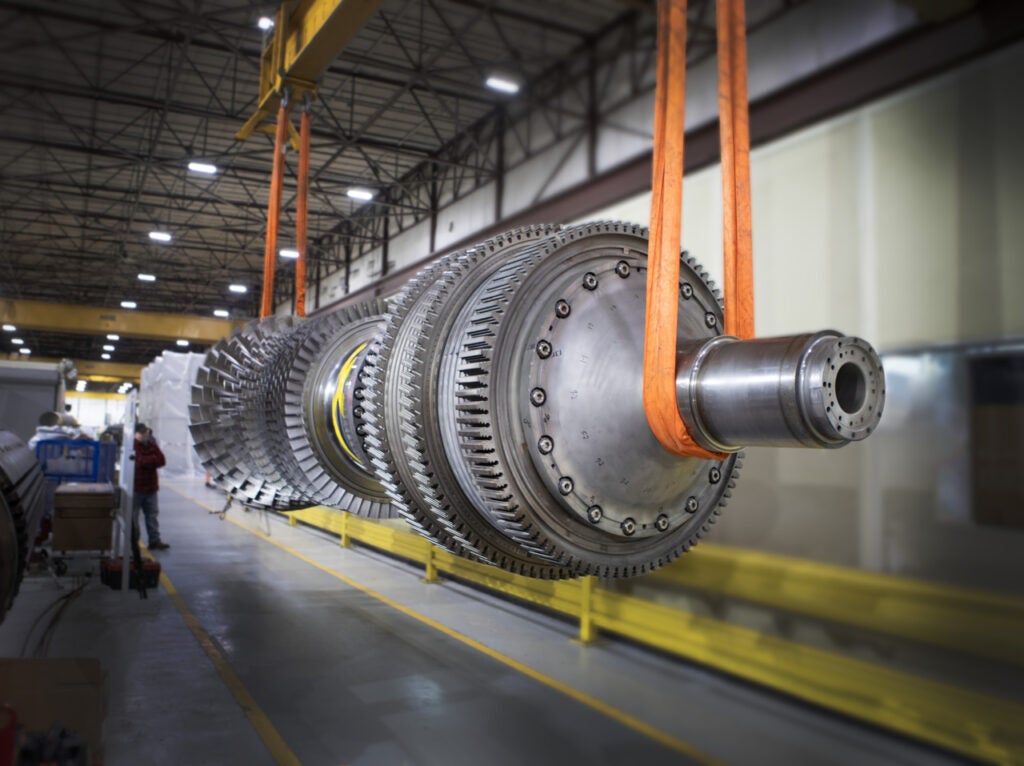
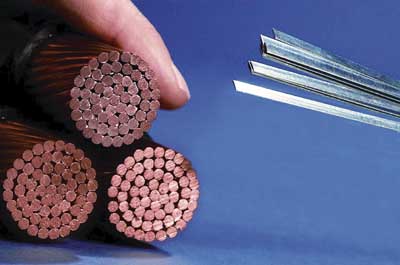
So, here we are today, almost 25 years since that first conference and $700 million to $800 million dollars later, plus perhaps half that amount additionally invested by the private sector. Numerous successful demonstrations, employing both low- and high-temperature superconductors, in almost every type of power equipment—cables, transformers, rotating machinery, fault current limiters, storage and power conditioning devices—have been undertaken in America and elsewhere. The U.S. National Laboratories—particularly Los Alamos, Oak Ridge, Argonne, and Brookhaven—in conjunction with private companies such as American Superconductor and SuperPower, have developed high-performance, “second generation,” long-length (hundreds of meters), and reliable superconducting tape suitable for deployment in all the above applications.
Several U.S. utilities have very generously donated talent and facilities, and redirected a portion of their EPRI dues for financial assistance in support of such efforts. The fruits of their labors now “sit on the shelf” awaiting insertion into the American electric power infrastructure. Beginning in 2010, funding for the Power Applications of Superconductivity program was removed as a “line item” in the DOE’s congressional appropriation, and I believe justifiably so. If Ronald Reagan were still with us, he might say, albeit perhaps tongue-in-cheek, “Mission accomplished.”
No Technology Takers
Why has not a single U.S. investor-owned utility yet, on its own nickel, picked the fruits of our national effort? One often hears, “the high cost of the wire” or the “hassle factor.” The “hassle factor” involves such locutions as, “electricity is cheap and our in-plant and in-field efficiencies are pretty good right now, so there’s no compelling reason to implement incremental increases of only a few percent,” or “any new technology that involves a new skill set can lead to tedious negotiations with our labor unions,” or “anyway, our grid infrastructure works pretty well right now and when there are outages it’s responding just as it was designed to do.”
At IBM, when we would review the commercial potential of a particular new technology, part of the process would involve asking, “What if the product were free? Would our customers still buy it?” “If the wire were free, would American utilities then buy it?” And how could we bring that about? “Zero cost” would be obtained in the form of a federal-state “tax credit (not a subsidy!)” to the equipment manufacturer or utility for the wire cost alone associated with a given application, not to “packaging” such as insulation and cryogenics, or actual installation.
Many New Barriers to Development
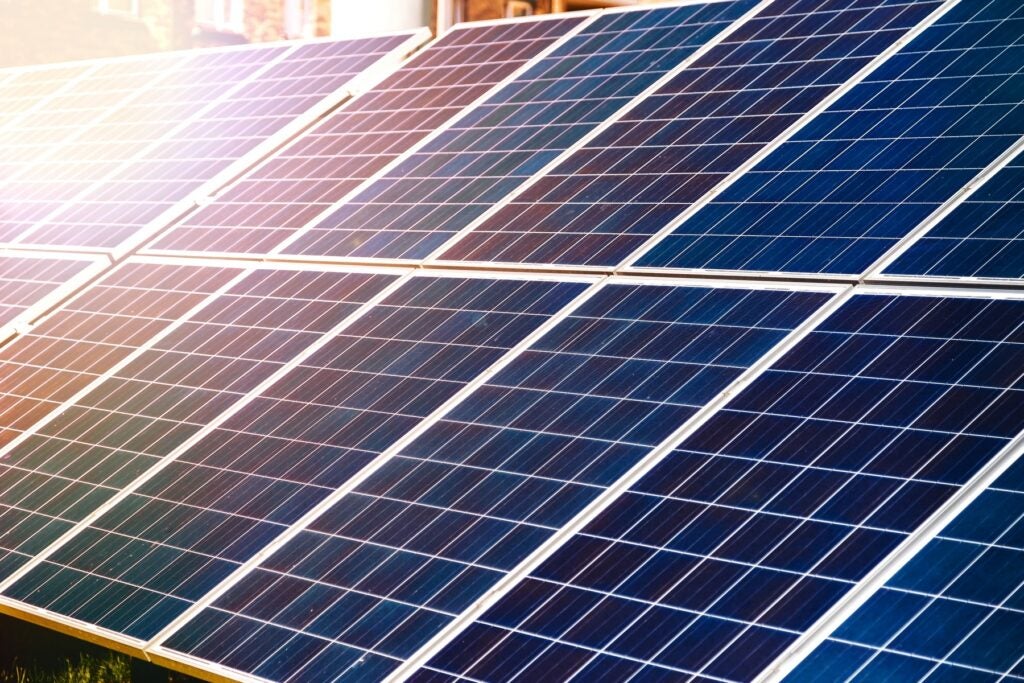
One also often hears that the “day of superconductivity in power” will dawn with the large-scale build-out of renewable electricity generation, which I take to comprise principally wind, solar, and biomass. The argument goes that new connection cabling to grid and storage substations will be necessary, so why not use superconductivity? Also, the advantageous power-to-weight ratio of a superconducting generator makes its deployment on high wind towers quite attractive.
However, from my point of view, such an occurrence in the U.S. is extremely problematic given present basic and, likely future as well, American political and social views about “living space.” Anyone who has ever visited a wind farm certainly doesn’t want one in his or her backyard, and not even on the horizon. Wind, solar, and biomass are massively ecoinvasive.
The North American continent is awash in fossil fuel reserves, arguably the largest reserves in the world. Under such circumstances, it is likely its inhabitants will continue to oxidize as many carbon atoms as possible.
So, when will the sun finally rise on large-scale power applications of superconductivity?
— Dr. Paul M. Grant (w2agz@w2agz.com), an IBM research staff member emeritus and an EPRI science fellow (retired), held an visiting scholar appointment at Stanford University and is currently an adjunct staff associate at the Jet Propulsion Laboratory, Cal Tech. Portions of this editorial appeared in the Summer 2011 issue of Cold Facts, the magazine of the Cryogenic Society of America (http://www.cryogenicsociety.org) and are reproduced by permission.