The U.S. may have created the roadmap for the next generation of nuclear reactors, but other countries are farther down the road to development. The U.S. Department of Energy initiated the Generation IV Roadmap development project in January 2000. Soon, nine other countries joined, including some of the largest commercial nuclear powers, such as France, Canada, Japan, and the Republic of Korea. Together, they formed the Gen IV International Forum (GIF). The process intended to identify a new generation of nuclear energy systems that could be market-ready by 2030 or earlier that would offer significant advances in sustainability, safety and reliability, and economics.
Over the following two years, a large number of experts from participating countries divided the issues among four Technical Working Groups (TWG). I chaired the TWG dealing with nonclassical designs, whose aim was to identify and evaluate novel nuclear energy concepts with potential sustainability, safety, and economic performance well above the current generation of advanced water-, gas-, or liquid metal – cooled reactors that were the subject of evaluation by the three other TWGs.
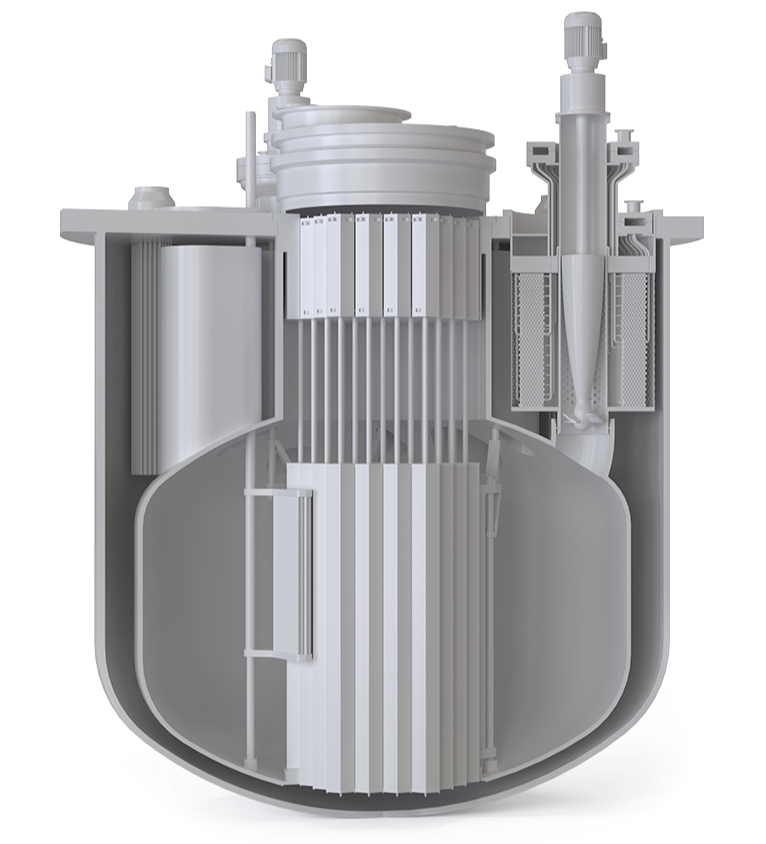
From a list of 19 concepts recommended by the TWGs, and based on expressed interest by two or more countries, the GIF leadership selected six Gen IV concepts: Very High Temperature Gas Reactor (VHTR), Sodium Fast Reactor (SFR), Supercritical Water-cooled Reactor (SCWR), Gas-cooled Fast Reactor (GFR), Lead-cooled Fast Reactor (LCR), and Molten Salt Reactor (MSR).
As of 2008, 12 countries have signed the GIF Charter. Seven of those 12—Canada, China, France, Japan, Korea, Switzerland and the U.S.—and Euratom (European Atomic Energy Community) have gone further and signed a Framework Agreement to participate in developing one or more Gen IV systems.
Considering all the technical, economic, and political facets of nuclear power around the world, the Gen IV process has been very successful. However, it is not on track to fulfill its main promise of making a more sustainable and economical generation of nuclear power plants available by 2030.
Where Gen IV Got Off Track
In September 2007, the European Commission launched the Sustainable Nuclear Energy Platform (SNEP) to develop a European strategic research agenda for the development and demonstration of fission power systems, aiming to maintain the safety and competitiveness of Advanced Light Water Reactors (ALWRs), develop a Gen IV fast reactor, and develop new applications of nuclear power for the production of hydrogen, water desalination, and other process heat applications. SNEP’s strategic research agenda (released Nov. 30, 2008) presents a vision for the development and deployment of a Gen IV fast reactor with closed fuel cycle by 2050 to operate symbiotically with an ALWR for improved sustainability.
Meanwhile, Japan is moving ahead with a Fast Reactor Cycle Technology project that will lead to full-scale deployment of the next-generation SFR by or before 2050.
The European program, led by France, and the Japanese program were developed thanks to consensus among their respective government, industry, and research communities on the indispensable role of ALWR technology to meet present needs for clean, nonpolluting baseload power and the essential need for fast reactors to secure the sustainability of nuclear power in the next century and beyond.
The most challenging requirement for Gen IV reactors was achieving an economic advantage with regard to initial capital and overall life-cycle cost and financial risk. Even compared with today’s overnight cost of construction for ALWRs, which is about four times higher than the typical estimates used at the outset of the program, none of the selected Gen IV systems could be cost competitive. Consequently, concern about financial risk — a major, decisive issue with U.S. utilities — favors more mature technologies over newer ones that may promise higher sustainability and/or safety performance.
Road-Tested Technology Has the Edge
More than 10,000 years of combined operational experience with Light Water Reactors (LWRs) sets a very high bar for other systems. Gen IV systems with a sustainability advantage, like the SCWR, or very high temperature reactors for process heat applications have a long and rocky road ahead. Even by mid-century, it’s unlikely that any of these systems will replace ALWRs for baseload power at a competitive cost.
The dominance of LWRs is primarily due to two interrelated factors: a well-balanced and perfectly matched design that has survived the technology selectivity of the first two decades of commercial nuclear power development in the U.S. and the spread of this technology by U.S. industry to France, Japan, and Korea. All countries currently planning to build nuclear power plants are considering one of the two varieties of the ALWR systems: the direct-cycle boiling water reactor or indirect-cycle pressurized water reactor. Both have life expectancies up to 80 years.
So where does that leave Gen IV goals? The expanded use of ALWR technology will bring more urgency to the issue of sustainability, particularly in areas of fuel utilization and the minimization of nuclear waste. The Europeans and Japanese plan to meet the sustainability goal primarily through the development and deployment of SFR in symbiosis with ALWRs. No such decision has yet been made in the U.S.; starting an open dialogue on the issue may be very timely if the U.S. wants to avoid being stalled at the side of the road.