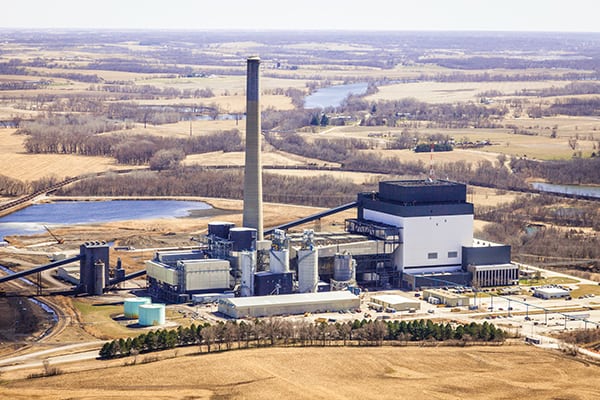
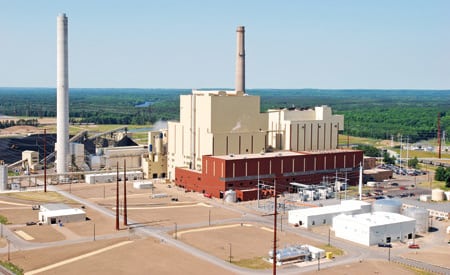
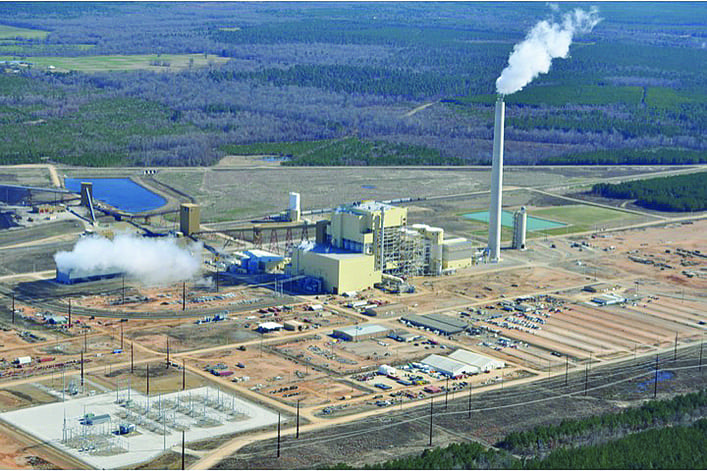
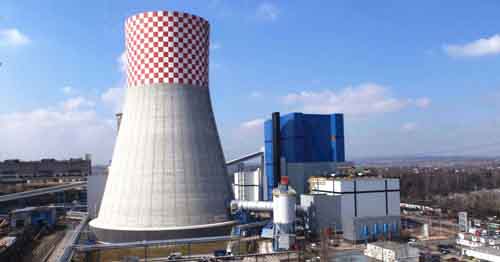
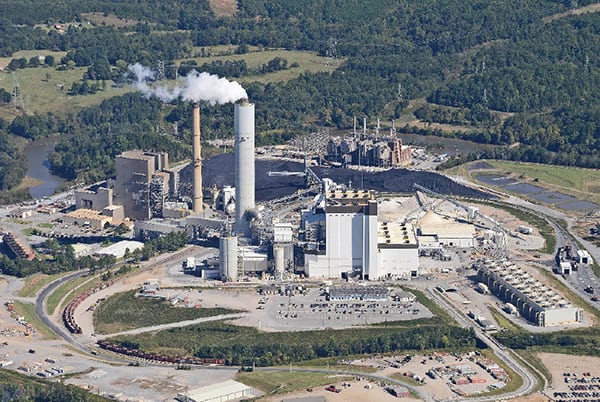
Renewed interest in higher plant efficiency, stable fuel costs, and energy security makes pulverized coal plants very attractive these days. Burning that coal to produce steam at supercritical pressure and temperature, which bumps up efficiency by 3% to 6% and reduces CO2 emissions, made the technology even more compelling for MidAmerican Energy Co. and its partners, who built Walter Scott, Jr. Energy Center Unit 4. If this plant name is unfamiliar, you might recognize it as the former Council Bluffs Energy Center. The facility was dedicated July 10 to Walter Scott Jr., long-time member of the Berkshire-Hathaway and MidAmerican Energy Holdings Co. Boards of Directors.
MidAmerican is the majority owner (61%), developer, and operator of the $1.2 billion project. But it needed the help of dozens of partners: Central Iowa Power Cooperative, Corn Belt Power Cooperative, Lincoln Electric System, Municipal Energy Agency of Nebraska, and the municipal utilities of the Iowa cities of Alta, Cedar Falls, Eldridge, Montezuma, New Hampton, Pella, Spencer, Sumner, Waverly, and West Bend. Combined, these utilities provide electricity to more than 1 million customers. The Walter Scott, Jr. Energy Center (WSEC) is located on the Missouri River, within the city limits of Council Bluffs, Iowa, and across the river from Omaha, Nebraska.
The southwest Iowa site came to life with a single, 45-MW coal-fueled unit in 1954 and since then had been expanded to three units that generate more than 800 MW. Unit 4 doubled the capacity of the site to 1,600 MW when it entered service this June, making it the largest producer in Iowa. The WSEC uses Powder River Basin (PRB) coal, delivered by unit trains as the site’s fuel supply. Unit 4 uses the plant’s existing coal unloading and storage facilities, but the site’s coal crushers and conveyors had to be upgraded to handle the increased throughput that Unit 4 requires. New transfer conveyors also were installed from Unit 3 to the new Unit 4 tripper room.
Wave of the future?
There are about 155 supercritical power stations with a combined capacity of 107 GW currently operating in the U.S. Construction of supercritical-pressure boilers in the U.S. began in the 1950s, peaked in the 1970s, but fell precipitously in the 1980s. "Teething" problems caused by austenitic steel metal fatigue, superheater corrosion, and creep cracking in heavy components operating at high temperatures and pressures were responsible for the technology’s fall from grace. The last supercritical project in the U.S. was the 1,300-MW W.H. Zimmer Station, located in Moscow, Ohio, that went commercial in March 1991 under the majority ownership of Duke Energy. Without question, the U.S. has been decidedly slow at adopting the latest supercritical technology; in contrast, over 85% of new European and Asian capacity installed over the past two decades has used it.
Perhaps this project will signal the beginning of a revival of North American interest in supercritical technology as more utilities try to diversify from gas and use more coal. After all, regulated utilities still are required to keep prices low and reliability high. Over the past decade, new coal-fired capacity has represented less than 5% of new generation, but the U.S. Department of Energy predicts a steady rise in its share, possibly to as high as 40%, in the next few decades.
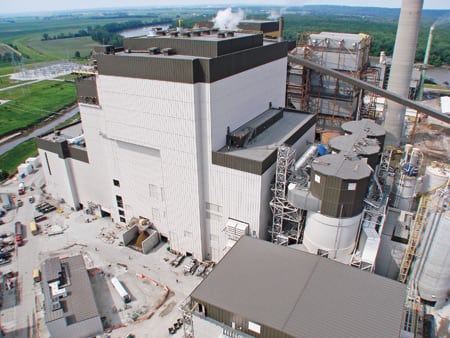
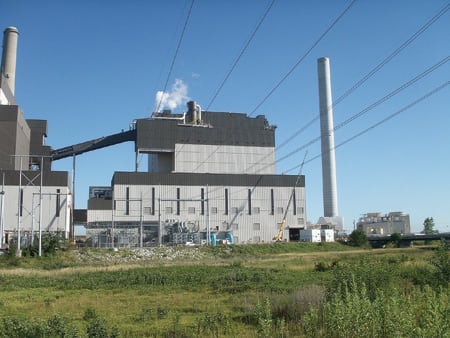
By any account, 16 years has been a long time to wait for the next round of supercritical coal-fired plants to make an appearance, but WSEC Unit 4 (Figure 1) is leading what appears to be a new wave of construction. Following closely on its heels will be several other supercritical plants: Wisconsin Public Service Corp.’s 530-MW Weston Unit 4 (to be built in partnership with Dairyland Power by 2008), Wisconsin Energy’s 677-MW Elm Road Generating Station Units 1 and 2 (due on-line in 2009 and 2010, respectively), Kansas City Power & Light’s 850-MW Iatan Unit 2 (slated for commercial operation in 2010), and Duke Energy’s 900-MW Cliffside Unit 6 (scheduled for 2011 commercial operation). Elm Road and Cliffside are outfitted with Hitachi supercritical boilers closely related to the one powering MidAmerican’s Walter Scott, Jr. Energy Center Unit 4.
|
1. Latest and greatest. Modern supercritical technology was adopted for MidAmerican Energy’s Walter Scott, Jr. Unit 4. Courtesy: Hitachi America Ltd.
|
At the same time, AEP has two ultrasupercritical projects in development: Public Service of Oklahoma’s $1.8 billion Red Rock Project (slated for 2012 operation) and SWEPCO’s Turk Project (planned for 2011). Both expect their permit approvals this month. There are almost two dozen more supercritical and ultrasupercritical projects in the development queue in the U.S.
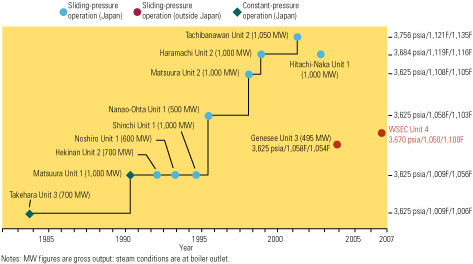
Looking back, we see that the last supercritical plant built in North America was the 495-MW Genesee Unit 3, a 2005 POWER Top Plant jointly owned by EPCOR Power Development Corp. and TransAlta. The plant, called G3, is located about 45 miles southwest of Edmonton, Alberta. The owners awarded the design and construction contract for Genesee Unit 3’s power island to Hitachi Canada Ltd. (HCL) in December 2001. HCL then called on its parent and Babcock-Hitachi K.K. (BHK) to oversee the engineering and construction phases of the project and provide the plant’s major equipment. G3 went commercial on March 1, 2005. This short history lesson is important because the design of WSEC Unit 4 picks up where Genesee Unit 3 leaves off. (More on the technical heredity of this boiler later.)
Assembling a super team
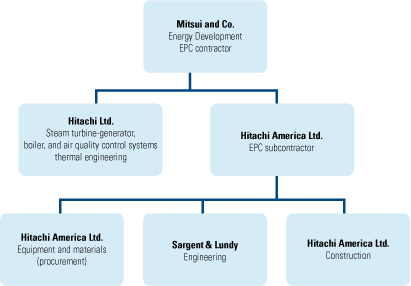
In 2002, MidAmerican Energy chose a competitively bid, turnkey approach to building Unit 4. It awarded the project’s engineering/procurement/construction (EPC) contract to a team led by Mitsui and Co. Energy Development Inc. on February 2, 2003. The MidAmerican contract is reported to be the largest U.S. power plant deal ever struck by Japanese companies. Mitsui then assembled its team (Figure 2), led by Hitachi America Ltd. (HAL), which subsequently hired Sargent & Lundy as its subcontractor with responsibility for overall plant design, detailed engineering, and balance-of-plant (BOP) equipment procurement support. Hitachi Ltd. supplied the steam turbine, generator, boiler, and air quality control systems. Hitachi Ltd.’s Thermal Engineering Department provided high-level thermal design along with the power block’s general arrangement.
|
2. Teamwork pays. The EPC team was organized for success. Source: Hitachi America Ltd.
|
Hitachi’s supercritical boiler design experience seems to have begun when supercritical installations in the U.S. waned in the 1970s. Over the past 30-plus years, the company has refined its designs and pushed steam generator pressures and temperatures steadily upward. Hitachi manufactures the boiler at its BHK subsidiary in Kure, Japan, and the steam turbine-generator at Hitachi Works in Hitachi City, Japan.
Boiler wars
Hitachi’s experience with supercritical boilers dates back to the 1970s and has been refined over the years to result in a very reliable design, as witnessed by a large network of similar operating units in Japan (Figure 3). The first 700-MW coal-fired supercritical boiler plant with turbine inlet conditions comparable to current levels began commercial operation in 1983. Steady increases in unit temperature, pressure, and efficiency over the ensuing two decades culminated in the 1995 commissioning of a supercritical (3,625 psia/1,058F/1,105F) boiler to power the 500-MW Unit 1 of Hokuriku Electric’s Nanao-Ohta power plant. By 2002 this plant was operating at 100% boiler reliability on a 24-month turnaround schedule, despite firing (primarily) high-slagging imported coals.
|
3. Asian invasion. This diagram shows the evolution of steam conditions for boilers supplied by Hitachi’s BHK subsidiary over the past 20 years. The sliding-pressure Benson boiler that powers WSEC Unit 4 is based on a Hitachi reference design whose reliability has been proven in Japan. Source: Hitachi Canada
|
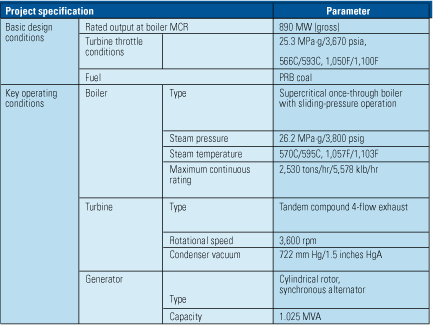
Like EPCOR’s G3, the WSEC Unit 4 derives its design from a 1,050-MW unit that Hitachi supplied for Tokyo Electric Power Co.’s Hitachi Naka plant near Hitachi City. WSEC Unit 4 has steam conditions of 3,675 psia and 1,057F/1,103F and delivers 5.5 million pounds per hour (Table 1).
|
Table 1. Winning design. Here are the basic design conditions and key boiler, turbine, and generator specs of Walter Scott, Jr. Energy Center Unit 4. Source: Hitachi America Ltd.
|
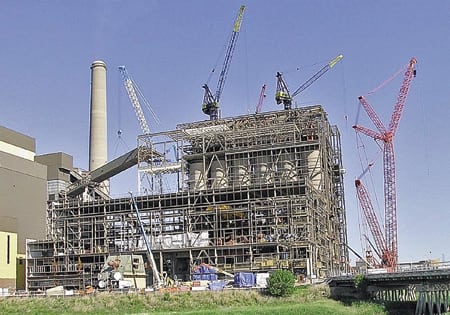
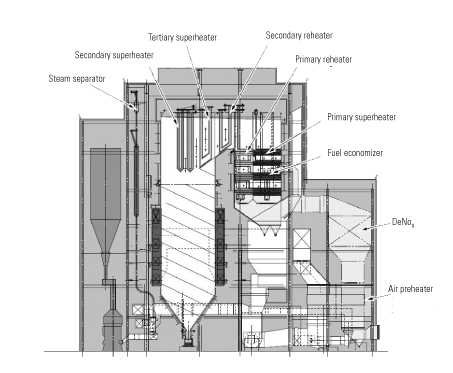
The Benson sliding-pressure boiler includes a spiral-wound waterwall furnace and a double backpass convection section (Figure 4), the first of its kind in the U.S. The tubes are rifled to increase heat transfer by suppressing DNB (departure from nucleate boiling) in the subcritical-pressure region and pseudo-film boiling in the supercritical-pressure region. The lower part of the furnace has an opposed firing system. The boiler design minimizes imbalances of fluid temperatures at the furnace waterwall tube outlet, improving reliability.
|
4. Raise the roof. Erection of the boiler and steel frame nearing completion. Courtesy: Hitachi
|
Steam-side systems
Hitachi’s nomenclature for the 890-MW steam turbine is TCDF-40—a tandem-compound, four-flow, single-shaft, 3,600-rpm machine with 40-inch last-stage titanium blades. Those blades have the same length as Genesee Unit 3, and the turbine is much like the one that powers the 700-MW Unit 2 of Chubu Electric Power Co.’s Hekinan plant. The WSEC unit is also the largest Hitachi steam turbine installed outside of Japan.
The steam turbine-generator, rated at 1,025 MVA, is also among the largest two-pole generators manufactured by Hitachi. Its 0.52-MPa·g hydrogen cooling system for the rotor windings is the same used in large four-pole generators of 1,500-MVA class. The design makes the stator frame structure more compact. The stator windings are water-cooled.
Critical components in the turbine system—the bodies of the main stop, main steam control, and combined reheat valves, and main and reheat steam lead piping—are made of 9-Cr forged steel; 12-Cr steel was used in the high-pressure/low-pressure (HP/IP) rotors, HP/IP internal casings, and diaphragm for the HP/IP sections. To improve efficiency and reliability, a continuous cover blade was applied to the moving blades of the HP and LP sections. To further raise efficiency, an advanced vortex nozzle was mated to the nozzle blades in all sections.
Sliding-pressure operation of the boiler is controlled as a function of steam turbine power, with the turbine governing valves wide open. This minimizes throttling losses and allows the steam pressure at the turbine inlet to change to maintain flow at a constant volume. Sliding-pressure operation also improves the thermal efficiency of the steam turbine at partial loads, by decreasing thermodynamic losses.
The feedwater system has an HP heater above the reheat port, two 50% turbine-driven boiler feedpumps, and a motor-driven start-up feedpump supplied by Ebara Corp. (www.ebara.co.jp). Feedwater heating is done in eight stages, via seven closed-cycle feedwater heaters from Thermal Engineering International (www.babcockpower.com) and one deaerating heater from Kansas City Deaerator Co. (www.kansascitydeaerator.com). A little domestic content never hurts.
The condenser was designed by Hitachi Ltd. and fabricated in Canada. ITT Goulds Pumps (www.goulds.com) provided the three 50% vertical condensate pumps, while U.S. Filter Corp. (now Siemens Water Technologies, www.water.siemens.com) supplied the full-flow condensate polisher that keeps the working fluids in spec for the once-through supercritical steam generator. A 22-cell mechanical-draft, fiberglass cooling tower supplied by GEA Power Cooling Inc. (www.geaict.com) tempers the cooling water moved by three 50% vertical, wet pit circulating water pumps, also supplied by Ebara.
Makeup water is produced by six wells located at the plant. Well water is cleaned up by clarifiers and a reverse osmosis (RO) demineralization system from U.S. Filter and then stored in a 500,000-gallon tank. The demin water is used for main cycle makeup and for regenerating the condensate polishers and the RO system’s mixed-bed resins.
Keeping the air clean
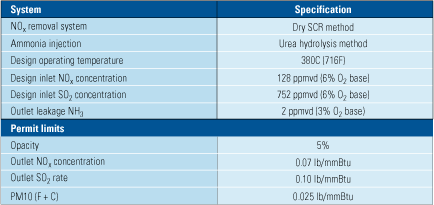
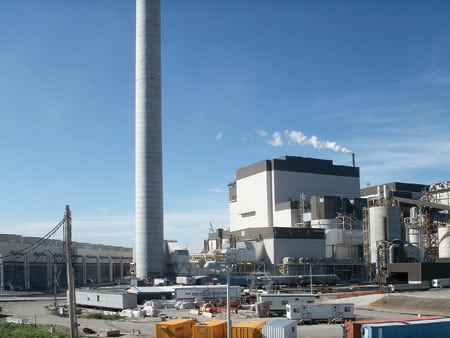
When it selected an air quality control system, WSEC Unit 4 checked every box on the dealer’s list of options (Table 2). The unit incorporates state-of-the-art pollution controls (Figure 5) to keep NOx, SO2, and particulates in check.
|
Table 2. Winning specs. These are the key air pollution controls and permit limits for Walter Scott, Jr. Energy Center Unit 4. Source: Hitachi America Ltd.
|
|
5. All the add-ons. Air quality control systems include a selective catalytic reduction unit, three spray dryer-absorbers, a pulse-jet filter train, and a tall stack. Courtesy: Hitachi America Ltd.
|
Hitachi supplied the selective catalytic reduction (SCR) system that reduces NOx emissions immediately downstream of the boiler (Figure 6). The PRB coal contains high calcium and high catalyst poisons, and the dust easily sticks to the catalyst. This SCR system uses a Hitachi plate-type catalyst that has a higher resistance to dust plugging and has been modified to achieve higher durability in PRB-fired flue gas. The catalyst reactor is compact, with special flue-gas mixers upstream of the reactors. This mixer accelerates NH3 mixing with flue gas during a short residence time using the U2A system from Wahlco Inc. (www.wahlco.com). In this process, the urea is diluted to a 40% urea/water solution, which then is hydrolyzed into NH3.
|
6. Take a slice. A cross-section view of WSEC Unit 4’s boiler and other major components. Sliding-pressure operation improves plant efficiency at partial loads. Source: Hitachi America Ltd.
|
Next in line downstream of the SCR system (Figure 7) are three Babcock & Wilcox (www.babcock.com) dry lime-injected spray dryer-absorbers (SDAs) for SOx reduction and a pulse-jet bag filter train to control particulates. In each SDA, SO2-laden hot flue gases mix with a finely atomized spray of fresh lime and recycled ash slurry to produce a dry waste that is easier to dispose of than the waste produced by wet flue gas desulfurization (FGD) systems.
|
7. Clearing the air. A schematic of the air quality control systems downstream of the boiler illustrates how NOx and SOx are removed. Source: Hitachi America Ltd.
|
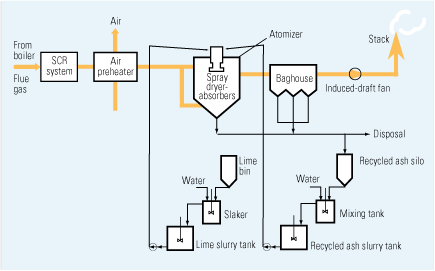
A rotary atomizer with a 1,000-hp motor is an integral part of the SDA vessel. As the slurry droplets evaporate, they absorb SO2, which reacts with dissolved and suspended alkaline material. The atomizer also sprays water to provide temperature control. The amount of water used is carefully controlled to avoid completely saturating the flue gas, which would impair performance by enabling wet solids to adhere to the surfaces of the absorber vessel water and the baghouse. However, the nearer the system comes to saturating the flue gas, the higher the level of SO2 removal. The SDA outlet gas temperature is kept at about 17 degrees C above the adiabatic saturation (dew point) temperature. Typical of most FGD systems, the sorbent is delivered in aqueous form to a dedicated absorber vessel.
Gas leaving the SDAs immediately enters the filter trains, which are equipped with fabric bags to separate the solids (flyash and calcium/sulfur compounds) entrained in the flue gas. Each bag has 16 compartments. Cleaning is initiated either by a pressure drop or at a preset time interval. Each compartment is isolated by closing its outlet damper when broken bags are detected.
The reagent preparation system consists of two independent systems for the lime and recycled slurry. Pebble lime from the storage silo is fed to lime slakers, which hydrate it. The solids are collected on the filter bags, which contain unreacted calcium hydroxide; the solids can be used as recycled slurry to react and absorb SO2 from the flue gas.
Powdered activated carbon injection equipment is available for mercury control, although the final type and quantities of reagent will be determined during future optimization tests. A specific Hg emission rate is not included by the plant’s air quality control permit.
Design by computer
Sargent & Lundy (S&L, www.sargentlundy.com) used its 3-D modeling system, PLADES, for the detailed design of the unit. S&L integrated equipment models from all of the major equipment vendors to develop the overall plant model. The model (Figure 8) served as the primary tool for walkthroughs, constructability reviews, interference checking, and intercompany communications. Burns & McDonnell (www.burnsmcd.com) served as the owner’s engineer.
|
8. Virtual engineering. Sargent & Lundy used 3-D modeling tools to develop an overall plant computer model, which was used for constructability studies. Source: Hitachi America Ltd.
|
Scheduling work
The entire project, from notice to proceed (NTP) to substantial completion, took just 45 months to finish. Critical path procurement began immediately after the NTP was given to the team in September 2003. Long-lead components included boiler alloy parts from Sumitomo Metals, rotor forgings from Japan Steel Works, and boiler structural steel from Central Texas Iron Works (www.ctiw.com), all ordered by the end of 2003. Erection of the boiler’s structural steel began in June 2004; the top girders were set in February 2005.
Initial site preparation began in September 2003 with the setting of pilings. Foundation work began in February 2004, and the turbine pedestal was completed about a year after receipt of the NTP.
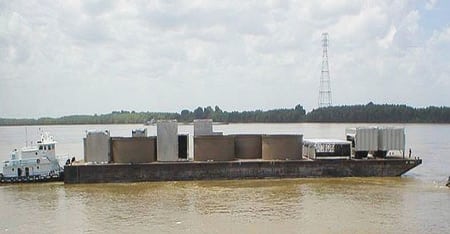
Structural steel and ductwork delivery began in May 2004, using a temporary barge unloading facility (Figure 9) built on the Missouri River. It enabled modular shipments, including box sections of boiler ductwork. Boiler components began arriving in October 2004. The steam turbine and generator also were delivered via the Missouri River in May 2005; they were placed on their foundations by August.
|
9. Barging in. Many large components were delivered by barge to the plant site. Source: Hitachi America Ltd.
|
Setting of the boiler’s top girders, a major milestone for a sliding-pressure Benson boiler, occurred in February 2005. Once the girders were in place, proper boiler erection work began. Other mechanical equipment (condensers, coal mills, etc.) were installed soon afterward. The crossover coal conveyor between Units 3 and 4 was assembled on the ground and lifted into place in May 2005.
The boiler hydro test was completed in June 2006. First oil fire followed in November 2006, first steam flow in January 2007, and first coal fire in February 2007. The plant operated at 100% load as a prerequisite for Substantial Completion, which was achieved June 1, 2007. Plant shake-down operations and contract acceptance testing were continuing at press time.
Overcoming challenges
The tight project schedule necessitated the use of several modern construction processes. For example, HP and IP turbine installation time was reduced by putting the two turbines onto a single shaft before they left the factory.
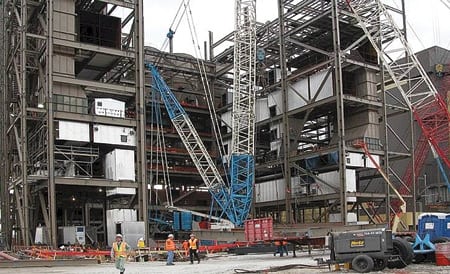
Other advanced construction practices that Hitachi has pioneered—originally for boiling-water reaactors—are prefabricating large components and simulating erection of structures and components (see "Transfer ABWR construction techniques to U.S. shores," POWER, May 2007). Both techniques were applied on this project (Figure 10). Hitachi calls its process "simultaneous erection" of all boiler-related components such as ductwork, piping, and other items along with the structural steel. The process reduced installation time by eliminating the time-intensive placement of components after the steel was erected.
|
10. Parallel processing. Hitachi has perfected simultaneous erection of structural steel and boiler components. The technique shortens construction schedules. Courtesy: Hitachi America Ltd.
|
Construction learning curves also played a part in developing the project schedule. Over the past decade contractors have become expert in constructing "horizontal" power plants using the ubiquitous combined cycle. Supercritical steam plants, especially those using "simultaneous erection" techniques require a contractor to think "vertically" and in three dimensions. These are skills that require an investment of time and effort and can only be learned on the job.
Brownfield projects often pose design and construction problems when there are "surprises" during excavation, and the WSEC project was no different. In some instances, existing underground piping had to be partially excavated to establish exact coordinates for other design work in the area. Also, limited adjacent laydown space meant that component installation had to be staged further away. For this reason, the work of team members had to be closely coordinated to optimize the sequencing of design work and equipment deliveries.
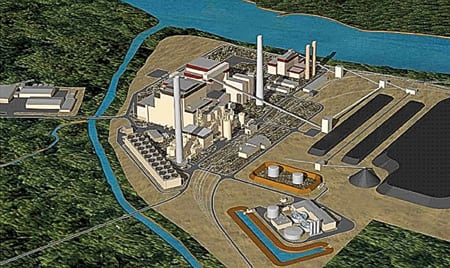
For example, note in Figure 11 that Unit 4’s air quality control equipment had to be oriented perpendicular to the boiler because of the locations of existing coal-handling facilities and because the water treatment plant is located within the track loop for coal unit trains. Construction access to these areas had to be coordinated with deliveries of coal to WSEC Units 1, 2, and 3.
|
11. Hang a right. Note that the air quality control systems had to be installed perpendicular to the boiler building to avoid interfering with other systems and the train tracks. Courtesy: Hitachi America Ltd.
|