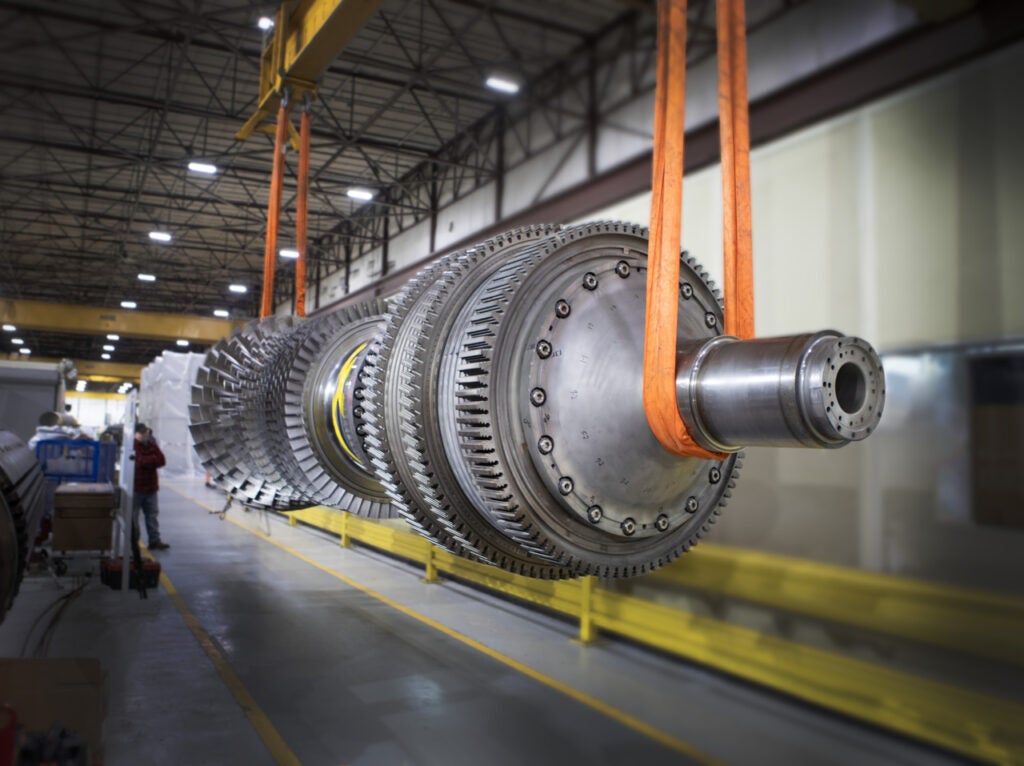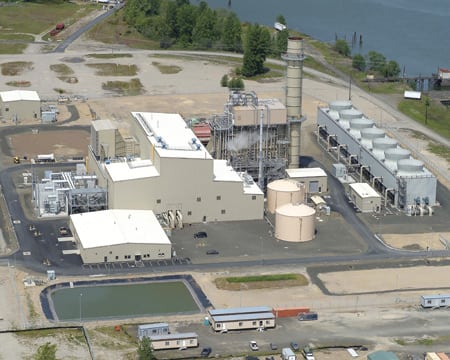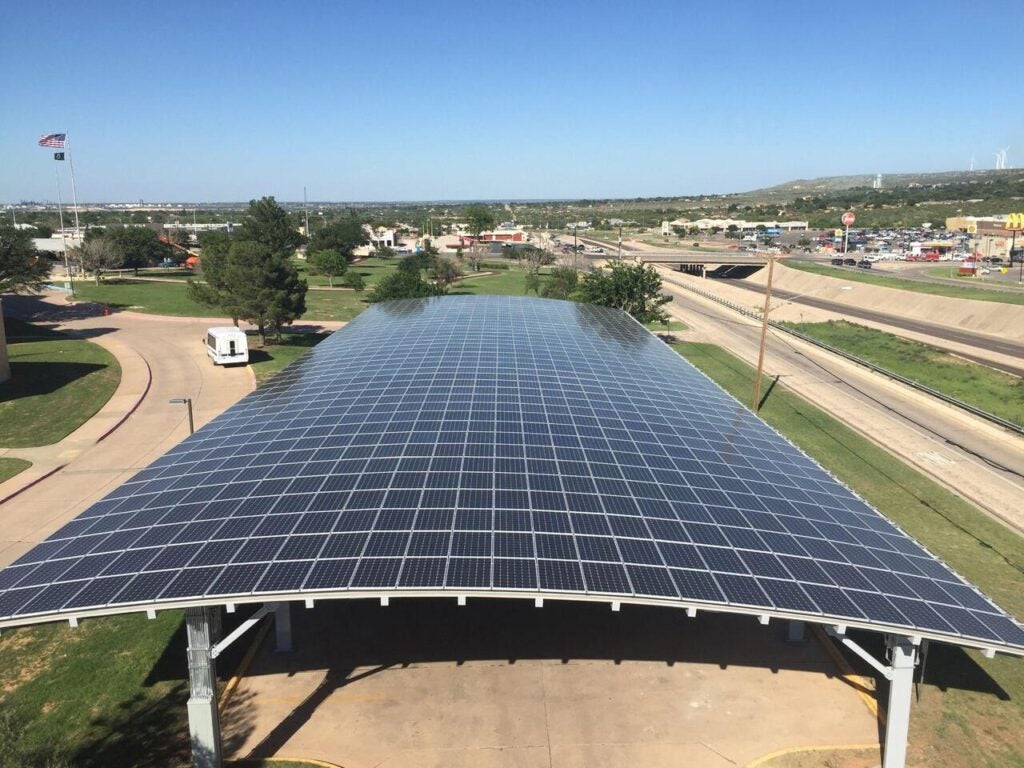
In November 2008, a central Texas utility commissioned HPI, a full-service turbomachinery design and construction firm based in Houston, to perform a major upgrade of its plant’s power distribution and turbine control systems. The scope of the project included upgrades to four gas-fired Pratt & Whitney FT4 Twin Pac gas turbine generator packages, new programmable logic controller (PLC)–based control panels, generator protection panels, new fuel valves, and emergency batteries and chargers. A single Twin Pac package uses two combustion turbines to drive a single double-ended generator (Figure 6).
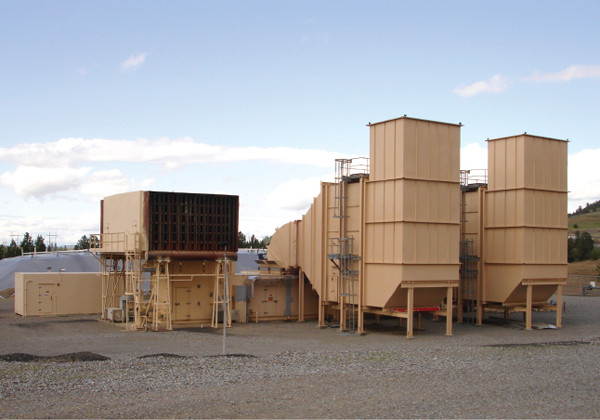 |
| 6. Upgrading a Twin Pac. A central Texas utility recently upgraded its four Pratt & Whitney Twin Pacs with new wiring, controls, safety systems, and an updated dual-fuel system. Courtesy: HPI |
The 926-MW plant, originally constructed in 1967–68, had original gas turbines that were designed for dual-fuel operation; however, only the natural gas fuel system was in use, and the liquid fuel system had been partially dismantled. The project also upgraded and recommissioned the liquid fuel system.
Tough Scope of Work
A front-end engineering and design study determined the technical requirements and scope of work for the project. In general, it required a major refurbishment of the entire station’s electrical systems. Specifically, all the cross-site cables for the four Twin Pacs were replaced in new overhead cable trays. Much of the original cabling was installed in underground cable runs, which were often flooded by heavy rain. New control subpanels mounted inside existing control cabinets (Figures 7 and 8) were also added, as were new fuel valves.
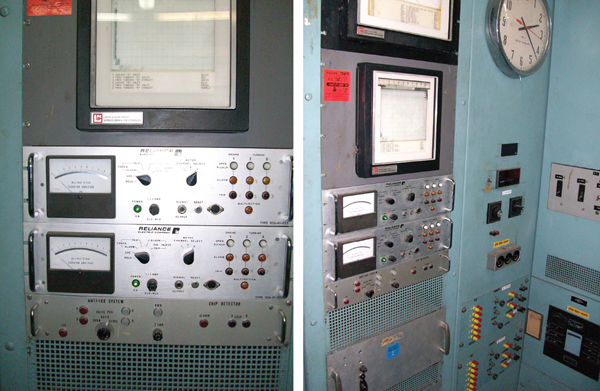 |
| 7. A typical 1970s-vintage FT4 governor and sequencer panel. Courtesy: HPI |
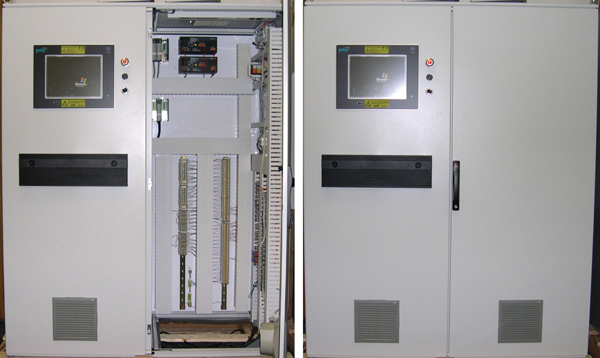 |
| 8. A modern replacement control panel. In addition to the modern digital controls, the Class I, Div II design of the panel enclosures was retained, ensuring that positive air pressure is maintained inside the enclosure at all times. Courtesy: HPI |
The project required much demolition work, including removing complete panels and junction boxes. The original cabling within the turbine enclosures was installed at the factory as part of the original package. When the demolition began, workers quickly discovered control wiring mixed in with power cabling that terminated at the motor control center—no longer an acceptable wiring practice.
Instead, all of the control and power cabling was run in separate trays from the marshalling cabinets to the field to eliminate the possibility of “cross talk” between adjacent wires, an HPI best practice. Digital and analog signals were separated into individual cables for the same reason.
HPI also aggregated the cabling between cabinets, such that all control or power conductors running between points are most efficiently run in a common, multi-conductor cable, where practical. If this practice is not followed, the number of cables increases dramatically, along with the associated terminal blocks, analog cards in the PLCs, and so on. The cost of the cables and the labor to install the cables also increases—a situation to be avoided.
Package Wiring Upgraded
Each of the eight FT4 engines has two thermocouple compensation harnesses. To obtain better engine temperature reading and tighter control of the fuel governor, these harnesses were replaced and new cable runs were installed. The thermocouple wiring harnesses required special cables custom manufactured by a third-party supplier based on HPI’s specifications. As a result of this and other improvements, the engine control system can operate closer to its maximum operating parameters, achieving an overall increase in power output and unit efficiency.
Previously, the fire and gas alarms were a standalone system producing only an audible alarm. The operator was responsible for recognizing and responding to the alarm and manually tripping the engine(s) if required. New fire and gas monitors were installed and integrated with the turbine control system so that alarms are clearly visible on the main control panel. The new fire and gas alarms now indicate exactly where in the engine and generator compartments an alarm condition has occurred and will automatically trip the engine(s) when needed.
The old seismic vibration and speed probes were replaced with a new Bentley Nevada (BN) 3500 series system, along with its associated cabling. This enhancement of the vibration system gives operators greater visibility of the turbine driveline’s real-time operating conditions. The entire BN 3500 was integrated with the PLC system, and data is presented graphically on a dedicated vibration page on the main control panel. Finally, the BN keyphasor module was fitted on the shaft of the generator to measure vibration of the gear box shaft.
Challenges Faced
Due to this particular utility’s security policies, all project documentation was transported manually rather than sent electronically. A dedicated hard drive, in a sealed workspace, was set up at HPI to support the project. Access to project information was limited to those individuals on the project who were approved to view project documentation. The HPI team was also required to have security clearances, an additional logistical constraint on the project team.
The evolving design of the cabling system during construction meant that the cable schedules were frequently updated, necessitating additional material purchases. The HPI team was able to mobilize additional cable installers to ensure that the project remained on schedule.
Key Results
The project was completed in May 2010 after about 10 months total site time. HPI received an “Excellent” rating on all phases of the project from the customer. There were two important reasons for the project’s success. One was effective project management and good communications between the owner and contractor. Another was the fact that an integrated project team composed of controls engineers, installation technicians, and electricians—led by an experienced project manager—provided the right mix for handling a project with a dynamic scope of work.
—Contributed by Thaddeus Berry (tberry@hpi-llc.com), business development manager, HPI.