In the wake of the recent U.S. Supreme Court ruling related to cooling water intake practices at large power plants, many utilities are relieved to be off the hook as far as implementing expensive control upgrades to protect fish and other aquatic organisms.
Impacts of Cooling Water Intake Systems
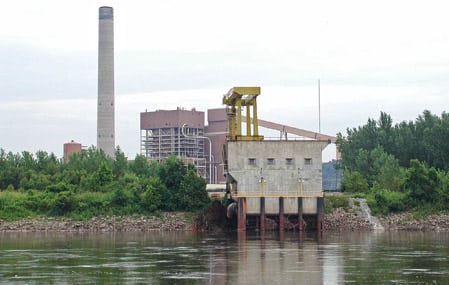
Cooling water intake structures divert billions of gallons of water into coolant systems for power plants. These systems can injure or kill billions of aquatic organisms, resulting in severe environmental impacts. Several years ago Congress sought to remedy this problem through Section 316(b) of the Clean Water Act (CWA). The statute requires that "cooling water intake structures reflect the best technology available for minimizing adverse environmental impact." The resulting rules applied to approximately 550 power plants that account for about 53% of the nation’s electric power generating capacity.
In enforcing the statute, the Environmental Protection Agency (EPA) turned to a cost-benefit analysis. If the cost of a particular technology was unjustified by a corresponding environmental benefit, the technology was not required. Environmental groups reacted by suing the EPA to require the agency to employ a cost-only analysis. Such analysis requires the best technology a facility can afford, even if the environmental benefit derived is minimal.
In response, industry representatives argued against the cost-only analysis because they felt that affected power plants would be forced to apply expensive upgrades that had few environmental benefits over cheaper alternatives.
Balancing Costs and Environmental Benefits
On April 1, the Supreme Court ruled on the case Entergy Corp. v. EPA, which was consolidated with PSEG Fossil LLC v. Riverkeeper, Inc. and Utility Water Act Group v. Riverkeeper, Inc. The court upheld the EPA’s decision not to mandate closed-cycle cooling systems for cooling water intake because the cost of such systems would be prohibitively expensive and because other technologies could approach the performance level of closed-cycle operations.
The agency’s view that "best technology available for minimizing adverse environmental impact" allows consideration of the technology’s costs and of the relationship between those costs and environmental benefits is a reasonable interpretation of the statute, the court held. When Congress wished to mandate the greatest feasible reduction in water pollution, it used plain language.
Reactions to the Decision
Not surprisingly, there have been a wide range of responses to the Supreme Court’s ruling.
For example, the Pacific Legal Foundation (PLF), a public interest group that fights for limited government and a balanced approach to environmental protection, applauded the decision. PLF attorney Steven Geoffrey Gieseler called the ruling a "victory for common sense in government rulemaking" in an interview with The New York Times in April.
"I am very pleased by the court’s opinion," said Gieseler, who filed a friend-of-the-court (amicus) brief for PLF in support of Entergy Corp. "With this opinion and the court’s recent ruling in the Navy sonar case [allowing courts to consider a balancing test when weighing environmental injunctions] it is my hope that we’re entering a more adult era in environmental law."
In contrast, Amy Sinden, a member scholar of the Center for Progressive Reform (CPR) and a law professor at Temple University, was critical of the ruling. However, she attempted to put the impact of the high court’s decision in perspective in a statement CPR released in April.
"The court today gave EPA the discretion to use cost-benefit analysis in setting standards for power plant cooling systems, but did not require it to do so," said Sinden, who filed an amicus brief in the case on behalf of Riverkeeper Inc. "Importantly, it said that the EPA’s discretion to use cost-benefit analysis may not extend so far as to authorize ‘a rigorous form of cost-benefit analysis.’ The court suggested that EPA’s authority only extends to determining whether costs are ‘significantly disproportionate’ to benefits. This ruling might preclude the kind of overly formalized, monetized cost-benefit analysis that absurdly tries to put a dollar figure on each fish."
Moving Forward
It is important to remember that the recent ruling is based on interpreting an existing law, and that the existing law is open to amendment if Congress chooses to take action. Additionally, the case’s long-term impact may depend on whether the Obama administration wants to use cost-benefit calculations when the result would potentially lessen environmental protection.
In the coming months, the EPA will be reworking the rules governing cooling system upgrades. It remains to be seen how the agency’s new administrator, Lisa Jackson, an Obama appointee, will deal with the Bush-era EPA regulations that were the subject of the recent Supreme Court case.
"We are looking forward to working with EPA’s new administrator, whom we are confident will agree that the Bush EPA regulations failed to satisfy the CWA’s mandate that the adverse environmental impacts of cooling water intake structures be minimized," said Alex Matthiessen, president of the Hudson Riverkeeper group.
The U.S. electric generation industry needs a sensible section 316(b) policy that balances economic needs with protecting our natural resources. The Supreme Court’s decision validates the EPA’s authority to consider both costs borne by power plants to comply with 316(b) permits and the economic benefits of environmental protection. The downstream effect of this ruling: Utilities have a mandate to find and use available, affordable technologies that prevent unnecessary fish kills and damage to the environment.
—Angela Neville, JD is POWER‘s senior editor