Where can you get the most frank answers to the question, "What do utility executives think about the smart grid?" Probably from the 2009–2010 " Platts/Capgemini Utilities Executive Study." Conducted in March and released mid-July, it surveyed senior executives from 106 electric (57%) or electric and gas (42%) utilities in North America (19% from Canada). Participants were asked about current industry trends, the industry’s future, what utilities are doing to prepare for the future, and perceptions of the Obama administration’s impact on the utility industry.
In verbatim comments addressing current industry issues, variants of the word "change" occur or are implied frequently. Some survey participants, like this one, see change as a positive for the industry: "[The changing landscape] makes it probably the most exciting time to be involved in this industry." Others expressed more anxiety about converging change agents (aging demographics, aging infrastructure, and pressure from environmental regulations): "It’s the perfect storm."
One issue that cuts across a multitude of survey issues is the smart grid. A summary of comments related to smart grid technology deployment follows. For details of participants’ views on this and other issues, download the full report. Note that all participants could comment on any topic, whether or not it was their area of responsibility, but they did not have to comment on every topic.
Current Smart Grid Status
The executive summary notes that 45% of respondents’ companies have a smart grid strategy in place, while 52% said their utility has one in development. "Over two-thirds of participants also said they expect their smart grid strategies will change over the next five years as a result of evolving technologies." Full smart meter implementation has been reached by 37% of respondents and advanced meter infrastructure (AMI) by 35%.
Although "smart meters" have gotten the most press and consumer attention—not to mention federal stimulus dollars—not all utilities begin their smart grid projects with new, digital meters. One respondent said, "We’ve had a smart grid in many cases for the last 20 or 30 years. We started with the system operating departments in different companies, and they have progressed infinitely and dramatically over the last 10 years . . . now what we are going to start seeing . . . is integrating it at a much lower level, on the individual house level, and there are a million things that have to be figured out."
One expressed concern that not all utilities in a given service territory may be doing things the same way, which could raise issues related to a lack of consistency. But, aside from having a single set of federal standards, the most likely way to gain greater consistency, even at the service territory level, is through cooperation.
According to one respondent, "There is more of a willingness in utilities in the last 3-5 years to share information. We come back from those years of mergers and de-mergers and everybody being fairly closed off as far as communicating changes in their systems. The willingness now of utilities to work more collaboratively together to define what our requirements are, and to set the stage for how we are going to move ahead with some of this new technology and meet these challenges in the future."
Other respondents disagreed about the level of cooperation across company lines and with regulators. Clearly, implementation of a smarter North American grid would be simplified (though never simple) if cooperation among utilities, technology vendors, and government entities at all levels (including across the 49th parallel) were a given—a point made by more than one executive.
Security Issues
According to a chart ranking various smart grid projects in terms of importance, "upgrading security" comes in first and is closely followed by the deployment or upgrading of intelligent electronic devices (which can include sensors and other devices that provide transformer protection, line current monitoring, phasor measurement, and more—among them, the kinds of tools that can help grid managers prevent or more quickly respond to outages, sometimes without sending staff into the field).
Though the charts throughout the report are useful, the deeper value is in the anonymous verbatim comments. With regard to security, for example, I found it interesting that published comments were practically devoid of reference to deploying smart grid technologies to improve grid security (let alone comments about potential security challenges created by smart grid technology), despite the issue’s high ranking in the quantitative portion of the survey. When I shared this observation with the survey designers (full disclosure—I worked for Platts for three-plus years when it owned POWER), they were kind enough to supply these additional comments on the topic:
The whole cyber security issue gets a little bit more challenging, perhaps, the more we know. It’s got great potential. … Over the course of the next many decades, we are eventually going to get to a system that looks very different from what we have right now, that gives customers much more control, and probably optimizes the electric system in a way different than what we do today. But from within a very new technology, some of those initial decisions are going to be very important.
On the positive side, I think our up-kick in security has been phenomenal, given some of the threats to the infrastructure that we have faced and our ability to still face technology, whether it’s electric or natural gas systems, or whether it’s the information technology to support everything that we do, and it’s incredibly secure in the face of just ubiquitous threats, and then the number of opportunities for things to go wrong. So our overall responsiveness to cyber security is another positive.
Notice that the first executive sees "many decades" passing before the grid joins the rest of the digital world while the second thinks the industry (or at least the respondent’s company) has mostly solved the security problems.
Does It Matter How We Define "Smart Grid"?
Some folks like to think they can dismiss or minimize the value of smart grid developments by pointing out that no single, clear definition of the term exists. In that respect, the moniker is akin to "clean coal"; "cleaner coal" and "smarter grid" would be more appropriate, but neither is as powerful for marketing and rallying purposes. That said, those who understand smart grid issues are the first to note that what’s in progress is the building of a smarter grid and that it is more a process than an end point.
As with any new technology introduction, there’s an inevitable degree of chaos during the early years as a plethora of new companies and tools compete for preeminence and as standards are developed. Given that—prior to the recent, slow introduction of digital technologies to the electricity sector—the electrical grid has been almost unchanged for a century, we should expect some initial open-endedness to the reshaping and redefining of the grid. A certain level of trial and error learning up front is beneficial, lest an industry settle too quickly on choices that may later prove inferior.
Another reason for variations in smart grid definitions is addressed by this survey participant: "It is the time for people to start to get their minds around what [smart grid] means to them, and what the implications are to better optimize their houses going forward. I think we need to define what smart grid means for [us] because it means many different things to [many] different people. We all have different challenges within our service territory, and to define the requirements for smart grid against where the customer benefits associated within your specific service territory are key."
Another respondent noted that smart grid technology would, in the long run, likely not be deployed to the same extent in all service territories in all parts of the U.S. Perhaps digital home energy management, for example, doesn’t make sense in some areas, but tools to enable faster response to outages (or the ability to avoid some outages altogether) and that enhance grid security would benefit everyone.
How to Fund the Smart Grid
Several individuals commented on the difficulty of funding smart grid projects. At least one seemed to indicate that, given the tight economy, transmission and distribution equipment was allowed to fail before it was replaced. With that sort of approach, the odds of replacing 100-year-old technology with the smartest alternative that can be integrated into the larger, smarter grid are very low, ultimately making the cost of a smarter grid even higher.
Some survey participants said they were relying on what regulators would permit in terms of cost recovery. Others, like this respondent, are looking to the federal government to solve the dilemma: "The government will have to mandate it. . . . It’s very hard to make an economic case for right now up front. The payback is long term and you really have to force some level of standardization, common protocols across the systems to make it happen and get people comfortable with it."
However, one individual had a much different perspective: "The whole transmission and distribution infrastructure which is aging and coming up for renewal is a safe place to put your money. Whether it’s transmission or distribution, it’s the area of business that isn’t changing, does demand capital, does produce attractive risk-adjusted returns. So that’s the place to put your money while the other part[s] of your business are in turmoil."
How Executives See the Industry’s Future
As with any collection of individuals, these executives don’t all agree on every issue. One likely reason is that they don’t all currently rely on the same generation portfolio and are not all bound by the same state- or provincial-level requirements for renewables, for example. That makes their choices for "most important" issues over the next 5 to 10 years all the more interesting. When they were asked to use a 10-point scale to identify the most important issues from a list of 29 issues, respondents put these at the top:
- "An increase in electricity prices for end users
- Increasing environmental regulation
- Increased implementation of AMI/AMR [automated meter reading] technology
- Increased utility industry of technology (e.g. demand side management and smart grid technology)"
Note that two of those items directly involve smart grid technology and the other two do so indirectly.
Though the issues identified as "least important" don’t relate directly to smart grid issues, three of them do so obliquely:
- "More LNG (Liquefied Natural Gas) terminals built
- Greater collaboration among industry leaders
- Increasing number of financial players in the market
- More coal generation built"
We’d expect less anticipated demand for LNG and coal because imperatives to build lower-carbon generation seem all but certain, and to the extent that those sources are renewables and/or distributed generation, a smarter grid is required to ensure that we have a reliable grid.
Other visions of the future included energy storage, though most noted that it is still too expensive for common use. In one respondent’s view, "That’s the one [technology] that I’d love to see but I think storage is 30-40 years away." (See the Sept. 2010 issue of POWER for a story on energy storage.)
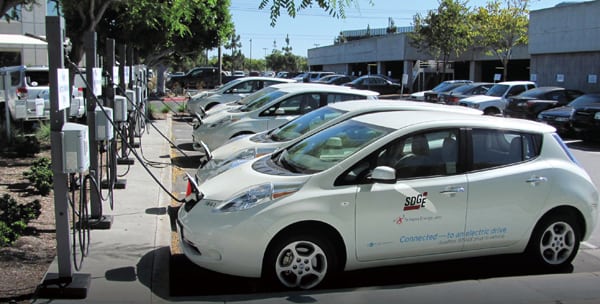
One type of smart grid–integrated energy storage option is plug-in electric hybrid vehicles, and some comments indicated that the individuals grasped the business potential of a new nighttime load.
They [Customers] Just Don’t Understand . . .
Complaints that customers don’t understand the industry in general and, in particular, the costs of renewable energy and new technology were numerous. For example, consider these three comments:
The main thing we commiserate about is the lack of public knowledge with regard to energy. I don’t know how we get to that, but we base that on the lack of understanding on the part of residential customers, which is just astounding. The large industrial customers are very sophisticated, they get it…. They are right there at our side at the PUC. But we find that as you go down the chain, that the normal customer is pretty ill-informed and pretty opinioned and apt to go off on tangents.
We need to educate customers better, particularly about cost, educate them about what is the true cost of wind, what is the cost of carbon, how that impacts us. We haven’t been that verbal and vocal to educate customers on that.
Most of our opportunity to inform and educate comes when we are asking for something.
Like highways and firefighters, customers need and depend on electricity but don’t think about it every day—nor should they have to. After all, utility customers have their own jobs that others don’t fully understand or appreciate daily—whether they are trash collectors, surgeons, teachers, or soldiers.
As for educating politicians and regulators, as one respondent put it so well: "We have to have a very credible position at the table, and sometimes say very unpopular things. But we need to [avoid] being perceived as naysayers. So I always say our role is to give public policy makers what they want in [a way] that’s affordable. Sometimes that means convincing them of what they really want. They are public policy makers. They are not expected to be experts at our business, we are. …We have to have that leadership."
Another noted: "We are probably one of the last big industries where people use your product and really don’t know what it costs until they get the bill in the mail a month later. Really I think the key to unlocking conservation and energy efficiency is to show customers what it costs at the time they are using the product." To do so, you need a smarter grid. Smart grid technologies can enable ongoing customer education both directly—through real-time monitoring of home energy usage, where that is provided—and indirectly, through training in the use of such technologies.
Be Cautious, but Don’t Get Left Behind
"[AMI and smart grid] makes so darn much sense on paper. …It sounds like it’s a lot more complicated and expensive [and] you’ve got to have some relative standardization across the industry, and you have also got to deal with security issues," said one participant. "You never want to be on the leading edge or first wave of anything. …We will be a later adopter. I think there are a lot of utilities…to work out the problems and bumps." Fair enough. Change is scary, and early adopters assume greater risk. That may not be a risk that smaller utilities, for example, can always take.
But if nobody takes the risk of moving forward, where will North America be in another 10, 20, 50 years, as the rest of the industrialized world pushes ahead with smarter electrical infrastructure? Will this next respondent’s comment still ring true? "If scientists from the past would come back, and we’re talking about people from 100 years ago… if they walked into our switchyards they would feel right at home with the technology because it is 100-year-old technology that hasn’t change[d]."
Several participants commented on the industry’s aging infrastructure, so sooner or later, new investment needs to be made. Different utilities may find that it makes sense to start smartening up their grids in different places. For some, the choice may come down to what their utility commissions approve or what they can get federal funds to subsidize.
Where a utility starts may be less important than having a plan and making some initial moves. If smarter grid technology (everything from meters to distributed generation to an army of sensors embedded throughout the grid) reaches a tipping point (whether as a result of regulation, standardization, business model changes that affect smart grid economics, or something else), this executive’s belief could become reality: "I believe we are going to see . . . more of a lot of advances in things like distributed generation, smart grid, etc. and a lot of development in that area. . . . I believe it will start slow at first and then move very rapidly. That’s because once it starts, what we’re going to find is that the utilities that haven’t subscribe[d] to it, haven’t embraced it, are going to fall behind very quickly."
—Gail Reitenbach, PhD is POWER‘s managing editor.
This story was originally published online 7/20/2010.