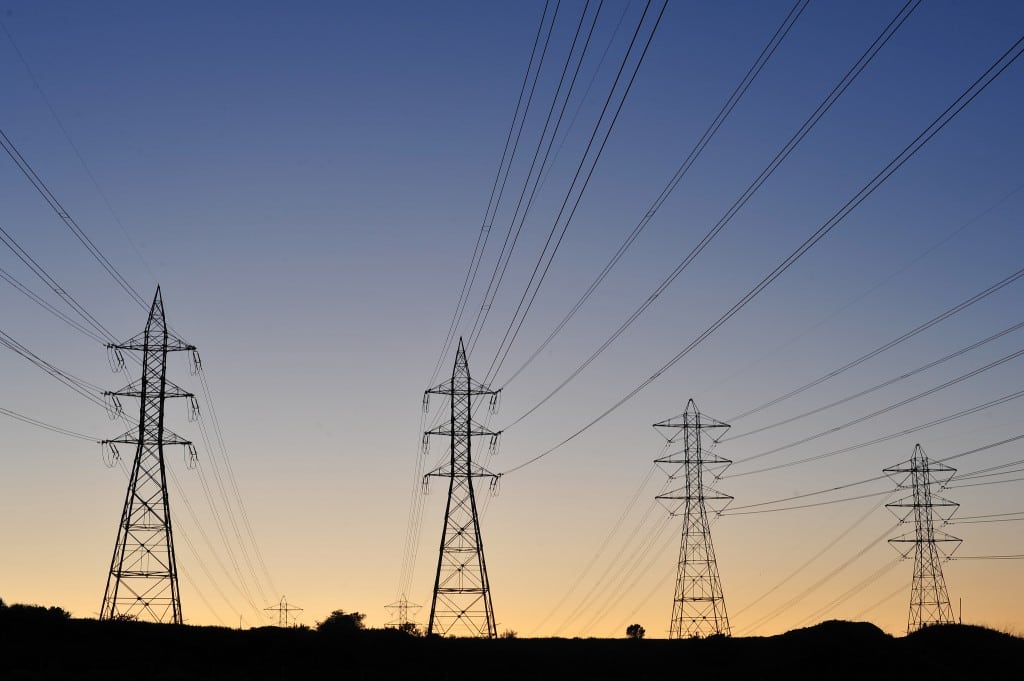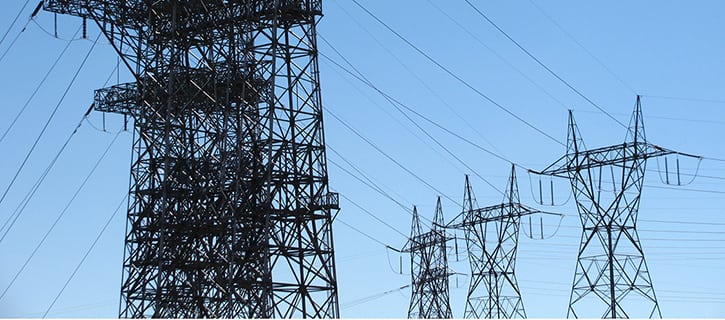
President Obama promoted "green energy" as a signature theme in his presidential campaign. During his first weeks, he reaffirmed his administration’s commitment to renewable resources. In a radio address, he promised to double the nation’s alternative energy capacity within three years and to construct a 3,000-mile transmission grid to "convey this new energy from coast to coast."
The advancement of clean energy and the accompanying "green jobs" are a cornerstone of the newly enacted $787 billion American Recovery and Reinvestment Act of 2009. In signing this stimulus plan legislation, the president again focused on the inextricable linkage between renewable power and a 21st-century transmission infrastructure: "Today, [our] electricity… is carried along a grid… that dates back to Thomas Edison, a grid that can’t support the demands of clean energy….[The stimulus plan represents] an investment that takes the important first step towards a nationwide transmission superhighway that will connect our cities to the windy plains of the Dakotas and the sunny deserts of the Southwest."
Political Change Necessary
At one level, the president gets it: Energy policies that promise green power without also committing to the massive development of transmission infrastructure are disingenuous and will necessarily fail. However, the president’s transmission initiatives appear to be based on the premise that the federal government possesses the authority to jump-start the national grid. To the contrary, the jurisdictional reality remains that individual states retain power over transmission projects. As a federal court recently explained: "The states have traditionally assumed all jurisdiction to approve or deny permits for the siting and construction of electric transmission facilities. As a result, the nation’s transmission grid is an interconnected patchwork of state-authorized facilities."
Accordingly, the development of most transmission projects, even if they are a key priority for a popular president’s agenda, currently must pass political muster in every state to be crossed. Local constituencies thus retain the power to effectively veto transmission lines of statewide importance, and individual states can unilaterally defeat multistate projects based on the most parochial considerations (such as if the project benefits an adjacent state more than the one erecting roadblocks).
EPAct: Road to Nowhere?
Congress has acted to enhance the power of the federal government and thus enable transmission projects with multistate importance to be assessed on more broadly based national interests. The Energy Policy Act of 2005 (EPAct) provided the Federal Energy Regulatory Commission (FERC) with "backstop" transmission siting authority. States retain the primary siting responsibility, but if the state has "withheld approval for more than 1 year" for a project in a designated "national interest electric transmission corridor," the applicant may seek siting authority from FERC.
We previously questioned (in "Can FERC Deliver Transmission?" POWER, November 2007) whether EPAct provides a meaningful federal alternative if a state denies a transmission project. Our discussion focused on the then-recent rejection by Arizona regulators of a transmission line to connect Arizona generation with California electric consumers. Almost four years after the filing of the initial application with the California Commission, this transmission project remains suspended. For this project, the question of whether EPAct backstop authority represents meaningful reform or is a road to nowhere remains unanswered.
Court Dilutes FERC’s Backstop Authority
Ironically, within 24 hours after President Obama’s promise of a national "transmission superhighway," a federal court ruling in Piedmont Environmental Council v. FERC effectively negated FERC’s backstop authority. The majority rejected FERC’s interpretation that the state’s denial of a transmission project constitutes its "with[holding] approval for more than 1 year." Thus, this decision enables states to deprive FERC of any backstop siting authority by timely rejection of a transmission project application.
An underlying policy preference for the states’ long-held permitting authority emerges from the majority opinion: "[FERC’s] reading would mean that… state commissions… will lose jurisdiction unless they approve every permit application in a national interest corridor." The dissenting judge found FERC’s interpretation to be the only reasonable interpretation consistent with congressional intent.
Federal Oversight Needed for National Transmission Superhighway
President Obama has offered meaningful responses to the engineering and financial barriers that have impeded the desired development of alternative energy. Now he must build on the political support for this green power agenda to resolve the remaining, but most vexing, barrier: ensuring that transmission infrastructure decisions imperative for national initiatives are not thwarted at the local level. Green power advocates point to construction of the national interstate highway system as a promising precedent for a "coast-to-coast transmission superhighway." The success of the former was its "national interstate" foundation. The lack of such a "national interstate" focus has produced a suboptimal "patchwork" of transmission facilities; preservation of the traditional state-focused paradigm will subject renewable resources available in the "windy plains" and "sunny desserts" to electronic isolation.
Editor’s Note: Davis Wright Tremaine attorneys represented parties supporting the FERC position in the Piedmont Environmental litigation. The views expressed herein are those of the authors and are independent of the firm’s representation of its clients.
–Steven F. Greenwald (stevegreenwald@dwt.com) leads Davis Wright Tremaine’s Energy Practice Group. Jeffrey P. Gray (jeffgray@dwt.com) is a partner in the firm’s Energy Practice Group.