Artificial photosynthesis for solar power?
Photosynthesis, the natural process used by green plants for millions of years to convert sunlight, carbon dioxide, and water into oxygen and carbohydrates is the basis of an emerging technology that promises to not only provide a renewable source of electrical energy but also to potentially help scrub the atmosphere of excessive carbon dioxide.
A team of researchers from the Department of Energy’s (DOE’s) Lawrence Berkeley National Laboratory, the University of California at Berkeley, and the University of Verona, among other institutions, are looking to create artificial versions of photosynthesis in an effort to find new ways to harness solar power. Their scope of study focuses on how plants are able to harvest and convert sunlight to chemical energy at an energy transfer efficiency rate of approximately 97%. Last month, these scientists announced they had discovered a “dimmer switch”—a molecular mechanism that controls the flow of solar energy as it moves through the system of light-harvesting proteins. The discovery sheds light on a potential pitfall affecting sunlight-harvesting systems and presents an important implication for the design of future artificial photosynthesis systems.
The scientists realized that if the photosynthesis system becomes overloaded with absorbed solar energy, it most likely would suffer some form of damage. Plants solve this problem on a daily basis with a photo-protective mechanism called energy-quenching, the researchers found. Excess energy, detected by changes in pH levels, is safely dissipated from one molecular system to another, where it can then be routed down relatively harmless chemical reaction pathways.
The pigment-binding protein CP29, one of the “minor” light-harvesting proteins in green plants, has been identified as a valve that permits or blocks the critical release of excess solar energy during photosynthesis (Figure 1). It has also been proposed that the opening and closing of this valve—much like a dimmer switch that can be turned on and off—can be controlled by raising or lowering ambient pH levels.
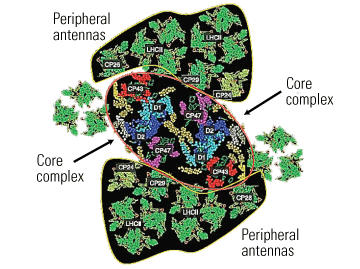
1. Natural dimmer switch. Researchers looking to develop an artificial power-generating version of photosynthesis have identified a botanical “dimmer switch” that controls the flow of solar energy as it moves through a system of light-harvesting proteins. Within this protein supercomplex, energy-quenching takes place in D1 and D2 proteins (light-blue and dark-blue areas). The surrounding proteins, CP29, CP26, and CP24, function as energy flow-controlling valves. Courtesy: Roberto Rossi, Berkeley Lab
“This is really the first detailed picture ever obtained of the molecular mechanism behind the regulation of light harvesting energy,” Graham Fleming, one of the scientists, said. “We believe we will soon be in position to build a complete model of the flow of energy through the photosynthetic light harvesting system that will include how the flow is controlled. This model could then be applied to the engineering of artificial versions of photosynthesis.”
The results of this study were reported in the journal Science (May 9, 2008). The researchers’ next step is to examine the energy-quenching mechanism in the rest of the of the PhotosystemII protein complex to see how it is used to regulate the flow of energy throughout the light-harvesting system.
Poultry litter to fuel 55-MW N.C. plant
A renewable power generating company has found a creative use for poultry litter. Though the litter traditionally is used as fertilizer or cattle-feed, tons go to waste. Rather than waste litter, a new biomass plant planned for construction in Sampson County, N.C., will burn the droppings to generate 55 MW of power.
Fibrowatt LLC, a Pennsylvania-based renewable energy company, announced in April that, as well as providing an alternative, beneficial use for poultry litter, its plant would increase alternative energy supplies to North Carolina, the first state in the southeast U.S. to require minimum levels of renewable energy by 2012.
Fibrowatt was founded in 2000 by a management team that built the world’s first three poultry litter–fueled power plants in the UK in the 1990s. The company’s subsidiary Fibrominn opened the first U.S. poultry litter–fueled power plant in Benson, Minn., in mid-2007. The 77-acre site uses more than 500,000 tons of poultry litter as well as other biomass to produce 55 MW at capacity (Figure 2). The electricity is sold to Xcel Energy.
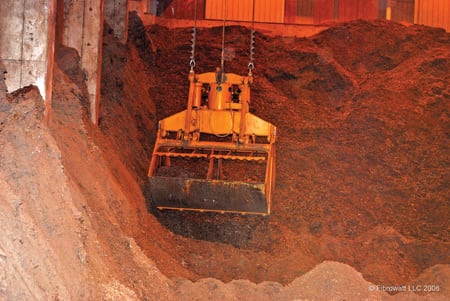
2. The food-fuel cycle. Tons of excess poultry litter will be burned at a planned 55-MW biomass plant in North Carolina. A crane moves poultry litter within a fuel hall at a similar plant in Minnesota. Courtesy: Fibrowatt LLC
The company is currently conducting site evaluations for two additional poultry litter–fueled plants in North Carolina. The selection of the Sampson County site, which took more than a year, was announced first because of strong support from the poultry industry and locale advantages, which included ample fuel supplies and access to a utility transmission line. To complete development of the Sampson County project, the company must agree to a power purchase agreement and obtain project financing, which is expected to exceed $200 million. Fibrowatt expects to begin construction of the plant in 2009, and it aims to begin operations in Sampson County by 2011.
First fuel cell–powered plane takes flight
Boeing made aviation history with deployment of the world’s first manned airplane powered by hydrogen fuel cells earlier this year. The zero-emissions plane was an international effort, developed by Boeing Research & Technology Europe in Madrid with assistance from industry partners in Austria, France, Germany, Spain, the UK, and the U.S.
The plane’s airframe, a two-seat Dimona motor-glider with a 53.5-foot wingspan, was modified to include a proton exchange membrane (PEM) fuel cell/lithium-ion battery hybrid system to power an electric motor coupled to a conventional propeller (Figure 3). The plane’s electric propulsion system was made by U.S.-based UQM Technologies, a developer of alternative energy technologies.

3. Hydrogen light. Boeing has deployed the first fuel cell–powered airplane. The plane’s airframe was modified to include a PEM fuel cell/lithium-ion battery hybrid system to power an electric motor coupled to a conventional propeller. Courtesy: Boeing
During three test flights, which took place in February and March at the airfield in Ocaña, south of Madrid, the pilot of the experimental airplane climbed to an altitude of 3,300 feet above sea level using a combination of battery power and power generated by hydrogen fuel cells. Then, after reaching cruising altitude and disconnecting the batteries, the pilot flew straight and level at a speed of 62 mph for approximately 20 minutes on power solely generated by the fuel cells.
According to Boeing researchers, PEM fuel cell technology potentially could power small manned and unmanned air vehicles. Over the longer term, solid oxide fuel cells could be applied to secondary power-generating systems, such as auxiliary power units for large commercial airplanes. Boeing announced in April that it does not envision that fuel cells will ever provide primary power for large passenger airplanes. The company said it would continue to investigate their potential, as well as other sustainable alternative fuel and energy sources that improve environmental performance.
First HTS transmission cable energized
The world’s first high-temperature superconductor (HTS) power transmission cable system in a commercial power grid was energized in April and is operating successfully in Long Island Power Authority’s (LIPA) Holbrook transmission right-of-way.
The cryogenically cooled 138,000-V system consists of three individual HTS power cable phases running in parallel and is capable of transmitting up to 574 MW of electricity at capacity. Its 2,000-foot-long cable system contains hair-thin, ribbon-shaped HTS wires that conduct 150 times the electricity of similar-sized copper wires (Figure 4). This power density enables transmission-voltage HTS cables to use far less wire and yet conduct up to five times more power—in a smaller right-of-way—than traditional copper-based cables. And unlike conventional power grids, which typically lose 7% to 10% of power due to the inherent electrical resistance experienced with copper wires, HTS cables transmit electricity with virtually no electrical losses.
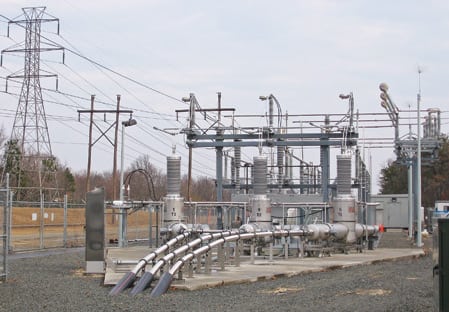
4. Hot transmission. LIPA’s 574-MW high-temperature superconductor power transmission cable system consists of three cables running in parallel in a 4-foot-wide underground right-of-way. The three cables shown entering the ground can carry as much power as all of the overhead lines on the far left. Courtesy: American Superconductor Corp.
LIPA is the third electric utility in the U.S. to have deployed an HTS cable system in its power grid. In the summer of 2006, National Grid and American Electric Power energized distribution-voltage HTS power cable systems in Albany, N.Y., and Columbus, Ohio, respectively. At nearly half a mile in length, LIPA’s HTS cable system is the longest of the three. It also is the first to operate at transmission voltages. After an initial operational period and following performance and economic reviews of the cable system, LIPA plans to retain the new superconductor cable as a permanent part of its grid.
HTS power cables are envisioned by the DOE as a component of a modern electricity superhighway—one that is free of bottlenecks and can readily transmit power to customers from remote generation sites, such as wind farms. The DOE previously funded $27.5 million of the $58.5 million total project cost as part of its ongoing efforts, through the Office of Electricity Delivery and Energy Reliability, to modernize the nation’s electricity delivery infrastructure.
In mid-2007, this project’s prime contractor, American Superconductor Corp. (AMSC) announced that it would lead the development of an extension of LIPA’s HTS cable system. The new cable will be powered by AMSC’s second-generation HTS wire, branded as 344 superconductors. The DOE plans to provide up to $9 million in cost-sharing for the $18 million project.
PTC powers wind power industry
With the fate of a key federal incentive in the balance, the U.S. wind energy industry continued new installations at a breakneck pace in the first quarter of 2008. The American Wind Energy Association (AWEA) said in its quarterly report that 1,400 MW, or approximately $3 billion worth, of new generating capacity was put in place during the first quarter.
These figures, coupled with investment in 17 new manufacturing facilities over the past year and a quarter, show that America’s wind industry can “deliver the goods,” AWEA Executive Director Randall Swisher said. “But if Congress does not act quickly, this momentum could be derailed at the worst possible time for the economy, placing 76,000 jobs and over $11.5 billion in investment at risk,” he said.
Swisher warned that 2009 could be a different story due to looming uncertainties over investment in wind power projects and manufacturing that could result from delays in production tax credit (PTC) extensions. The PTC—the primary federal incentive for wind power and other renewables—expires at the end of this year. At previous times when the credit has lapsed (1999, 2001, and 2003), wind power installations have dropped by as much as 93% in the following year (Figure 5).

5. Wind production woes. When Congress has failed to extend the production tax credit, wind capacity installation decreases of as much as 93% have resulted in the following, “expired PTC” year. Source: AWEA
The DOE last month concluded from a technical feasibility report that up to 20% of the nation’s total electricity needs could be supplied by wind power by 2030. The analyses surmised that reaching 20% wind energy would require enhanced transmission infrastructure, streamlined siting and permitting regimes, improved reliability and operability of wind systems, and increased U.S. wind manufacturing capacity. The report stressed that annual wind installations would need to increase to more than threefold, requiring the number of annual turbine installations to increase from approximately 2,000 in 2006 to almost 7,000 in 2017.
In the first quarter of 2008, 10 states had new installed wind power facilities that would bring total U.S. wind power capacity to over 18,000 MW, AWEA said. Over 4,000 MW of projects are under construction nationwide.
AWEA also reported an increase in the share of U.S.-made wind turbine components—from less than 30% to approximately 50% in three years. Prior to 2005, AWEA estimates that less than a third of components were manufactured domestically. But the relatively stable availability of the PTC since August 2005 has allowed U.S.-based supply chain providers to begin establishing a much stronger foundation of domestic manufacturing for turbine components, which range from towers and blades to gearboxes, bearings, and electrical and electronic components. AWEA estimates that, by the end of 2008, approximately half of turbine components for turbines installed in the U.S. will be produced domestically. In 2007 and early 2008, at least 17 manufacturing facilities have been brought on-line or expanded in the U.S., creating more than 4,000 jobs and $500 million in manufacturing investment.
Renewing Greensburg
A year after Greensburg, Kansas, was devastated by a tornado, the city is being rebuilt with an emphasis on energy efficiency and 100% renewable energy—particularly wind energy—with support from the DOE. The city of 1,400 residents in the rural Midwest could become a model for North American sustainability.
When Greensburg contacted the DOE for assistance, the agency sent a team of experts from its National Renewable Energy Laboratory (NREL) to conduct studies, develop renewable energy and energy-efficient business strategies, and assemble financing and ownership options to produce or procure renewable energy technologies. The DOE opened an office in Greensburg and helped the city develop and pass a resolution that all large city buildings achieve LEED Platinum certification, the highest green building rating available under the U.S. Green Building Council’s Leadership in Energy and Environmental Design (LEED) rating system. Greensburg is the first city in the U.S. to pass such a strict green building requirement.
The DOE has invested $1.25 million in its assistance to Greensburg and is helping the city to design energy-efficient buildings and power the entire town with renewable energy (Figure 6). As Kansas has the third-highest potential of any state for wind energy, Greensburg has decided to develop a 3- to 4-MW wind energy system, which is expected to produce enough energy over the course of a year to equal the city’s electricity needs. The community will be connected to the grid during the times that wind does not blow sufficiently, and the system will include biodiesel-powered generators for renewable emergency power backup. During the current fiscal year, the DOE will provide Greensburg with a minimum of $500,000 in additional funding for energy-efficient buildings and wind generation technical support.

6. A green burg. When BNIM Architects designed this new school for Greensburg, Kansas, the National Renewable Energy Laboratory provided technical advice about the use of solar electric systems, day-lighting, and other energy-efficiency and renewable features. Courtesy: BNIM Architects
GAO deems coal-to-gas switch impractical
The ability of U.S. power-generating units to make a large-scale switch from coal to natural gas is not only limited but could also result in “adverse economic consequences,” the U.S. Government Accountability Office (GAO), Congress’s investigative arm, has determined.
The agency had been directed by the House Committee on Appropriations to report on whether existing U.S. coal-burning, electricity-generating units were able to switch to burning natural gas, and what the associated economic implications would be. The report—“Economic and Other Implications of Switching from Coal to Natural Gas at the Capitol Power Plant and at Electricity-Generating Units Nationwide”—was the secondary focus of a larger assessment, which aimed to find out how practical it was to use natural gas instead of coal at the Capitol Power Plant (CPP). The CPP supplies steam and chilled water to heat and cool the Capitol building and 23 surrounding buildings.
The GAO surveyed available data and interviewed key stakeholders concerning the ability of large-scale U.S. plants to make the switch. It found that because natural gas currently costs four times more than coal per British thermal unit and has shown a higher rate of price increases and volatility over time relative to coal (Figure 7), increasing the nation’s use of natural gas for electricity generation could result in adverse economic consequences. These higher fuel costs, coupled with supply constraints, limit the practicality of making the switch, the GAO said. A widespread switch could force the U.S., a nation with limited domestic production, to become dependant on international supplies—and even these supplies likely would not meet demand, stakeholders told the GAO.
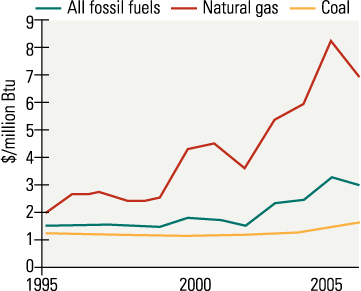
7. No go for gas. According to industry stakeholders, a large-scale switch from coal to natural gas for power production is uneconomical because of high, fluctuating natural gas prices. Source: GAO
Large-scale fuel switching would also require substantial investments in pipeline and storage capacity and new terminals to process imported natural gas—all of which would require regulatory approval. Stakeholders told the GAO that, with respect to the conversion of existing coal-burning plants, “it would be more feasible and cost-effective to construct new natural gas units or dispatch excess capacity at existing natural gas units.” Retrofitting coal units would not only be expensive, but it could decrease the unit’s overall efficiency.
Because of these technical and other issues, a large-scale shift from coal to natural gas could increase electricity prices, residential and commercial heating costs, and fuel costs for certain industries that consume large quantities of natural gas, the GAO said. Therefore, switching coal plants to natural gas—something that has rarely been done before—is unlikely to occur in the future.
Assessing the Congo River’s power potential
Since a two-day international forum under the auspices of the World Energy Council (WEC) last April in London, discussions about building a 39,000-MW hydropower dam complex on the Congo River worth $80 billion seem to have resuscitated interest in the region’s massive power potential.
The WEC talks, attended by governments, utilities, banks, consultants and equipment suppliers, assessed the viability of plans—viewed by some as grandiose—to build the Grand Inga complex in the Democratic Republic of Congo (DRC). The WEC anticipates that the series of 52 turbines of 750 MW each, sited over the Inga Rapids on the Congo River, could be the world’s largest and most powerful dam when operational between 2020 and 2025. It could produce more than twice the capacity of Three Gorges Dam in China and over a third of the total electricity currently produced in Africa.
Construction, which the WEC hopes would begin by 2014, would include building a 673-foot-high dam, a 9-mile-long reservoir, and a plant capable of producing 320 TWh of electricity annually. Power from the dam would be transmitted to Egypt in the north, Nigeria in the west, and South Africa, via new transmission lines.
But the Grand Inga is just one of several major plans in the works for the region. The mighty Congo River has been thought to harbor the potential to produce up to 75 GW of electricity (Figure 8). Two low-output hydroelectric plants, Inga 1 and Inga 2, built in 1970 and 1982, respectively, already operate in the region. A massive third scheme—the Inga 3 project—is in the first of four stages of implementation.
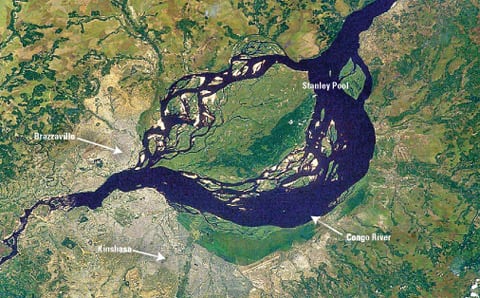
8. Inga power. The Congo River could harbor enough energy to supply a third of Africa’s power. Draining the vast equatorial Congo Basin, it discharges 40,000 cubic meters per second of water at Stanley Pool. Source: NASA
This scheme will tap the flow of the river without building a dam wall and produce an estimated 4,300 MW of power by 2015. Should it proceed, the first phase would involve a diversion of water through a 1.86-mile tunnel at an upstream bend of the river and back into the river’s downstream flow. Three other tunnels, the longest being 5.6 miles, could follow in stages and raise Inga 3’s total capacity to about 12 GW without the need for any dam construction. The project will be overseen by the Western Power Corridor (Westcor), a joint venture owned by power utilities of Angola (ENE), Botswana (BPC), the DRC, Namibia (NamPower), and South Africa (Eskom). It is estimated to cost $6 billion, and Westcor hopes that construction will begin during 2010.
At the end of February, Westcor completed a prefeasibility study for Inga 3’s 4,300-MW baseload capacity station and called for expressions of interest in the construction of the project. Pan-African entities are also showing interest in the project’s feasibility: In May, the African Development Bank approved a grant of about $15.7 million to study hydropower development of the Inga complex, with specific interest in Inga 3. The bank had already approved a grant of $58 million to help rehabilitate Inga 1 and 2.
POWER digest
News items of interest to power industry professionals.
Foster Wheeler wins contract for CFB gasifier for biomass-to-liquids pilot plant. Foster Wheeler Ltd. announced in May that its Finnish subsidiary Foster Wheeler Energia Oy has been awarded a contract by NSE Biofuels Oy Ltd. for a circulating fluidized-bed (CFB) biomass gasifier to be located in Varkaus, Finland.
Foster Wheeler’s scope includes an oxygen/steam gasifier and gas treatment equipment. The plant utilizes the company’s fuel-flexible CFB gasification technology to convert a wide spectrum of biomass into a clean syngas to be used in a gas-to-liquids (Fischer-Tropsch) process to produce feedstock for renewable diesel from biomass/wood residue-based gas. The gasification and syngas cleaning system is part of NSE’s new-generation renewable diesel demonstration plant at paper producer Stora Enso’s Varkaus Mill in Finland.
Foster Wheeler has received a full notice to proceed on this contract. The plant is expected to start up in early 2009 and will be integrated into the energy infrastructure of the Stora Enso Varkaus Mill. Foster Wheeler and the joint venture partners have also agreed in principle to further cooperation, aiming for delivery of a commercial-scale production plant to be located at one of Stora Enso’s mills.
ThermoEnergy, Babcock to commercialize emissions-free plant design. ThermoEnergy Corp. and Babcock Power Inc. have signed a memorandum of understanding to jointly commercialize a carbon-capture power plant designed to convert coal, natural gas, oil, and biomass into energy with near-zero emissions.
Based on pressurized oxyfuel combustion technology, the ThermoEnergy Integrated Power System (TIPS) captures carbon dioxide in a clean pressurized form for sequestration or for reuse in oil recovery.
“With relatively few unit operations, TIPS enhances power plant reliability, while its process efficiency comes from recovering the latent heat of vaporization of produced and entrained water. Adding a second reheat to the steam cycle efficiency, coupled with a simple, low-energy process to recover pipeline quality carbon dioxide gives TIPS a competitive edge over other conversion technologies,” said Alex Fassbender, president of ThermoEnergy Power Systems LLC.
Babcock and ThermoEnergy engineers will begin work immediately to finalize the data needed to design, construct, and operate a large-scale pilot plant at a host site.
Fluor to build world’s largest offshore wind farm. Fluor Corp. announced in mid-May that it has signed a contract with Scottish and Southern Energy (SSE) to design and construct the 500-MW Greater Gabbard Offshore Wind Farm. The venture is the world’s largest offshore wind farm project and the first UK offshore wind farm to be built outside territorial waters. The project is located approximately 15 miles off the Suffolk coast of the UK. The contract is valued at approximately $1.8 billion.
The Greater Gabbard Offshore Wind Farm Project will feature 140 wind turbines, each having a rated capacity of 3.6 MW. The turbines will be supplied by Siemens Wind Power A/S under a separate contract with SSE. Fluor will be responsible for installation of the turbines, which will be mounted on steel monopiles and transition pieces in water depths between 75 and 100 feet. A new electricity substation will be built near Sizewell, Suffolk, UK.
Construction work is scheduled to commence for the offshore site in summer 2009; work to prepare the site for the onshore substation is already under way. The wind farm will be commissioned in two phases, and construction is scheduled to be completed in 2011.
Wärtsilä to supply world’s first jatropha-fueled CHP plant. Wärtsilä has secured an order for an engine-driven combined heat and power (CHP) plant that will run on liquid biofuel extracted from the seeds of the jatropha plant. This CHP plant will be the first in the world ever to produce both electricity and heat using crude jatropha oil as fuel.
The plant is to be located in an agricultural area in Merksplas, Belgium. It will be owned by Greenpower NV—a joint venture between Thenergo (50%), the Belgian developer of sustainable energy projects; four local agricultural companies (40%); and a private investor (10%). Commercial operation of the plant is scheduled to begin in February 2009.
The plant will have a gross electrical efficiency of 44.2% and an overall efficiency of more than 85%. Heat from the plant will be used primarily for farming processes, such as in nearby greenhouses. It will also be used in a drying process for a livestock manure digester plant that processes biogas and dry fertilizer material. Electricity will be sold to the grid.
The contract is valued at approximately $10.84 million. Wärtsilä will deliver a Wärtsilä 32 engine with an electrical output of 9 MW. The scope of supply includes exhaust gas cleaning equipment and heat-recovery systems. Greenpower and Wärtsilä have signed a letter of intent for a 10-year operations and maintenance (O&M) agreement.
Siemens secures power plant order from Britain. The Siemens Energy Sector is to build its ninth plant in Britain, a combined-cycle power plant (CCPP) in Wales for Severn Power Ltd., a subsidiary of Welsh Power. The power plant with an installed capacity of 850 MW will attain an efficiency of 58%. Construction has commenced and is scheduled to be completed in 2010. The order, including a 16-year O&M agreement, is valued at a total of $1.29 billion.
Siemens is building the eco-friendly CCPP for Severn Power in Uskmouth in the vicinity of Newport, Wales. The plant is being erected on the site of a decommissioned coal-fired plant. In addition to turnkey construction, the Siemens scope of supply encompasses two SGT5-4000F gas turbines, two steam turbines, two hydrogen-cooled generators, and all electrical and instrumentation and control equipment.
Tenaska Power Fund to sell Calumet and three other generating facilities. Tenaska Power Fund (TPF) announced in May that it had entered into an agreement with International Power plc to sell the Calumet Energy Power Station, a 303-MW plant in Chicago, Ill., and APT Generation, a portfolio of three electric generating plants in Pennsylvania, West Virginia, and Ohio.
The three APT plants are the 625-MW Armstrong Energy plant in Armstrong County, Pa.; the 313-MW Pleasants Energy plant in Pleasants County, W.Va.; and the 616-MW Troy Energy plant in Wood County, Ohio. The Pleasants and Armstrong plants are positioned to deliver power to the PJM energy grid; the Troy plant serves the Midwest independent system operator grid.
The four plants will be sold for $856.4 million. The acquisitions are expected to close by the end of the third quarter of 2008.
Alstom to supply advanced clean coal combustion technology to RWE plant. Alstom won a $773.5 million contract in April to supply boilers for two 800-MW units at RWE Power AG’s existing coal-fired Westfalen Power Station, near Hamm, Germany.
Under the terms of the contract, Alstom will supply the complete boiler islands and auxiliary equipment, plus erection and commissioning. When completed in 2011, the new units will achieve cycle efficiencies of about 46%—substantially more than the European average of 36% for existing bituminous coal–fired plants.
The new Westfalen supercritical boilers with steam temperatures of 1,112F (600C) will reduce all emissions, including carbon dioxide, by about one-third compared to the fleet of older units. Application of Alstom’s advanced technical solutions will also significantly reduce nitrogen oxide and sulfur dioxide emissions.
Coal Creek Station upgrades steam turbine. Great River Energy’s two-unit, 1,100-MW Coal Creek Station, 50 miles north of Bismarck, N.D., marks the first installation of GE’s new 26.8-inch last-stage bucket (LSB) with axial entry dovetail.
The LSB upgrade of the first of the two GE steam turbines was completed in April 2008. The unit reentered commercial service in May 2008. “With an increased annulus area and reduced exhaust losses, the longer LSB is designed to increase plant output without increasing heat to the turbine or fuel to the boiler,” said Steve Pock, steam turbine product manager at GE Energy.
—Compiled by Sonal Patel.
Correction
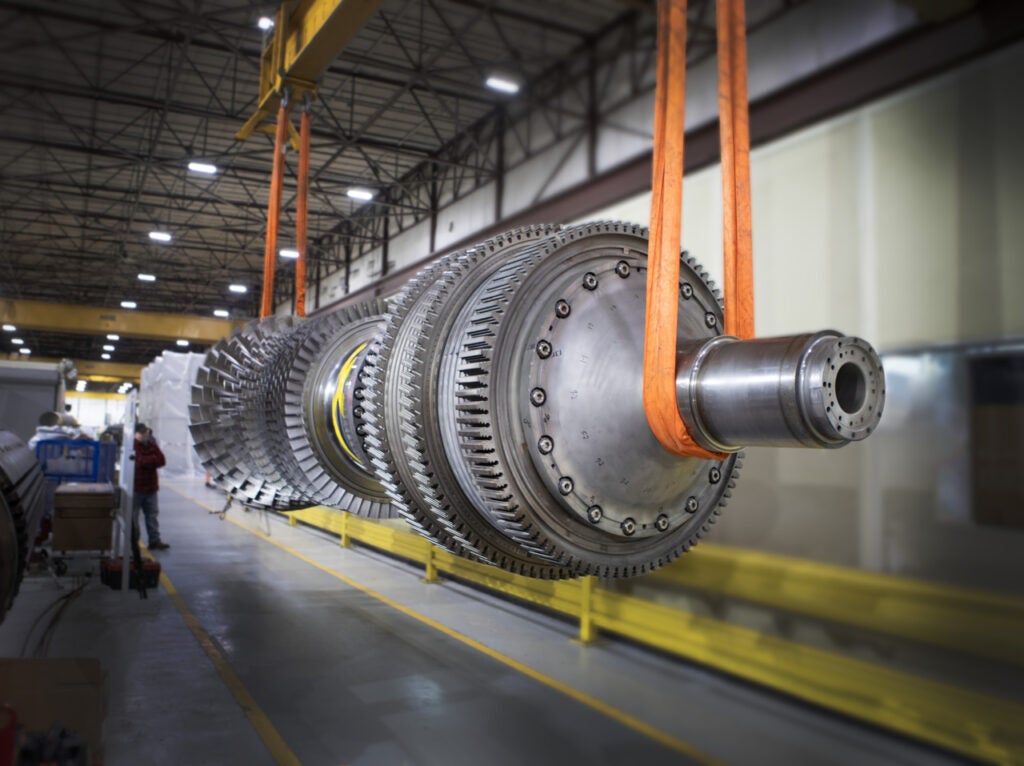
The caption on page 30 of our March 2008 issue erroneously identified the turbine rotor as from a Frame 7FA gas turbine. The photograph depicts the plant’s steam turbine rotor. POWER regrets the error.